Industrial machinery removal South Africa projects succeed or fail before the first lift. This industrial machinery removal South Africa guide provides a practical project-control baseline. A press, boiler, motor, tank or production line may look like one item on an asset register, but removing it safely requires verified mass, an engineered route, competent rigging, isolation, transport planning and a clear destination.
This guide explains nine practical stages for factories, mines, warehouses, liquidators and project teams. It also shows where machinery resale, parts recovery and scrap recycling should be separated so useful value is not lost during a rushed shutdown.
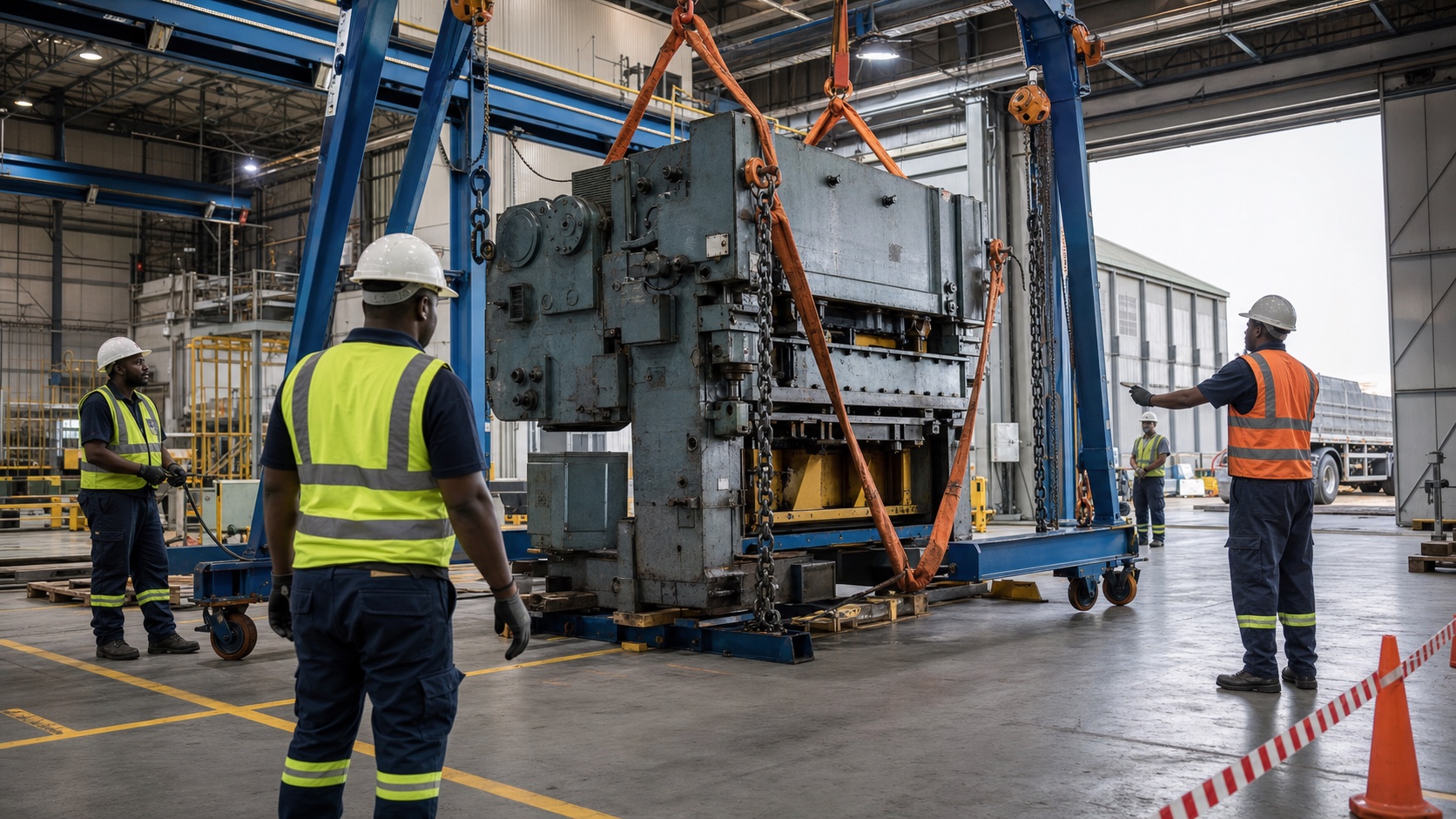
What industrial machinery removal includes
The scope can cover electrical and process isolation, dismantling, rigging, skidding, crane work, loading, abnormal transport, relocation, storage, resale preparation or recycling. The contractor must understand the final destination because removal for reinstallation demands different protection and documentation from removal for material recovery.
9 steps for industrial machinery removal South Africa
1. Verify the asset and destination
Confirm serial number, ownership, condition, accessories and whether the unit will be reused, sold, stripped for parts or recycled. Photograph it in place and list loose components. Do not remove financed, leased or customer-owned equipment without written release.
2. Establish the true mass and centre of gravity
Use drawings, manufacturer data and competent assessment. Add tooling, fluids, bases, guards and attachments that may not appear on a nameplate. An unknown or uneven centre of gravity changes sling selection, pick points and trailer positioning.
3. Isolate every energy source
Disconnect, lock out, test and record electricity, hydraulics, pneumatics, steam, gas, water and stored mechanical energy. Drain or make safe process fluids before movement. Isolation is a formal technical task, not a quick cable cut.
4. Survey the removal route
Measure doorways, columns, overhead services, floor capacity, gradients, corners and loading-bay geometry. Check whether temporary removal of walls, roof sections or guardrails needs engineering approval. Protect live operations and emergency routes.
5. Select the lifting method
Choose cranes, gantries, forklifts, skates, jacks or chain blocks from the verified load and site constraints. Confirm equipment certificates, sling angles, lifting points and ground conditions. Define an exclusion zone; no person should stand under a suspended load.
6. Write the lift and move plan
The plan should name the supervisor, signal method, equipment, sequence, control points, weather limits and stop-work triggers. Brief every participant, including the driver and site representative, before work begins.
7. Prepare the machine for transport
Secure moving parts, remove vulnerable projections, protect machined faces and blank open pipework. For relocation, label cables and components so recommissioning is possible. For recycling, separate high-value motors, stainless assemblies and copper cable where safe and commercially justified.
8. Control loading and transport
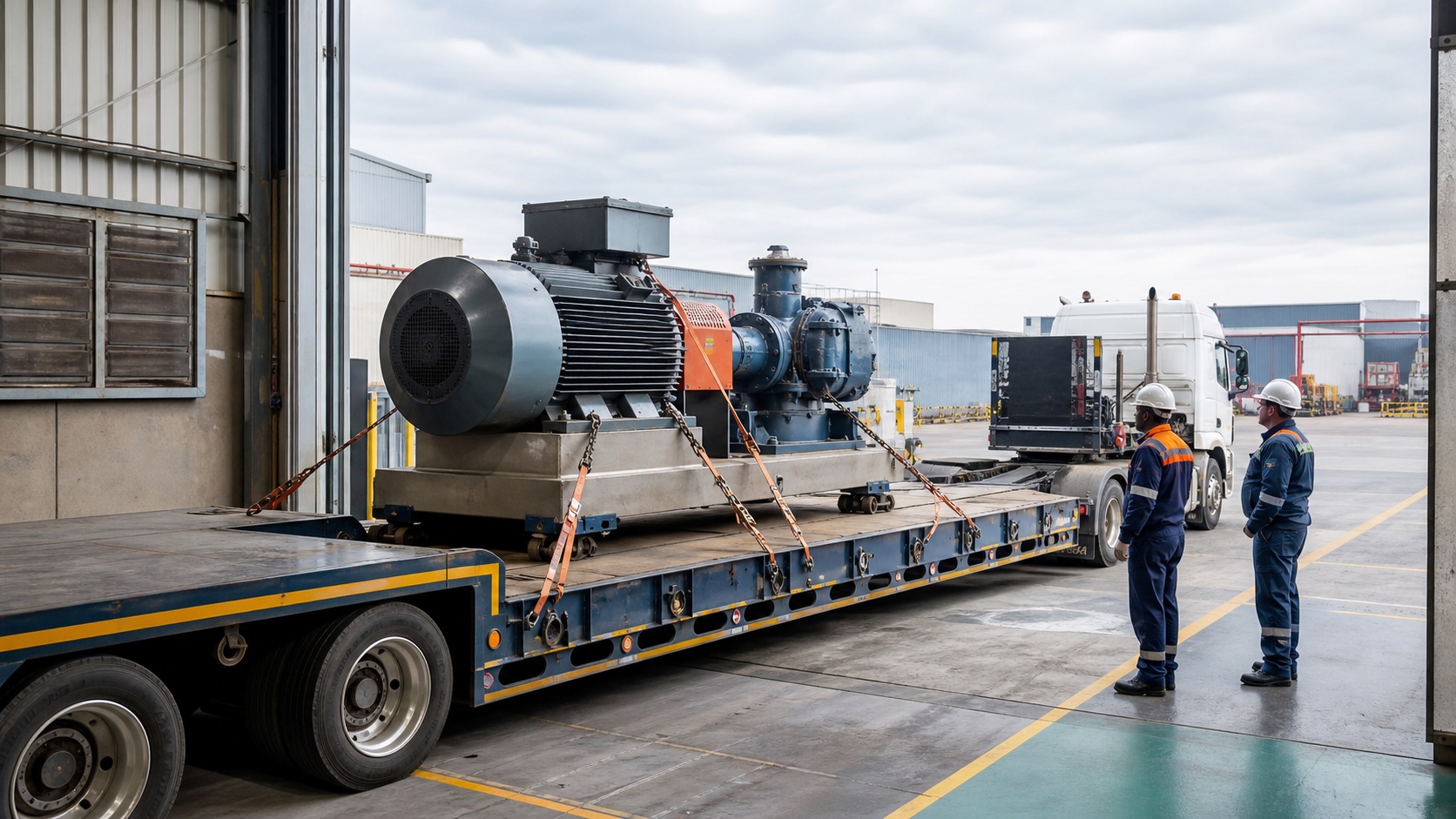
Align the trailer on a stable route, distribute axle loads, select rated tie-downs and verify permits for abnormal loads. Photograph the secured load before departure. Keep pedestrians and unrelated traffic out of the loading zone.
9. Complete the handover
Record the condition and destination. For reuse, capture delivery and component checks. For recycling, match the release note to grade records and weighbridge evidence. The project is not complete when the truck leaves; it is complete when the chain of custody closes.
Removal method comparison
| Method | Best suited to | Primary control |
|---|---|---|
| Machinery skates and jacks | Level floors and controlled short moves | Floor capacity and stable load support |
| Mobile gantry | Indoor lifts with limited crane access | Rated frame, clear travel path and competent rigging |
| Mobile crane | Heavy lifts and roof or wall extraction | Lift study, ground bearing and exclusion zone |
| Forklift | Loads within verified capacity and load centre | Correct attachment, route and visibility |
| Sectional dismantling | Oversized or complex production lines | Engineered sequence and component identification |
Watch: rig move safety principles
The video focuses on oil-field rig moves, but its planning, communication and transport lessons apply broadly. South African projects must still follow local legal duties, competent-person requirements and site rules.
Questions to ask a machinery removal contractor
- Who is the appointed competent supervisor?
- How will mass and lifting points be verified?
- Which equipment certificates and operator competencies apply?
- How will utilities, residues and stored energy be made safe?
- What is the route and contingency if the route is blocked?
- Who carries risk during lifting, transport and delivery?
- How will reusable assets be protected and scrap documented?
For broader metal streams, read D7’s guide to industrial scrap metal and its practical scrap metal dealer checklist.
Review the relevant industry and regulatory guidance before finalising scope. A industrial machinery removal South Africa project should also be checked against site-specific legal, safety and environmental duties.
Pre-move verification before the lift
Complete a final walkdown with the owner, electrical team, rigging supervisor, transport coordinator and receiving party. Confirm that every energy source is isolated, disconnected services are identified, guards and loose components are secured, lifting points are approved and the intended travel route remains clear. Record the machine condition before movement so that any transport damage can be separated from pre-existing wear.
The industrial machinery removal South Africa team should also verify floor capacity, door dimensions, overhead restrictions, trailer position, weather limits and the recovery plan if a lift or vehicle cannot proceed. Photograph certificates, serial numbers, attachment points and packed accessories. A short stop before the lift is far cheaper than an uncontrolled change while equipment is suspended.
Where machinery is destined for resale or relocation, protect documentation, control panels, specialist tooling and service records as carefully as the asset itself. Where recycling is the approved route, separate motors, copper cable, stainless components and contamination risks before loading. These industrial machinery removal South Africa checks improve safety, preserve value and create a clear handover trail.
Frequently asked questions
Can machinery be removed while a factory remains operational?
Yes, but the interface must be designed. Separate work zones, shared utilities, traffic routes, fire systems, noise and production risks must be assessed and controlled. Some moves require planned shutdown windows.
Is a forklift enough to move heavy machinery?
Only when the load, load centre, attachment, floor and route are all within verified limits. Machine shape and centre of gravity can make a seemingly adequate forklift unsafe.
What happens to obsolete machines?
They may be sold for parts, dismantled into recoverable assemblies or recycled by metal grade. A pre-removal assessment prevents valuable non-ferrous components from disappearing into mixed scrap.
industrial machinery removal South Africa: Practical Next Steps
D7 Capital Partners coordinates industrial recovery, scrap metal, demolition and waste solutions for complex South African sites. For an industrial machinery removal South Africa project that connects safe execution with responsible value recovery, contact D7 Capital Partners for a site assessment.