Monday morning usually starts the same way on a construction job. The programme is already tight, the site team wants confirmed delivery dates, finance wants clarity on exposure, and the steel quote on your desk looks cheaper than the others until you ask the next question. Can they deliver, to your site, in sequence, with the right test paperwork and the right cut lengths?
That is where new buyers often get caught. They treat steel as a line item. In practice, steel procurement is a chain of risk decisions involving grade, availability, freight, compliance, fabrication, and timing.
In South Africa, that chain is broad enough to give you options and fragmented enough to punish lazy buying. The best buyers do not shop from a simple list of suppliers of steel in south africa. They map the supply route, understand who adds value at each stage, and know when recycled feedstock can solve a problem that primary supply cannot.
Your Guide to Sourcing Steel in South Africa
A buyer usually starts with the obvious question. Who can quote fastest and lowest?
That is the wrong first question on a live project. The better question is this: who can supply the right steel, in the right form, with the least commercial and operational risk?
I have seen urgent buys go wrong for predictable reasons. A supplier promises stock but cannot confirm batch traceability. A good ex-works price turns bad after transport to a remote site. Material arrives in mill lengths when the fabrication team needed pre-cut sections. The quote was not dishonest. It was incomplete.
What a practical buying approach looks like
A sound buying process looks at the whole market, not just one layer of it. In steel, that means understanding:
- Primary production: Mill output and standard product availability.
- Secondary processing: Re-melted steel and converted products.
- Distribution: Stockholding, branch reach, and delivery reliability.
- Recycling and recovery: Scrap streams that feed back into manufacturing and fabrication.
Each part of that chain solves a different problem. Bulk plate and coil needs one strategy. Reinforcement and structural sections need another. Scrap-derived feedstock can open a third option when price pressure, sustainability targets, or primary supply constraints start affecting programme certainty.
A buyer earns value by reducing failure points, not by shaving a little off the quoted rate and inheriting bigger problems later.
Where new buyers usually improve fastest
The quickest improvement comes when buyers stop treating steel as a commodity and start treating it as a managed package.
That means checking specification first, logistics second, documentation third, and price after that. When you work that way, you often find better value beyond the listed rate. You avoid site delays, reduce waste, and make better use of alternative supply routes, including recycled ferrous material that many buying teams still ignore.
Understanding the South African Steel Supply Ecosystem
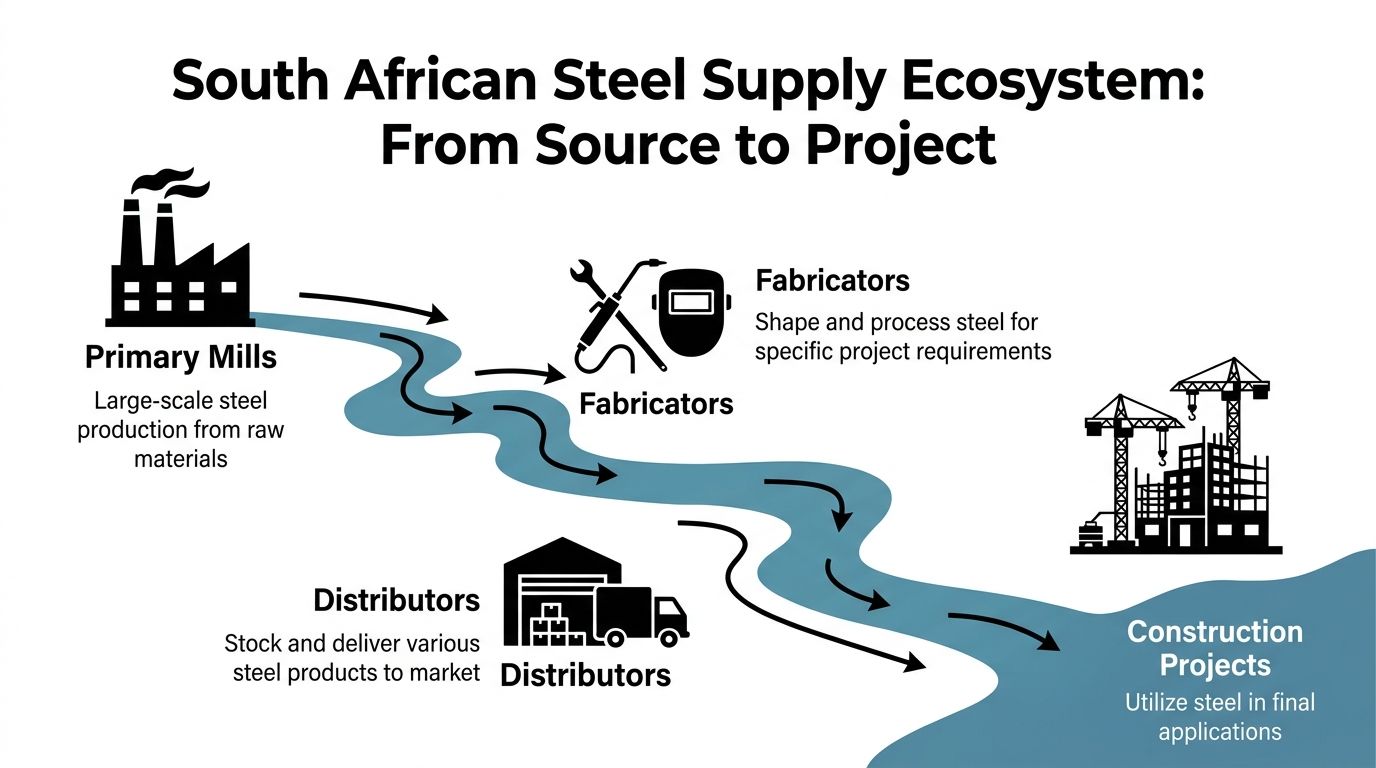
A buyer in South Africa can approve the right grade, secure a fair rate, and still lose time and money because they sourced from the wrong layer of the market. That usually happens when the supply chain is treated as one pool of interchangeable sellers. It is not. Mills, processors, stockists, recyclers, and scrap aggregators each solve a different problem, and each introduces a different risk.
The upstream end of the market
At the top of the chain sit the primary mills. They set the tone for standard product availability, lead times, and replacement cost across the rest of the market. For large-volume buyers, mill conditions matter even if you never buy direct, because stockists and processors price and plan around mill output, import parity, and production interruptions.
In practice, that affects more than supply. It affects negotiating position. When domestic mill supply tightens, distributors become less flexible on payment terms, substitutes become harder to secure, and transport planning starts carrying more weight than the base rate on the quote.
Where buying gets practical
Most construction and fabrication buyers spend more time with processors, service centres, and distributors than with mills. These businesses cut, slit, profile, bundle, warehouse, and dispatch material in forms that suit site and workshop conditions. They also absorb some of the complexity that new buyers often underestimate, such as mixed loads, partial releases, short-notice schedule changes, and traceability across multiple line items.
Location matters here. A supplier with stock in Gauteng may give you better range and faster conversion on common items, but freight to the Cape, Mpumalanga, Limpopo, or remote project areas can wipe out that advantage. A local branch with less stock can still be the better commercial decision if it reduces break-bulk handling, delivery risk, and site downtime.
Analysts at CompanyData's South Africa steel company directory show a strong concentration of steel businesses in Johannesburg, with smaller clusters in Cape Town and Durban. That pattern helps explain why so much procurement and redistribution activity sits in Gauteng, even when the final project does not.
The circular supply channel buyers should treat seriously
Recyclers and scrap processors are not a side market. They are part of the steel supply system. Ferrous scrap from demolition, plant shutdowns, fabrication offcuts, rail, mining, municipal recovery, and manufacturing returns to the production cycle as feedstock for remelting or downstream conversion.
That matters for three reasons. First, scrap-linked supply can relieve pressure when primary steel is expensive or slow to source. Second, recycled feedstock can support sustainability targets without forcing a buyer into a premium product category. Third, good recovery planning turns waste on one package into buying power on the next. Here, experienced buyers separate listed price from total value. A supplier with access to well-sorted scrap streams, recovery partners, and remelt channels can sometimes offer better continuity than a trader who only brokers mill stock. D7’s advantage sits in that overlap between supply and recovery. The business understands both the outbound steel requirement and the inbound scrap value sitting on sites, in yards, and inside decommissioned assets.
If you want a current view of how this part of the market is shifting, review recent metal supply trends shaping circular and primary sourcing.
A buyer’s ecosystem check
Before asking for pricing, identify the supplier’s actual role in the chain and match it to the job:
| Supply role | What they are good for | Main buyer caution |
|---|---|---|
| Primary mill | Large volume standard production | Less flexible on mixed small urgent orders |
| Processor | Conversion, cutting, profiling, finishing | Confirm tolerance control and actual capacity |
| Distributor | Stockholding and delivery reach | Margin layers can hide handling and freight cost |
| Scrap recycler | Recovered feedstock and circular supply | Sorting quality, chemistry control, and spec fit must be clear |
A good buying decision starts with chain position. Once you know where a supplier sits, you can judge whether the quote includes real supply strength or just another layer between you and the material.
Decoding Key Steel Grades and Specifications
The fastest way to waste money in steel buying is to order the wrong grade correctly. The dimensions can be perfect and the material can still be wrong for the job.
That happens when buyers focus on shape before performance. Structural work, coastal exposure, fabrication method, and downstream processing all change what “right steel” means.
Start with the application, not the stock code
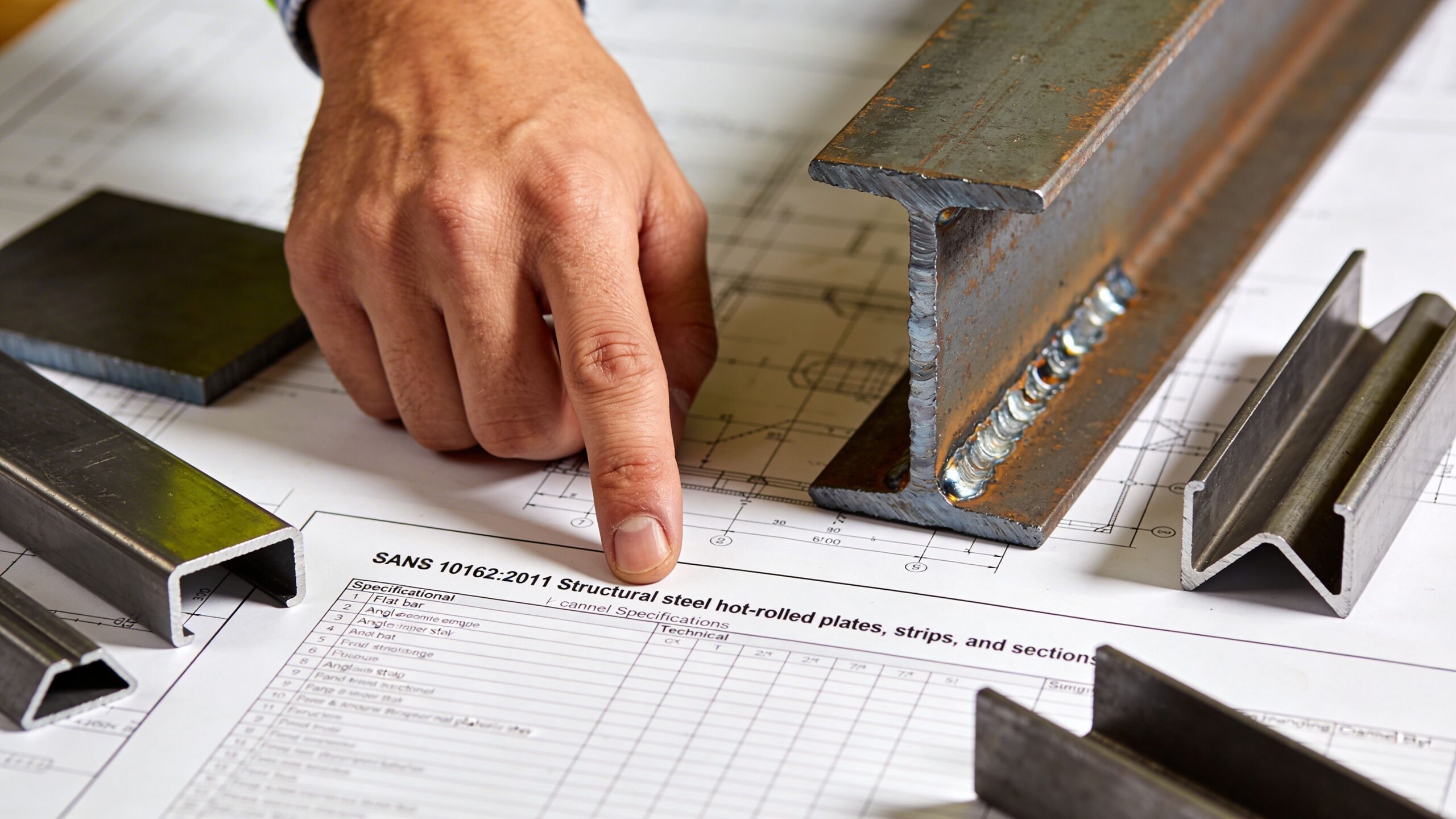
For construction buyers, the common categories usually include structural sections, plate, flat products, and reinforcing steel. The question is never just “what is available”. It is “what performance must this steel deliver once installed”.
A useful benchmark is SANS 1431 Grade 300W hot-rolled coil, which carries 300 MPa yield strength. According to InvestSA metals guidance, this specification offers benchmark corrosion resistance through micro-alloying and can reduce lifecycle costs in humid coastal projects. That same guidance notes that this performance can be achieved cost-effectively in electric arc furnace routes using high-quality scrap blends.
That matters because a specification is not separate from the supply route. In many cases, recycled input is part of how the final steel achieves the economics a buyer needs.
Scrap grades are not “leftovers”
New buyers often hear scrap terminology and assume they are dealing with waste. In reality, scrap specifications are commercial feedstocks with known categories and practical uses.
Common examples include:
- HMS 1 & 2: Heavy melting steel used as a furnace feedstock.
- PNS: Plate and structural scrap, often useful where heavier ferrous input is required.
- ISRI 201 and 204: Recognised scrap classifications that help define quality and consistency.
- Cast iron: Relevant in specific industrial recovery and remelt streams.
If you are new to this side of buying, review the range of ferrous metals that circulate through the market. It helps to understand what can go back into production and where those grades fit commercially.
How to choose without overcomplicating it
Use this simple decision path:
- Check the design requirement. Structural loading, weldability, exposure, and finish come first.
- Match the governing standard. If the engineer specifies a SANS grade, buy to that standard and insist on matching paperwork.
- Ask how the steel will be processed. Cutting, bending, galvanising, and welding all affect suitability.
- Consider recycled-origin feedstock where appropriate. It can be commercially attractive without compromising end use if the final product specification is met.
Good buying does not mean knowing every metallurgical detail. It means knowing which questions prevent an expensive mismatch.
How to Evaluate and Select the Right Steel Supplier
A quote comparison spreadsheet looks tidy. Real supply risk does not.
The right supplier is not the one who sends a neat PDF first. It is the one who can keep your programme intact after the order is placed, the drawings change, and the site asks for phased delivery instead of one drop.
Test the supplier before the supplier tests your project
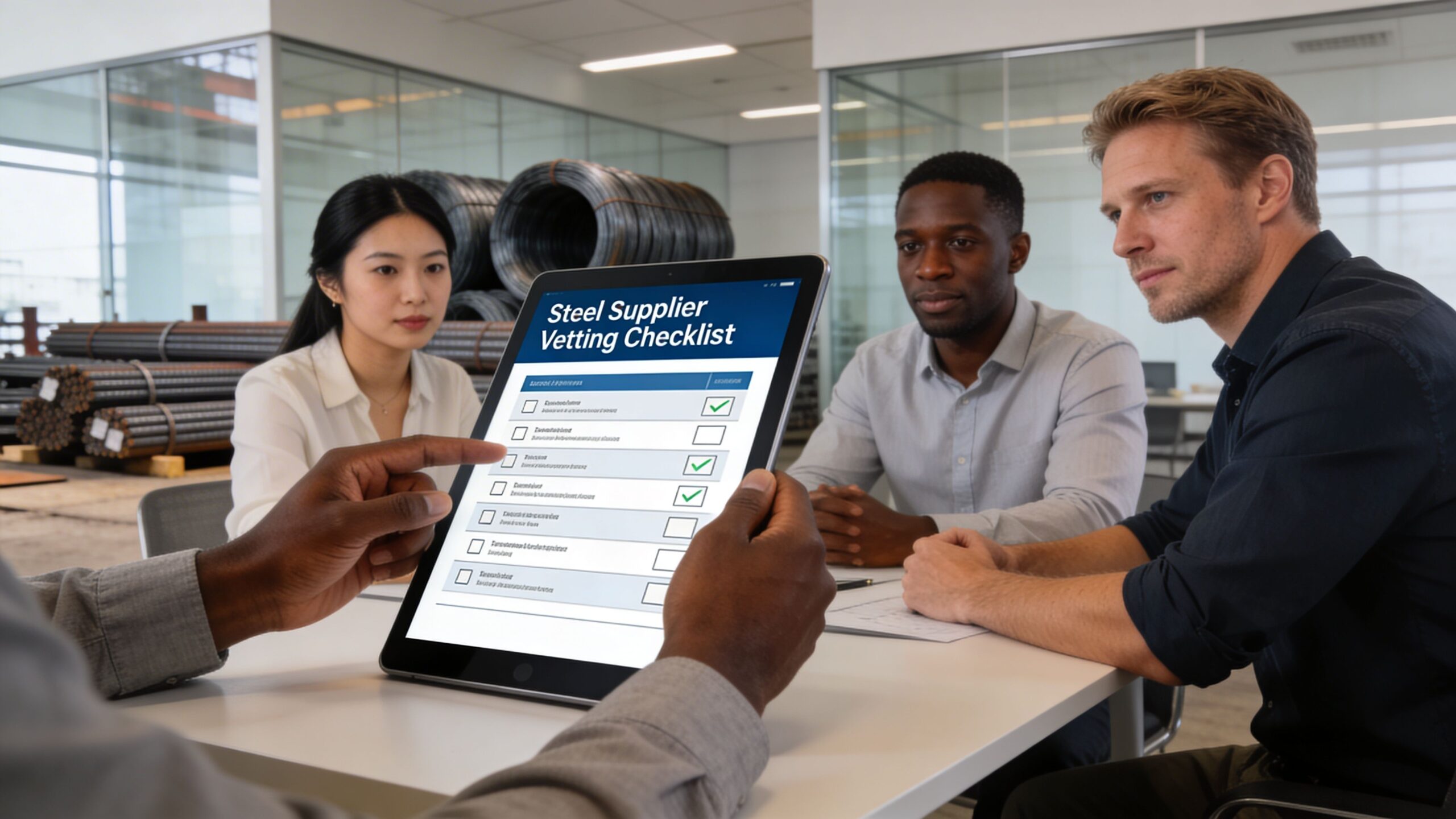
Start by asking for evidence, not assurances. A capable supplier should answer practical questions without drifting into sales talk.
I use a checklist like this.
Technical control
Ask these first:
- Can they provide material test certificates? If they hesitate, expect trouble later.
- Do they understand the specified grade? A buyer should not need to explain the standard to the seller.
- Can they handle cut, drill, bend, or profile requirements? If not, you are adding another subcontracting layer.
If your project involves recycled input, ask how they identify, sort, and separate grades. A vague answer usually means quality variation will become your problem downstream.
Capacity and stockholding
A supplier’s real strength shows up under pressure. Leading distributors use networks of over 26 branches and processing hubs exceeding 23 hectares, while tools such as AI-optimised inventory can reduce stockouts by 25%, according to NJR Steel operational data.
That does not mean bigger is always better. It means stock visibility and branch reach affect programme reliability.
When you evaluate capacity, ask:
- What is in stock now, not “normally”?
- What can be sourced quickly if demand spikes?
- Can they split deliveries to match erection sequence?
Look beyond the ex-works rate
A low listed rate often hides one of four costs.
| Hidden cost area | What to ask |
|---|---|
| Freight | Is delivery included, and to which exact site? |
| Processing | Are cutting and handling extra? |
| Delays | What happens if stock is short after order placement? |
| Compliance | Are certificates, weighbridge records, and trace documents included? |
A supplier who gives a slightly higher all-in number can still be the cheaper decision if they remove handling, rework, and transport uncertainty.
This video gives a useful visual reference point on what disciplined supplier vetting should look like in practice.
Logistics decides whether the steel is useful
Steel in a yard is not steel on site. You need to know who arranges transport, who carries offloading risk, and how deliveries are sequenced.
A practical buyer asks for:
- Delivery windows: Not just a day. A realistic time slot.
- Vehicle suitability: Especially for constrained urban sites or plant environments.
- Pack logic: Bundled by mark, phase, or area where possible.
The best suppliers help the site team receive steel efficiently. The weak ones just dispatch tonnage.
Compliance and commercial fit
For public work, municipal work, or large corporate procurement, commercial compliance matters almost as much as material quality. Check BEE status, safety documentation, and whether the supplier can support the paperwork chain your own client will demand.
Then make one final call. If this supplier goes wrong, how difficult will it be to recover? That question usually reveals more than the quote comparison ever will.
Navigating Pricing Logistics and Regulatory Hurdles
A buyer gets three quotes for the same tonnage. The cheapest one wins on paper, then loses money on freight, offloading delays, power-related production slippage, and paperwork gaps that stall payment. That happens often in South Africa.
The listed rate per ton is only one part of the buying decision. What matters is the landed cost, the delivery risk, and whether the supplier can keep material moving when local conditions tighten. Imported offers, exchange rate pressure, electricity interruptions, inland-to-coastal freight, and stock availability all feed into the number you see on the quote.
Ask suppliers to break pricing into clear lines:
- Material cost
- Cutting, bending, or other processing
- Transport
- Offloading or special vehicle charges
- Any surcharge tied to small runs, split loads, or urgent delivery
That breakdown shows where negotiation is real and where it is not. It also helps you compare a mill-linked supplier, a stockist, and a scrap-integrated supplier on equal terms. Buyers who understand recycled input streams often get better value because they are not limited to one supply route. If your team is assessing that option, this guide to scrap metal recycling in South Africa gives useful context on how the recovery side connects to steel supply.
Freight usually decides whether a quote is competitive.
South Africa’s steel supply still concentrates around major industrial hubs, especially inland. Projects do not. A project in the Western Cape, Northern Cape, or a remote mining area can turn a decent ex-works rate into an expensive delivered cost very quickly. Road transport carries much of that burden, and road risk is not only about distance. It includes vehicle availability, route restrictions, site access, waiting time, and the chance of damage if loads are handled badly.
The practical trade-offs are straightforward:
- Inland suppliers may hold better stock depth, but delivery to coastal or remote sites can erase that advantage.
- Regional stockholders may quote higher rates, but shorter lead times and lower freight can make them the better buy.
- Full loads reduce transport cost per ton, but they can create congestion, storage problems, and theft exposure on site.
- Split deliveries improve installation flow, but they raise handling and transport costs.
I tell new buyers to price steel the way site teams use it, not the way traders advertise it. If the job needs phased delivery, protected storage, or non-standard pack sequencing, put that into the RFQ from the start.
Regulation adds another layer. Even if you are not importing, local procurement rules, waste handling requirements, transport documentation, and traceability standards still affect how safely you can buy. That matters even more when recycled or recovered material forms part of the supply chain. The issue is not whether recycled input is acceptable. The issue is whether the supplier can prove origin, processing route, and material suitability for the intended use.
A capable supplier can show that paper trail without hesitation. A weak one gives vague answers, incomplete records, or substitutes after the order is placed. In my experience, that is where commercial disputes start.
Good buying discipline here is simple:
- Confirm delivered pricing, not only ex-yard pricing
- Match load plans to actual site receiving conditions
- Check whether long lead items depend on unstable input or production conditions
- Verify compliance records for transport, processing, and traceability
- Treat scrap-derived steel as a sourcing option only when the documentation and processing controls are clear
Price matters. Recovery matters more. If a shipment arrives late, incomplete, or unsupported by the right documents, the cheapest quote becomes the most expensive mistake on the job.
The Strategic Advantage of Scrap-Derived Steel with D7
Most steel buying guides stay in the comfortable part of the market. Mills, stockists, distributors, and standard catalogues. That is useful, but incomplete.
When supply tightens or project margins get thin, buyers need another lever. Scrap-derived steel and recovered ferrous input can be that lever if the material is properly processed and aligned to the intended use.
Why this route matters commercially
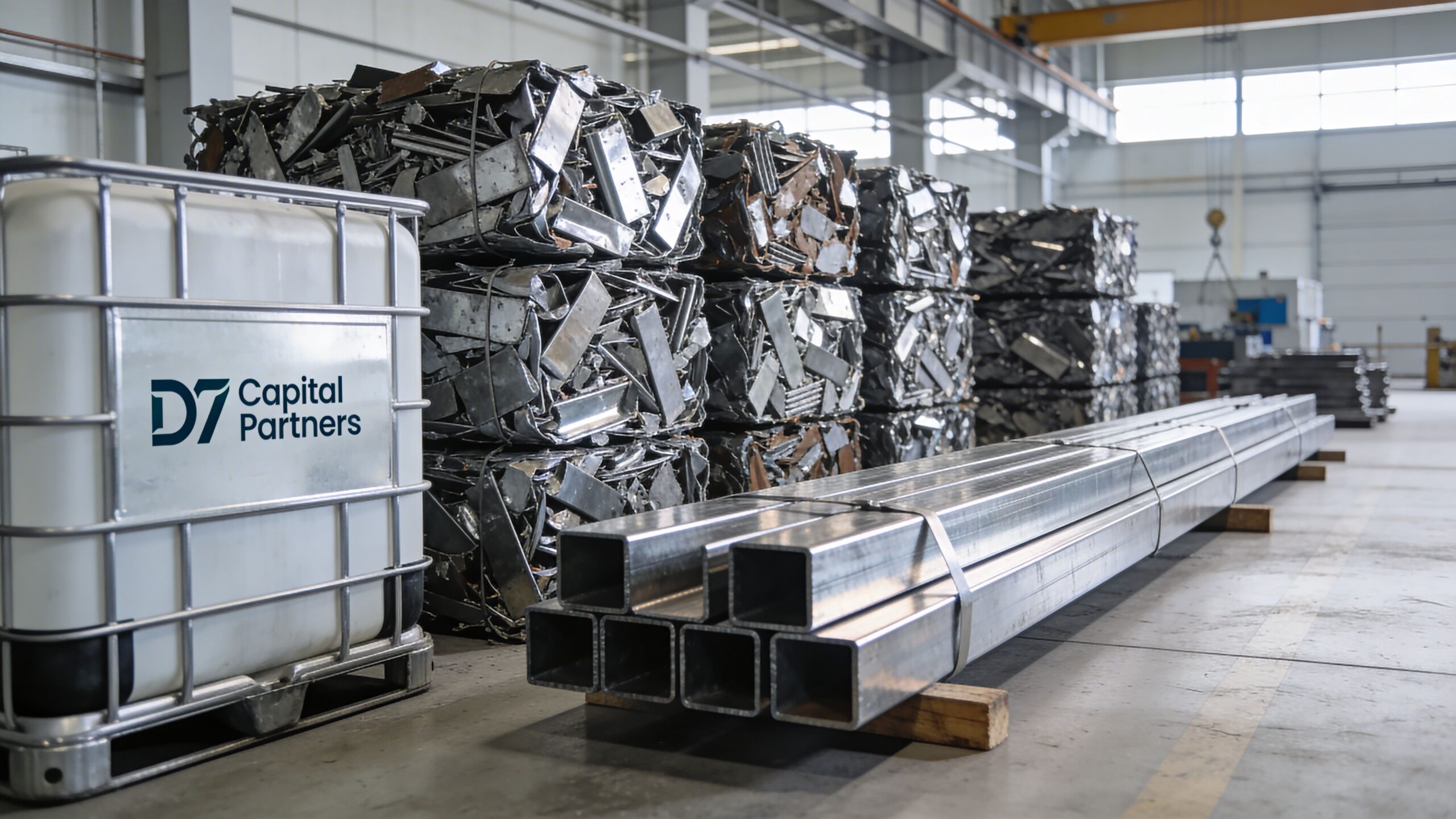
An often-missed angle in the market is the integration of scrap sources into mainstream supply chains. According to this review of steel manufacturers and suppliers in South Africa, scrap processors such as D7 Capital Partners fill a critical gap by recovering grades like HMS 1&2 and cast iron, potentially reducing input costs by 20% to 30% and buffering buyers against primary production constraints.
That is not just a sustainability story. It is a buying strategy.
A buyer can use recovered material streams to:
- Reduce cost pressure where recycled input suits the manufacturing route.
- Improve resilience when primary supply becomes uncertain.
- Support circular procurement goals without disconnecting from industrial quality needs.
What works and what does not
This route works when the buyer understands the difference between scrap as unprocessed waste and scrap as graded feedstock.
It does not work when teams buy vaguely. “Mixed scrap” is not a strategy. Defined grades, sorting quality, contamination control, and intended end use matter. So does timing. Recovered material can be excellent for planned industrial consumption and poor for buyers who need instant standardised finished product without processing.
For buyers who want a clearer operational view, this guide to scrap metal recycling is worth reviewing because it frames recovery as part of a managed supply chain rather than an afterthought.
Scrap-derived supply is strongest when procurement, fabrication, and recovery teams speak the same language about grade, cleanliness, and final use.
Where it fits best
This approach is especially useful for industrial manufacturers, fabricators, demolition contractors, and projects where sustainability reporting has become part of the tender environment.
It gives buyers another option when traditional supply alone does not deliver the best commercial result.
Your Partner in Steel Supply and Recovery
Smart steel buying in South Africa is not about finding the cheapest line on a spreadsheet. It is about building a supply plan that holds up under pressure.
That means understanding where the material comes from, how it moves, how it is certified, and where recycled metal can strengthen the chain. Buyers who do that well usually control cost better because they also control delay, waste, and avoidable variation.
The market gives you more than one route to value. Primary supply remains important. So do stockholding, processing, and logistics. But the circular side of the market deserves a permanent place in your buying strategy, especially when programme certainty and recovery value matter.
If you need support across that full cycle, from metal recovery to industrial-grade supply and compliant project services, review the full range of D7 Capital Partners services.
D7 Capital Partners (Pty) Ltd helps South African buyers manage steel and metal supply more strategically, with capabilities spanning scrap metal recycling, structural demolition, waste management, and the supply of ferrous and non-ferrous grades for industrial use. If your project needs a practical partner that understands recovery value, compliance, logistics, and dependable material flow, contact D7 Capital Partners (Pty) Ltd.