
Scrap metal theft prevention South Africa controls must protect material before it becomes an anonymous pile. This scrap metal theft prevention South Africa guide provides a practical project-control baseline. Copper cable, brass valves, stainless components and redundant machinery can disappear during maintenance, shutdowns and demolition when ownership, storage and release rules are unclear.
The cost is larger than the metal value. Theft can interrupt production and services, damage live infrastructure, create safety hazards and expose a company to investigation or reputational harm. These 12 controls help industrial sites, contractors, municipalities and recyclers build a defensible chain of custody.


Why scrap metal needs specific controls
Metal can move quickly from useful asset to “waste,” and that status change is where gaps develop. A pump may be written off by maintenance but still appear on finance’s register. Cable may be removed by a contractor before security knows it is authorised. Mixed scrap may leave without anyone recording the valuable components inside it.
South African research has highlighted the serious economic impact of stolen metal, particularly copper cable. The TIPS work on measures to prevent scrap-metal theft explains why legitimate recycling and infrastructure protection must be addressed together.
12 scrap metal theft prevention South Africa controls
1. Define when an asset becomes scrap
Require an authorised write-off or release before equipment or material enters the scrap stream. State who can make the decision and who verifies it.
2. Maintain a scrap register
Record material description, source area, owner, date, estimated quantity, photograph and approved destination. Link major items to the asset register or project work order.
3. Separate high-value metals
Store copper cable, brass, stainless, aluminium and specialist alloys apart from general steel. Separation improves both security and grade-based settlement.
4. Use secure covered storage
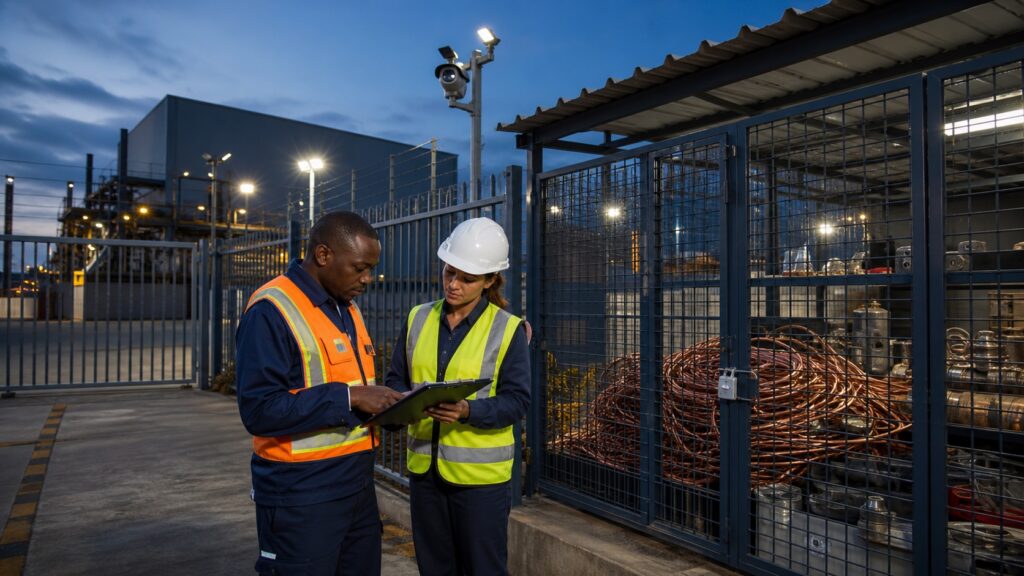
Place high-value material in a locked cage or container within the secure perimeter. Limit and log key or access-card holders. A loose pile behind a workshop is not controlled storage.
5. Improve lighting and surveillance
Cover approaches, storage, loading and gate handover points. Cameras should support response and investigation, not simply record a loss. Test visibility, retention and alert procedures.
6. Control tools and removal equipment
Secure cutting tools, lifting equipment and site vehicles after hours. Theft becomes easier when the tools needed to remove metal are already available nearby.
7. Restrict collection information
Share collection timing, quantity and value only with people who need it. Verify changes through known contacts rather than numbers supplied in an unexpected message.
8. Approve every load
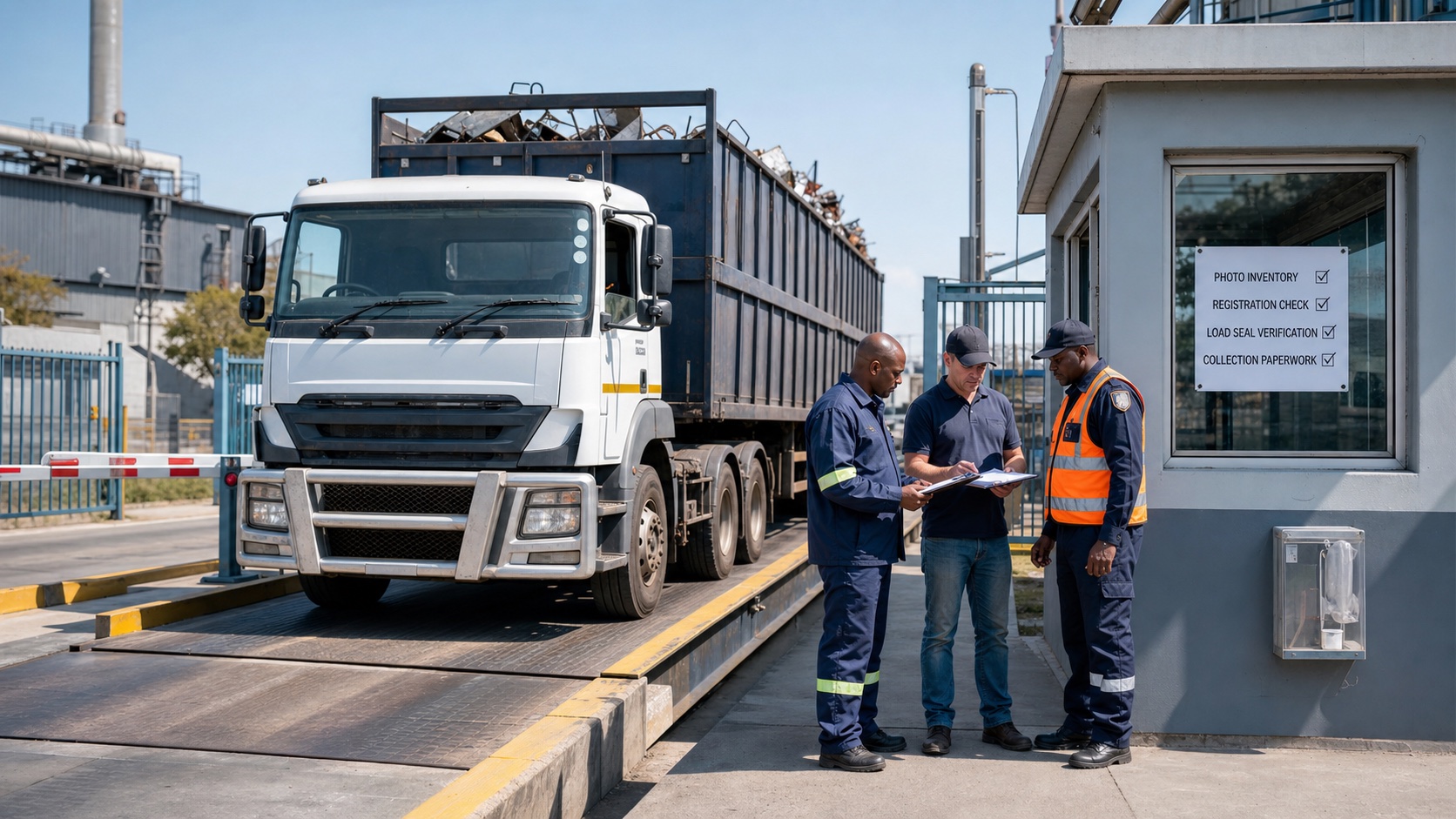
Use a numbered release note with named signatories. Photograph the load, vehicle and seal where appropriate. Security should compare the physical load with the approval before the gate opens.
9. Verify the collector
Confirm company, driver, vehicle registration and collection reference. Avoid last-minute substitutions without documented approval. Responsible recyclers also verify the legitimacy and origin of material.
10. Reconcile weights and payments
Match site estimates, weighbridge tickets, grade statements and settlement. Investigate unexplained differences rather than treating them as normal loss.
11. Collect frequently
Shorter storage time reduces exposure. Set collection triggers by both volume and value, especially during shutdowns when large amounts of cable and non-ferrous metal are generated quickly.
12. Audit the complete chain
Walk from generation point to storage, loading, gate, weighbridge and settlement. D7’s industrial scrap site audit helps reveal where material and documentation can separate.
Minimum evidence for each scrap load
| Stage | Evidence | Control owner |
|---|---|---|
| Asset release | Approved register entry and photographs | Asset owner |
| Storage | Access log and periodic quantity check | Facilities or security |
| Collection | Numbered release, vehicle and driver verification | Site representative |
| Weighing | Weighbridge ticket and grade statement | Recycler and commercial team |
| Settlement | Matched statement and authorised bank route | Finance or procurement |
Watch: remote monitoring for scrap and recycling sites

Red flags that require a stop
- Material origin cannot be explained or documented.
- Utility, municipal or infrastructure cable lacks formal authority.
- A collector or vehicle differs from the approved booking.
- A load contains hidden high-value items not listed on the release.
- Someone requests cash, an informal payment route or altered bank details.
- Weights, photographs and settlement do not reconcile.
Build response times, reporting and evidence into the scrap metal collection SLA. Use suitable scrap containers as part of the security design, not only for capacity.
Review the relevant industry and regulatory guidance before finalising scope. A scrap metal theft prevention South Africa project should also be checked against site-specific legal, safety and environmental duties.
Daily reconciliation and exception control
Make prevention part of the daily operating rhythm. At shift start, confirm who may enter the recovery area, which containers are open, which collections are expected and which release numbers are valid. At shift end, compare photographs, container condition, access logs and observed stock movement. Escalate broken seals, unexplained vehicle changes or loads that do not match the authorised material description.
The scrap metal theft prevention South Africa process should reconcile the asset register, release note, vehicle record, weighbridge ticket and payment statement. Use one exception log with named owners and closure dates. Do not allow a commercial deadline to override an unresolved ownership or identity concern.
Effective scrap metal theft prevention South Africa controls also protect legitimate contractors from false allegations. Time-stamped records, controlled keys, approved drivers and dual sign-off create a defensible chain of custody. Review trends monthly so repeated weak points lead to changes in storage, staffing, lighting, surveillance or collection windows.
Frequently asked questions
Is CCTV enough to prevent scrap theft?
No. CCTV works best with secure storage, lighting, controlled access, active monitoring, documented release and a tested response procedure.
Who should approve scrap leaving site?
A named authorised representative independent enough to verify the request. High-value or unusual loads may require dual approval.
How often should scrap be collected?
Balance logistics with exposure. High-value cable may need frequent small collections, while lower-value ferrous material can use a volume trigger. Document the rule.
What should happen if provenance is uncertain?
Stop the transaction, isolate the material and escalate through the site’s security and legal process. Do not accept a verbal explanation as a substitute for authority.
scrap metal theft prevention South Africa: Practical Next Steps
Scrap metal theft prevention South Africa businesses can defend depends on simple controls applied every time. D7 Capital Partners supports documented industrial collections, metal recovery, demolition and waste services. Contact D7 Capital Partners to review storage, collection and reporting for your site.
- Why scrap metal needs specific controls
- 12 scrap metal theft prevention South Africa controls
- Minimum evidence for each scrap load
- Watch: remote monitoring for scrap and recycling sites
- Red flags that require a stop
- Daily reconciliation and exception control
- Frequently asked questions
- scrap metal theft prevention South Africa: Practical Next Steps