If you're looking at an old car that’s seen better days, you might be wondering what to do with it. Turning that end-of-life vehicle into cash in South Africa is more than just calling up the first scrap yard you find. It’s a process, but if you know the steps, you can get a fair price while making sure you’re covered legally and environmentally.
It really boils down to three things: figuring out what your car is worth, getting the paperwork sorted (like deregistration), and then having a reputable dealer collect it. Let’s break it down.
Your Guide to Scrapping a Car in South Africa
Getting rid of an old car isn’t just a simple cash-for-car deal; it’s a regulated process. Think of it as the final, responsible step in a vehicle's life, feeding valuable materials back into the circular economy. This guide will walk you through exactly how it works in South Africa, so you can handle it with confidence.
To keep it simple, the whole journey can be mapped out in three main phases.
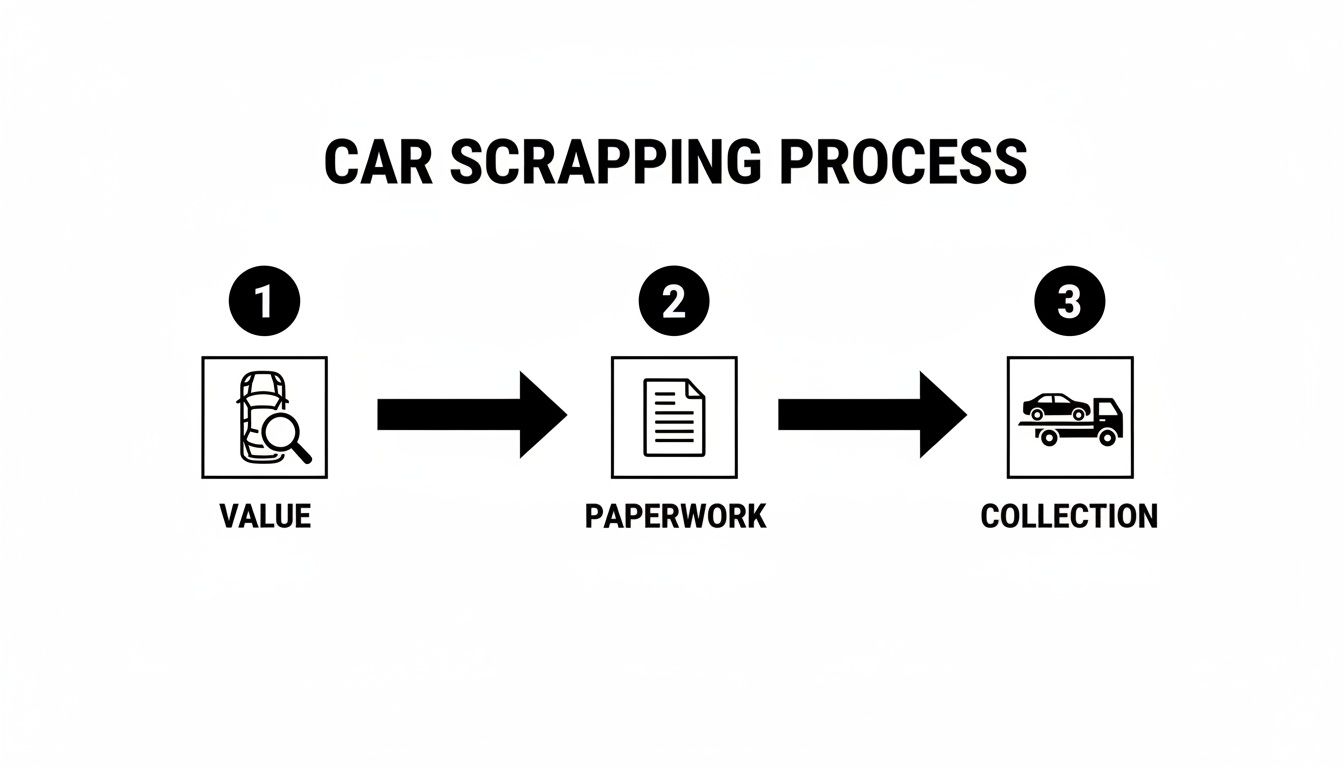
This process isn't just about the collection day. A successful, profitable scrap depends just as much on a realistic valuation and having all your legal documents in order. Knowing what's coming helps you prepare properly for each stage.
To give you a quick snapshot, here’s a look at the key stages involved in scrapping your car. This table outlines the main actions and what you're trying to achieve at each point.
Table: Key Stages of Scrapping Your Vehicle
| Stage | Key Action | Primary Goal |
|---|---|---|
| Preparation | Assess the vehicle's condition, gather all paperwork (NatIS certificate, ID), and remove personal items. | Establish a realistic value and ensure you have legal ownership documentation ready. |
| Deregistration & De-pollution | Officially deregister the vehicle at the traffic department and ensure all hazardous fluids are safely removed. | Comply with South African road traffic laws and prevent environmental contamination. |
| Collection & Payment | Arrange for collection with a certified scrap dealer and receive your payment and a disposal certificate. | Finalise the transaction, get paid fairly, and obtain proof of legal disposal. |
Each stage is crucial for ensuring the process is smooth, compliant, and profitable. Following these steps helps you avoid any last-minute surprises.
The Growing Importance of Vehicle Recycling
The choice to scrap a car is becoming more common, driven by both tight budgets and a greater awareness of our environmental impact. Doing it the right way is critical. It stops hazardous materials like engine oil and battery acid from poisoning soil and water, and it reduces the demand for mining new raw materials.
The benefits are clear:
- Financial Return: You get paid for the scrap weight and any salvageable parts.
- Environmental Protection: It guarantees that oils, battery acid, and other pollutants are handled safely.
- Resource Conservation: Valuable metals like steel, aluminium, and copper get a new life in other products.
This isn't just a local trend. Globally, the vehicle scrapping market was valued at US$ 75.05 billion in 2023 and is expected to climb to US$ 182.00 billion by 2033, pushed by stricter emissions laws and recycling initiatives.
Ultimately, knowing how to scrap a car correctly means you get a fair price, stay on the right side of South African law, and do your part for the environment. If you want to learn more about the materials themselves, have a look at our complete guide to scrap metal recycling.
Now, let's get into the nitty-gritty of each step.
Finding Your Vehicle's True Scrap Value
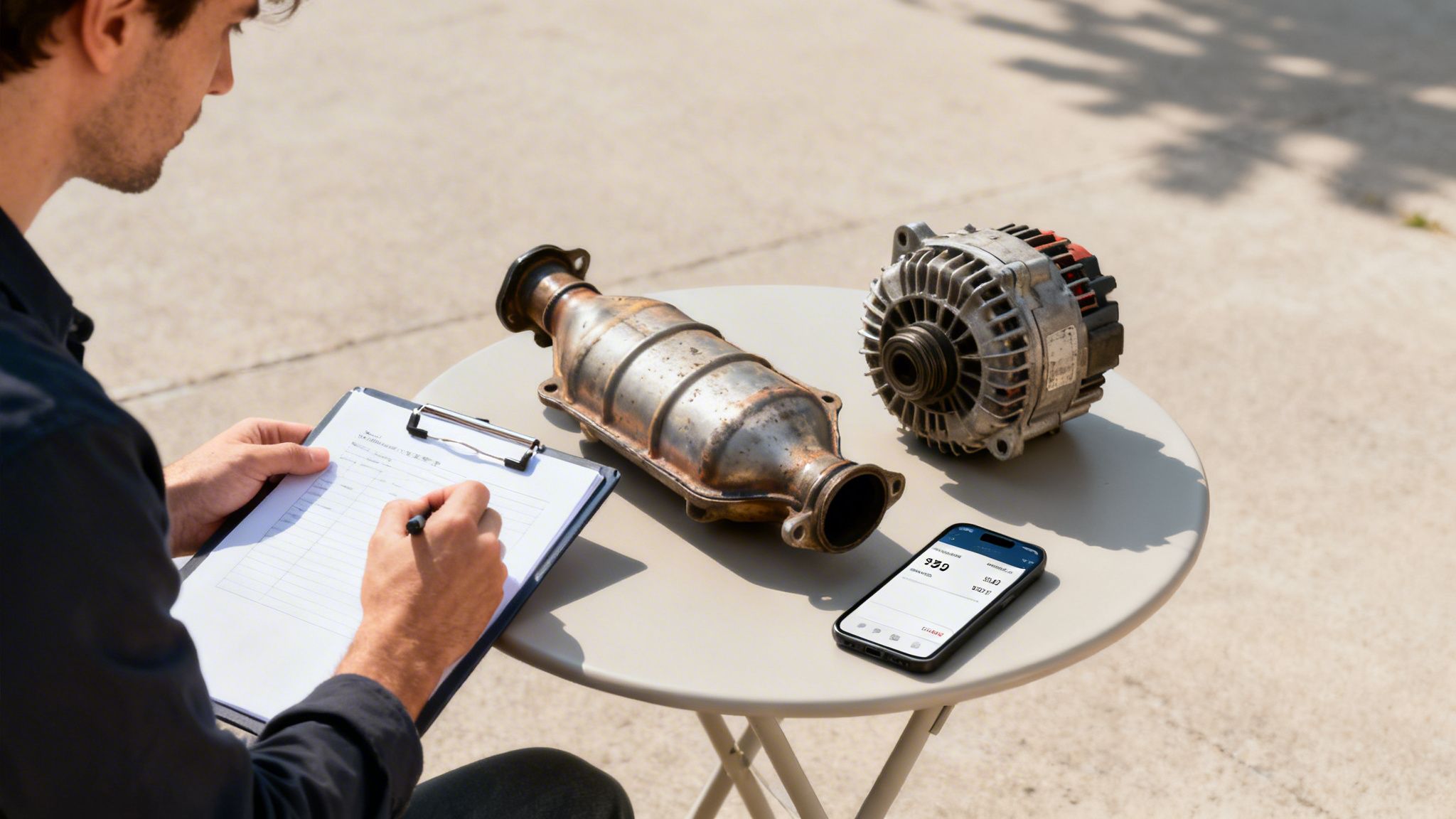
Before you can confidently negotiate with a scrap dealer, you need a realistic idea of what your old vehicle is actually worth. This isn’t about guesswork. While a car’s base scrap value comes from its weight in metal, several other factors can seriously bump up the final price you get.
Knowing these details puts you in a much stronger position. It helps you understand the dealer’s offer and ensures you’re getting a fair price based on a proper valuation, not just what the car weighs on the scale.
Looking Beyond the Weighbridge
The biggest single factor influencing your car’s scrap value is its kerb weight—that’s the total weight of the vehicle without any passengers or luggage. Scrap metal is traded by the tonne, and prices can change daily based on what’s happening in the global market. A heavier vehicle, like a bakkie or a big SUV, naturally has more metal and a higher base value than a small hatchback.
But a professional scrap yard sees much more than just a lump of steel. They see a collection of individual components and materials, each with its own potential value. This is why a "complete" car will always be worth more than one that’s been stripped for parts.
The recycler can profit from two different streams: reselling functional parts to mechanics and workshops, and recycling the raw metals from the chassis and body.
The High-Value Parts Checklist
Certain components are always in demand and can dramatically boost your car’s scrap value. Before you even think about picking up the phone, it’s worth checking if these key parts are still on your vehicle and in one piece.
- Catalytic Converter: This is often the single most valuable part of a scrap car. It’s packed with precious metals like platinum, palladium, and rhodium, which are highly sought after for recycling. The value can vary a lot depending on the car’s make and model, but just having it there is a major price driver.
- Engine and Transmission: If these big mechanical parts are still in a repairable state, they hold significant value. Mechanics and engine rebuilders are always looking for used engines and gearboxes as a cost-effective alternative to brand-new units.
- Alternator and Starter Motor: These are common failure points on older cars, which means there’s a steady market for working secondhand units.
- Body Panels and Bumpers: If your car has straight, undamaged doors, fenders, or bumpers, these can be salvaged and sold to panel beaters for collision repairs. A straight panel is always worth more than a dented one.
A key takeaway is to resist the temptation to remove parts yourself before selling. While you might think selling a battery or stereo separately is a good idea, a complete car is almost always more attractive to a scrap buyer and will fetch a higher overall price.
Assessing Your Vehicle's Condition
To get an accurate quote, you'll need to give the scrap dealer a clear picture of what you have. Grab a notepad, walk around your vehicle, and jot down the following details. This information will be vital when you ask for a valuation.
Vehicle Identification:
- Make (e.g., Toyota, Ford, Volkswagen)
- Model (e.g., Hilux, Fiesta, Polo)
- Year of Manufacture
- Engine Size and Type (e.g., 1.6L petrol)
Condition Assessment:
- Is the car complete? Make a note of any missing parts like wheels, the battery, or interior bits.
- Is there any major damage? Document things like a smashed windscreen, serious body rust, or flood damage.
- Is the car a runner? A non-runner is perfectly fine for scrapping, but its status helps the buyer figure out which parts might still be salvageable.
Having this information ready shows that you've done your homework. It allows a scrap yard to give you a more precise and reliable initial quote, paving the way for a smooth and transparent deal. Ultimately, a car’s scrap value is a combination of its raw metal and the usefulness of its parts. To learn more about what metals are most valued, check out our guide on the 10 common types of scrap metal you can recycle for cash.
Handling the Legal Paperwork for Scrapping a Car
Getting a good price for your old car feels great, but the real win comes from handling the paperwork correctly. This is the part where you protect yourself from future headaches. In South Africa, properly deregistering a vehicle you're scrapping isn't a friendly suggestion—it's a legal must. Get it wrong, and you could be chasing down demands for licence fees or even traffic fines for a car you don't even own anymore.
Think of this as the final, non-negotiable step in your car's life. Getting the paperwork sorted ensures a clean break and officially ends your responsibility for the vehicle. Let’s walk through what you need to do to get it right and avoid any loose ends.
Your Essential Document Checklist
Before you even think about heading to the traffic department, you need to get your documents in order. Having everything ready beforehand saves you from the frustration of making multiple trips. It’s a simple step, but it’s what makes the whole process run smoothly.
Here’s what you’ll need to have on hand:
- Your South African ID Book or Card: You must present your original, valid ID. It’s always a good idea to have a certified copy ready, as it's often requested.
- The Vehicle's Original Registration Certificate (NatIS Document): Everyone knows this as the "logbook." It proves you are the registered owner. If you’ve misplaced it, you’ll have to apply for a duplicate, which will unfortunately slow things down.
- Proof of Address: A recent utility bill or bank statement (not older than three months) is needed to verify where you live.
Without these three things, the registering authority simply can’t help you. Your attempt to legally scrap the car will hit a dead end right there.
A crucial point to remember: the responsibility for deregistering the vehicle is yours and yours alone. You can't rely on the scrap dealer to do this for you. That final proof of deregistration is your personal safeguard.
The Deregistration Process Explained
The heart of the legal process is telling the authorities that your car is being permanently taken off the road. This is done by submitting a specific form at your local traffic department or registering authority. The one you’re looking for is the 'Application for De-registration of Vehicle' (Form ADV).
This form is your official statement that the car is being scrapped. You'll need to fill it out accurately with your details and the vehicle’s information. The form requires you to state the reason for deregistration—in this case, you’ll select that the vehicle is to be "permanently demolished."
Once you've filled it out, you submit the form along with your ID and the original NatIS document. The clerk will process everything and give you a confirmation slip. This piece of paper is gold—hold onto it. It’s your final, undeniable proof that the car is no longer tied to your name.
Properly managing end-of-life vehicles is becoming a bigger deal every year. With passenger vehicle sales hitting 179,863 units in just the first four months of 2025, the number of cars on our roads keeps climbing. As you can learn more about these recent automotive sales trends, you'll see why a robust deregistration system is so vital for managing the millions of cars that will eventually be scrapped.
Why This Paperwork Matters So Much
It might feel like just another administrative chore, but completing this process is your shield against some serious potential problems. If the system still sees you as the owner, you're exposed.
Just consider these all-too-common scenarios:
- Future Traffic Fines: What if the car's number plates are cloned or used on another vehicle that racks up fines? Those notices will come straight to you.
- Licensing Fees: You’ll keep getting annual licence renewal reminders and start accumulating penalties for a car that’s now a metal cube.
- Liability Issues: In the unlikely event the vehicle somehow ends up back on the road and is involved in an accident, you could find yourself tangled in a legal nightmare.
Taking a little bit of time to deregister the vehicle yourself and getting that confirmation slip creates a clean, legally binding end to your ownership. It's the final act that separates you from that car forever and gives you total peace of mind.
Preparing Your Car for Collection
With the paperwork sorted, it’s time to get the vehicle itself ready for its final journey. This isn’t just about a quick clean-up; proper preparation is a big deal for safety, environmental reasons, and ensuring a smooth, professional handover with the scrap yard.
Think of it this way: a well-prepped car shows you know the ropes and respect the safety of the collection crew. It helps the whole process, from winching it onto the truck to its initial processing at a professional yard, run without a hitch.
Clear Out All Personal Items and Rubbish
First things first, do a thorough clean-out. You’d be amazed at what a car can swallow over the years, so it pays to check every nook and cranny. Look under the seats, in the glovebox and boot, and rifle through all the door pockets.
You’re on the hunt for two things:
- Personal Belongings: This is everything from old documents and CDs to sunglasses and that jacket you thought you’d lost. Once the car is gone, so are these items—for good.
- Non-Metal Rubbish: Get rid of any general waste like food wrappers, plastic bottles, and old papers. A scrap yard wants the metal, not your household trash, and a clean car is much quicker and easier to process.
This simple step protects your personal data from ending up in the wrong hands and stops you from accidentally losing something sentimental. A clean interior also makes the car safer for a collection team to handle.
The Depollution Process: What You Can and Cannot Do
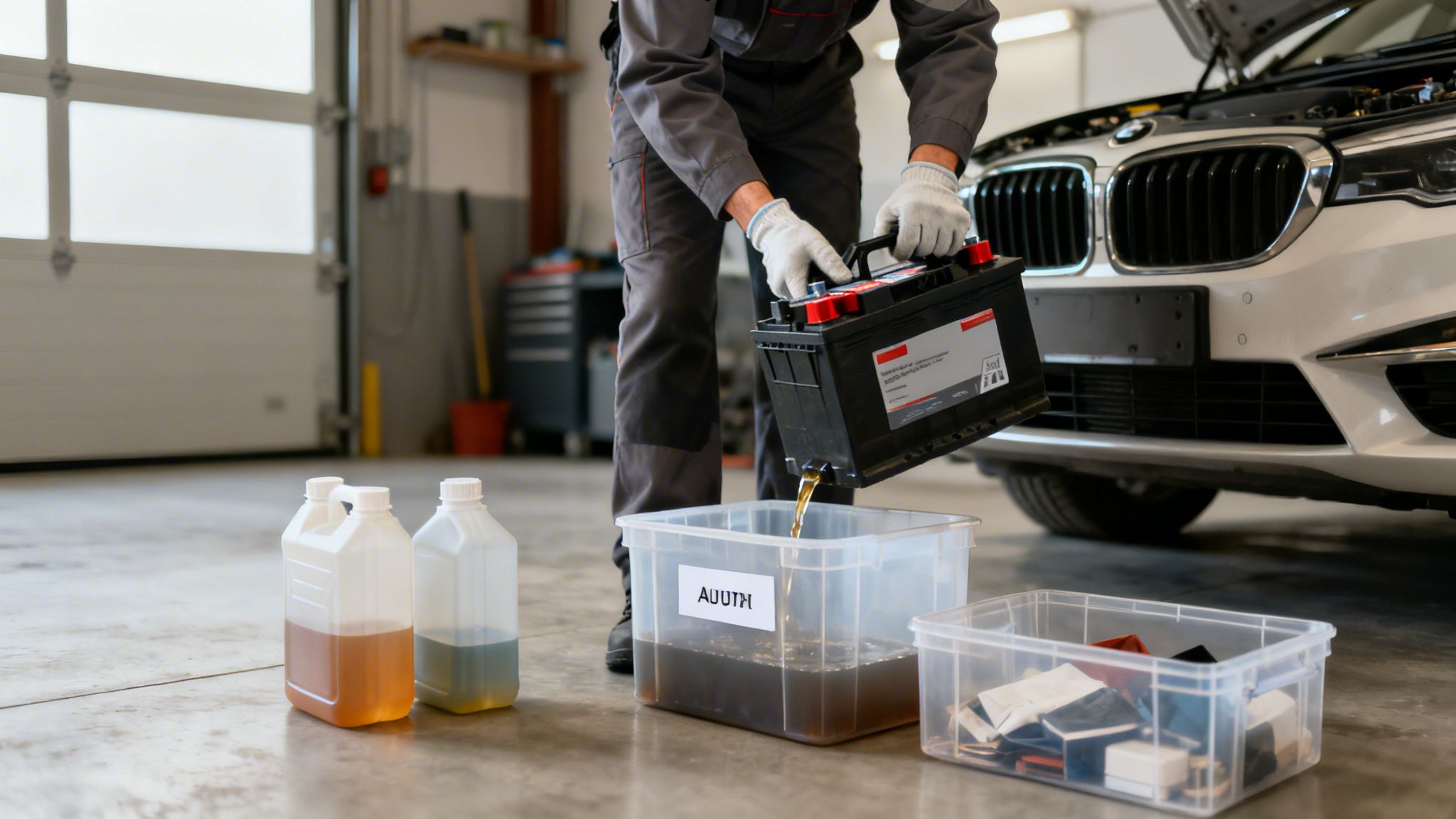
One of the most vital steps before a car gets crushed is depollution. This is where all the hazardous fluids and materials are safely removed to stop them from poisoning the environment. While the final, comprehensive job is handled by professional scrap yards, there are a few things you might consider.
Carefully draining certain fluids can sometimes make the vehicle cleaner and easier to transport, but you absolutely have to know what you’re doing.
Crucial Safety Warning: Automotive fluids are toxic and incredibly harmful to the environment. Never, ever drain them onto the ground or down a storm drain. You must use proper containers and take them to a designated hazardous waste facility.
If you have the right tools and expertise, you could drain fluids like engine oil and coolant. Use a proper drain pan and store them in sealed, clearly labelled containers. Again, these must be disposed of at a registered facility.
Dealing with Hazardous Components
Some parts of a vehicle are just plain dangerous and need specialised handling. Honestly, these are best left to the professionals at the scrap yard who have the right gear and training.
- The Battery: Car batteries are full of corrosive sulphuric acid and lead. If you’re comfortable, you can disconnect and remove it yourself. Always wear gloves and safety glasses, and make sure to disconnect the negative terminal first to prevent sparks. That said, most yards will happily take the car with the battery still in place.
- Air-Conditioning Refrigerants: This is a firm no-go area for any DIY work. The refrigerants (CFCs) in a car's air-con system are powerful greenhouse gases, and it's illegal to just release them into the air. This requires specialised recovery equipment that only licensed technicians have.
- Mercury Switches: Older cars might have small switches in the lights or anti-lock braking systems that contain mercury. This is another highly toxic substance that certified recyclers are equipped to handle safely.
A clean, safely prepared vehicle shows you’re a pro and helps the whole transaction go smoothly. For a more detailed look at what's involved, you might find our guide on professional scrap metal removal useful.
To help you get everything in order, we’ve put together a practical checklist to run through before you book the collection.
Vehicle Preparation Checklist Before Scrapping
Here’s a quick rundown to make sure your vehicle is safely and properly prepared for a collection team.
| Task | Why It's Important | Pro Tip |
|---|---|---|
| Remove All Personal Items | Prevents the loss of valuable items and protects your personal information. | Check under seats, in the boot, and all storage compartments. Then check again! |
| Clear Out Non-Metal Rubbish | A clean car is safer and easier to process, showing respect for the scrap yard's time. | You can dispose of this rubbish with your regular household waste. |
| Handle the Battery | Prevents acid leaks during transport and ensures safe handling of a hazardous item. | If removing it yourself, always disconnect the negative (-) terminal before the positive (+). |
| Do Not Touch Refrigerants | Releasing air-con gas is illegal and massively damages the ozone layer. | Leave this for the scrap yard's certified technicians—it’s what they’re trained for. |
| Keep Tyres Inflated (If Possible) | A car that can roll is far easier to load onto a tow truck than one with flat tyres. | Even if the car is a complete non-runner, inflated tyres make a huge difference. |
Taking these steps isn't just about fulfilling your responsibility; it contributes to a more efficient and safer recycling chain. It’s the final act of good ownership before your vehicle starts its new life as a recycled resource.
How Scrap Yards Calculate Your Payout
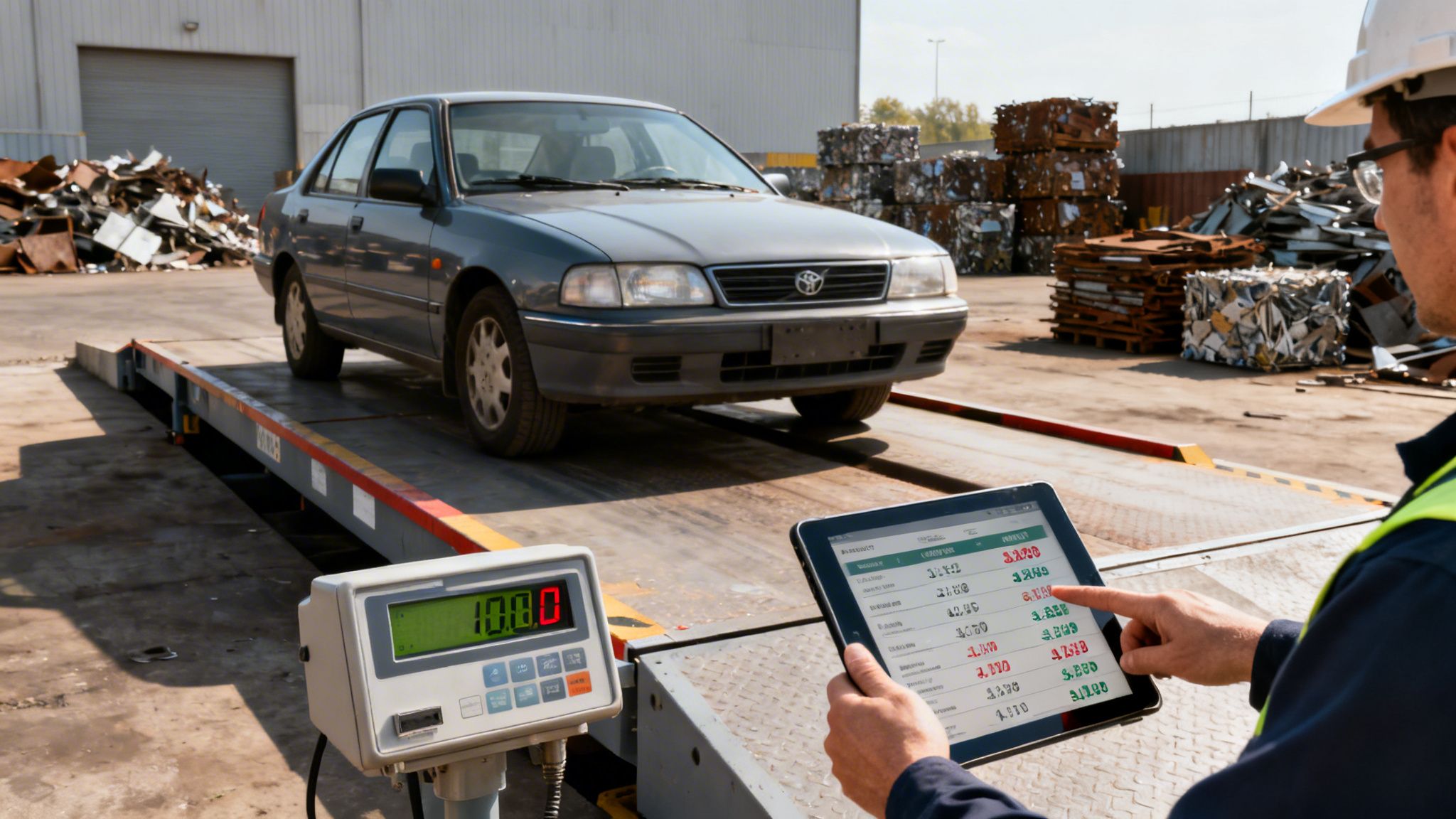
Ever wondered what really goes on when you scrap a car? It’s not just a quick glance and a guess. At a professional scrap yard, there’s a proper, structured process to work out the final price. This ensures the offer you get is a fair reflection of your vehicle's true material worth.
Knowing how this works gives you confidence in the process. You can see that your payout is based on clear, measurable factors, from the car's raw weight to the value of its individual components.
The Weighbridge Is the Starting Point
The first and most important step is weighing the vehicle. Every car that comes into a reputable facility is driven onto a massive industrial scale, known as a weighbridge. This gives us the car’s total gross weight, which is the foundation of its scrap value.
Scrap metal is a commodity, and just like oil or gold, its price changes daily based on global markets. It's traded by the tonne. Naturally, this means a heavier vehicle, like a bakkie or a large SUV, will have a higher starting value than a small hatchback simply because it contains more metal.
This initial weight reading gives the scrap yard a baseline figure to work from before anything else is considered.
It’s a straightforward formula: more weight equals more metal, which translates to a higher starting value. This is why the make and model matter—not for their prestige, but for their mass.
Assessing the Mix of Metals
Of course, a car isn't just one big lump of steel. It’s a complex mix of different metals, and each has its own price on the commodities market. After getting the gross weight, an experienced evaluator will assess the vehicle's composition—the specific blend of ferrous and non-ferrous metals inside.
This breakdown typically includes:
- Ferrous Metals: This is mostly steel and iron, which make up the bulk of the car’s body and frame. They are valuable but less so than their non-ferrous counterparts.
- Non-Ferrous Metals: Here’s where a lot of the value lies. We're talking about the aluminium in the engine block and wheels, the copper in the wiring looms, and the lead from the battery.
The daily market prices for these individual metals directly impact the offer. If copper prices are on the rise, for instance, the copper content in your car is suddenly more valuable, and that can give your payout a nice boost. To get a better feel for this, you can find more information about the value of different non-ferrous metals.
This detailed material assessment is why passenger vehicles are so central to the recycling industry. In fact, industry data shows that passenger vehicles make up 53.7% of the global vehicle scrapping market. This is because their high production volumes create a steady, predictable supply of these mixed metals for recyclers. You can discover more insights about the vehicle scrapping market and its composition.
Evaluating Completeness and Salvageable Parts
Finally, the yard looks at the car’s overall condition. Is it complete, or has it been stripped for parts? A "complete" car, even one that doesn't run, is almost always worth more than a stripped shell.
An evaluator will do a quick check for high-value components that are still present and can potentially be salvaged and resold. This includes major parts like the engine, transmission, alternator, and starter motor. If they are in a reusable condition, they add value on top of the raw metal weight.
The most valuable of these is often the catalytic converter. Because it contains precious metals like platinum and rhodium, its recycling value is a major contributor to the car's total worth. A missing converter will noticeably reduce the final offer.
By combining the vehicle’s weight, its specific mix of metals, and the value of any salvageable parts, a scrap yard arrives at a comprehensive and fair price. This methodical approach makes sure your payout accurately reflects every recoverable element of your old car.
Your Car Scrapping Questions, Answered
Even with the best plan, a few questions always crop up when it’s time to say goodbye to an old vehicle. Let's tackle some of the most common ones we hear from car owners, so you can move forward with total confidence.
Can I Scrap a Car Without the Registration Papers in South Africa?
This is a really common hurdle, but don't worry, it’s usually manageable. While it’s definitely more complicated to scrap a car without its original NaTIS document (the logbook), it isn't impossible—as long as you can prove you're the legal owner.
First things first, you’ll need to head to your nearest South African Police Service (SAPS) station and get a sworn affidavit. This is a legal document where you'll explain exactly why the registration papers are missing.
Along with that affidavit, you must bring undeniable proof that the car is yours. The original purchase invoice is perfect, but other official documents linking you to the vehicle can also work. You'll also need a certified copy of your ID. Any reputable scrap yard is legally required to verify ownership to make sure they aren’t processing a stolen vehicle.
Honestly, the easiest route is to first apply for a duplicate registration certificate at your local traffic department. It’s an extra step, but having the proper papers makes the whole scrapping process smooth and gets rid of any potential legal headaches.
What Actually Happens to My Car After It's Scrapped?
Your old car isn't just crushed into a cube on arrival. It’s about to start a surprisingly organised recycling journey designed to recover every last bit of value and protect the environment.
The first stop is the depollution bay. This is a critical step where all hazardous fluids and materials are carefully drained and removed. This includes:
- Engine oil, coolant, and brake fluid
- Petrol or diesel left in the tank
- The battery and harmful air-conditioning refrigerants
Next, the car gets stripped of any valuable or reusable parts. Components like the engine, alternator, starter motor, and even undamaged body panels are salvaged. These are then sold on the second-hand parts market, giving them a new lease on life.
Only then is the leftover shell, or "hulk," fed into a massive industrial shredder. This machine tears the car into small pieces of metal. Powerful magnets and advanced sensors then get to work, sorting the shredded material into different streams—separating ferrous metals (like steel) from non-ferrous metals (like aluminium and copper).
These sorted metals are cleaned, melted down in huge furnaces, and reformed into raw materials. From there, they’re sold to manufacturers to create brand new products, closing the loop on a truly circular economy.
How Much Money Will I Get for Scrapping My Car?
The payout for a scrap car isn't a single, fixed price; it’s calculated based on a few key factors. The biggest one by far is the vehicle's total weight. Scrap metal is a commodity sold by the tonne, and its market price can change daily.
A car's completeness also makes a huge difference. A whole vehicle with its engine and parts intact will always be worth more than a stripped-out shell. The presence of high-value parts, especially the catalytic converter which contains precious metals, can give your offer a significant bump.
Of course, the model and size of the car matter, but mostly because of weight. A big bakkie simply has more metal than a small hatchback, so its base scrap value will be higher. The only way to get a precise, up-to-the-minute figure is to contact a scrap dealer with your car's details for a custom quote based on that day's rates.
Do I Have to Take the Car to the Scrap Yard Myself?
Not at all. In fact, most people don't. Professional scrap companies, particularly those who specialise in end-of-life vehicles, almost always offer a collection service. It's the most practical choice, especially if the car is no longer roadworthy or has already been deregistered.
A collection team will typically arrange for a flatbed tow truck to collect the vehicle right from your property, whether it's at your home, a workshop, or a storage facility. The entire process is designed to be completely hassle-free for you.
Just be sure to confirm the collection details beforehand. Ask if there’s a collection fee and how it's handled—sometimes it's deducted from the payout, other times it might be a separate charge. If your car is still running and legally drivable, you might have the option to deliver it yourself, which could save you the fee and put a little more cash in your pocket.
Ready to turn your old vehicle into value, the right way? At D7 Capital Partners (Pty) Ltd, we provide professional, compliant, and profitable scrap metal recycling services across South Africa. Partner with us for transparent valuations, reliable collection, and peace of mind. https://d7capital.co.za