A factory decommissioning checklist South Africa teams can actually use must connect safety, asset value, waste control and handover. Use this factory decommissioning checklist South Africa sequence as a project-control baseline. Closing or relocating a plant is not simply a matter of switching off the power and calling trucks. Every production line, tank, cable tray, motor, store and structural element needs a documented destination before work begins.
This practical guide gives owners, facilities managers, liquidators, engineers and SHEQ teams a 12-step sequence for planning a controlled factory closure. It is designed for industrial projects where reusable equipment, saleable metal and regulated waste may all leave the same site through different routes.

What a Factory Decommissioning Checklist South Africa Project Should Achieve
The objective is a safe, traceable and commercially sensible handover. A good plan protects people and the environment while preventing useful assets from being treated as low-value mixed scrap. It also creates evidence: equipment registers, isolation certificates, collection records, weighbridge tickets, waste documentation and final sign-off.
Start with D7 Capital Partners’ industrial scrap site audit to identify where metal value and control gaps exist before the project programme is locked.
12 Steps in a Factory Decommissioning Checklist South Africa Project
1. Define the end state
Agree whether the building must be left broom-clean, stripped to shell, demolished, rehabilitated or prepared for a new operator. Record what stays, what transfers and what must be removed. A vague end state creates scope gaps and late variations.
2. Build one verified asset register
Walk the site with operations, maintenance and finance. Record equipment identity, location, approximate mass, ownership, condition, contamination risk and proposed destination. Photograph major items. Reconcile leased, financed and customer-owned assets before release.
3. Classify every destination
Assign each item to reuse on site, relocation, resale, parts recovery, recycling, treatment or disposal. Keep this decision separate from the physical removal method. A motor may be movable by the same rigging crew as scrap machinery, but its commercial route may be completely different.
4. Survey utilities and stored energy
Map electrical supplies, compressed air, steam, gas, water, hydraulics, process chemicals and stored mechanical energy. Identify who is competent and authorised to isolate each source. Lock-out, test and document before dismantling.
5. Identify hazardous materials
Review the site’s operating history, safety data sheets and building age. Oils, chemicals, asbestos-containing materials, refrigerants, batteries and contaminated residues require specialist assessment and must not be hidden inside a general scrap load. Where legal or environmental duties are uncertain, obtain project-specific professional advice.
6. Plan the dismantling sequence
The sequence should preserve structural stability and maintain safe access. Remove process materials before equipment, disconnect services before lifting, and clear routes before moving large loads. Define hold points where the competent team must re-assess conditions.
7. Engineer lifting and transport
Confirm equipment mass, centre of gravity, lifting points, floor capacity, door openings, turning space and trailer access. Specify certified lifting gear, crane or gantry capacity, abnormal-load requirements and weather limits. Never rely on an old machine plate as the only source of weight information.
8. Create controlled material zones
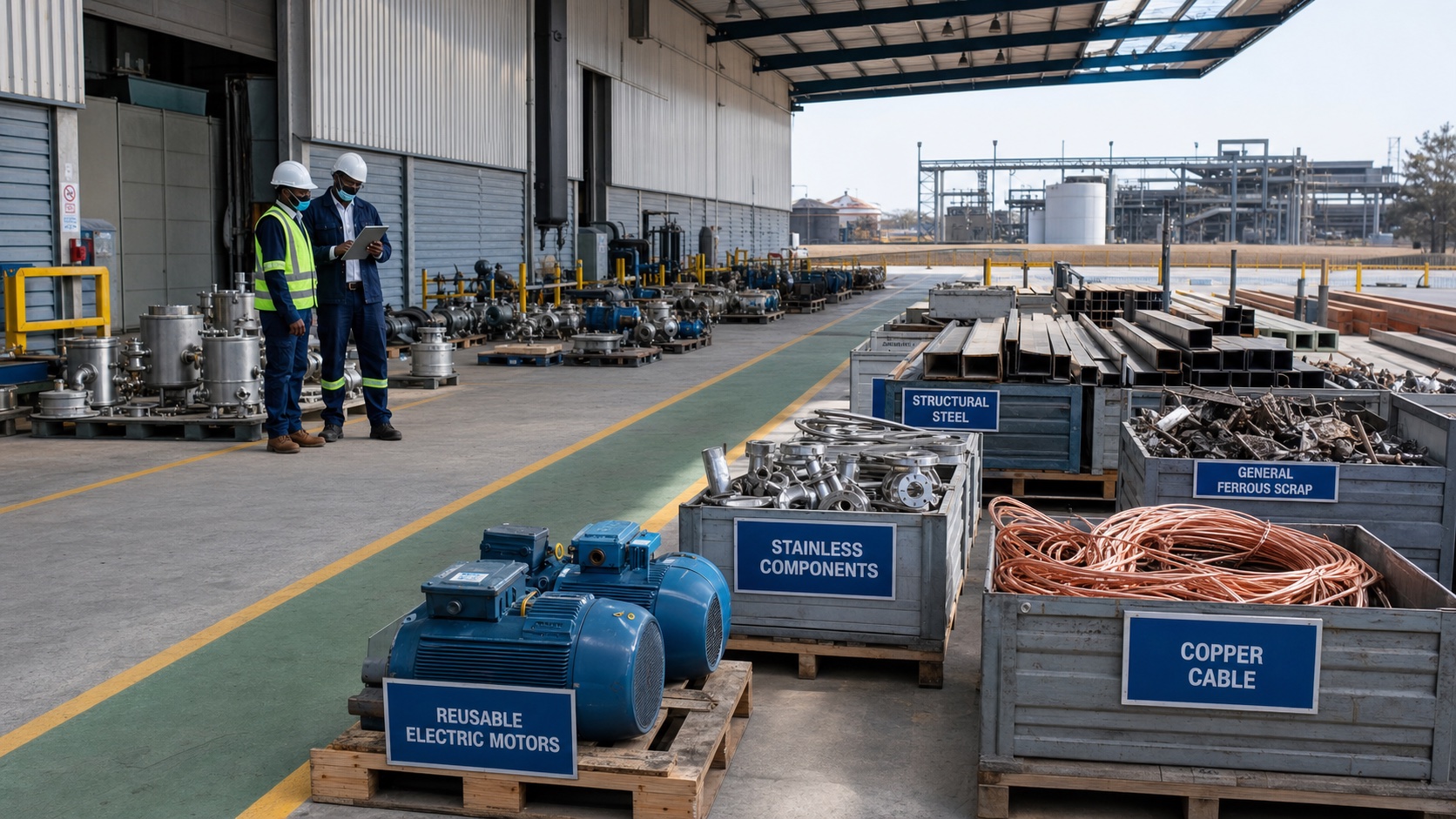
Separate reusable equipment from stainless steel, copper cable, aluminium, heavy ferrous steel and contaminated material. Use the right scrap metal containers for the loading method and collection rhythm. Keep emergency and vehicle routes open.
9. Protect the chain of custody
Use authorised release notes, vehicle checks, photo records, seals where appropriate and named signatories. Match collections to weighbridge tickets and settlement statements. This protects the owner, contractor and recycler from disputes or unauthorised disposal.
10. Schedule around live operations
If part of the plant remains operational, define physical separation, permit interfaces, traffic windows and stop-work triggers. Noise, dust, vibration, shared services and fire systems can affect production areas well beyond the immediate work zone.
11. Set measurable contractor deliverables
State what evidence is required for each load and milestone. A clear scrap metal collection SLA can cover service windows, weighing, grade disputes, reporting, housekeeping and escalation.
12. Close out with a joint inspection
Walk the site against the agreed end state. Check residual services, openings, contamination, temporary works, waste zones, documentation and keys. Record defects with owners and due dates, then issue final acceptance only when the close-out pack is complete.
This factory decommissioning checklist South Africa control table assigns evidence to each accountable owner.
Factory decommissioning control table
| Control | Owner | Evidence |
|---|---|---|
| Asset destination | Owner or appointed asset manager | Approved asset register and photographs |
| Energy isolation | Authorised technical person | Isolation and test certificates |
| Lifting plan | Competent rigging team | Lift plan, equipment certificates and briefing |
| Material release | Site representative | Release note, vehicle record and load photos |
| Recycling settlement | Commercial team | Grade record, weighbridge ticket and statement |
| Final handover | Project lead | Joint inspection and close-out pack |
Watch: industrial decommissioning in practice
Review the factory decommissioning checklist South Africa plan against the South African National Waste Management Strategy and obtain project-specific legal advice where regulated waste is present.
Common factory closure mistakes
- Starting removal before ownership and destination decisions are approved.
- Mixing high-value alloys and cable into general ferrous scrap.
- Underestimating access, floor loading or equipment mass.
- Treating residues and contaminated equipment as ordinary scrap.
- Allowing undocumented loads to leave during a busy shutdown.
- Closing the contractor purchase order before the evidence pack is complete.
Frequently asked questions
How early should factory decommissioning planning start?
Start as soon as closure or relocation becomes probable. Early surveys allow asset sales, specialist appointments, utility planning and collection logistics to run in parallel instead of competing during the final shutdown.
Should machinery be sold or recycled?
Assess condition, demand, removal cost, documentation and time available. Reuse or resale can deliver more value, while recycling may be the practical route for obsolete, damaged or incomplete equipment. Decide item by item.
Who should own the decommissioning checklist?
One accountable project lead should control the master checklist, with named technical, safety, environmental, commercial and security owners for specialist sections.
Use a Factory Decommissioning Checklist South Africa Teams Can Audit
D7 Capital Partners supports industrial clients with scrap recovery, dismantling interfaces, structural demolition and responsible waste solutions across South Africa. A well-run factory decommissioning checklist South Africa project turns a complex closure into a sequence of controlled, auditable decisions. Contact D7 Capital Partners to assess your site and build the right recovery plan.