The right scrap metal container is not simply the largest bin that fits on site. Scrap metal containers affect segregation, loading effort, vehicle access, housekeeping, collection frequency and the quality of the material reaching the recycler.
This guide helps South African facilities and operations teams choose between metal cages, bins, skips and roll-on containers, then position and manage them as part of a safe, traceable collection system. Well-managed scrap metal containers also make inspections, collections and recovery records easier to control.
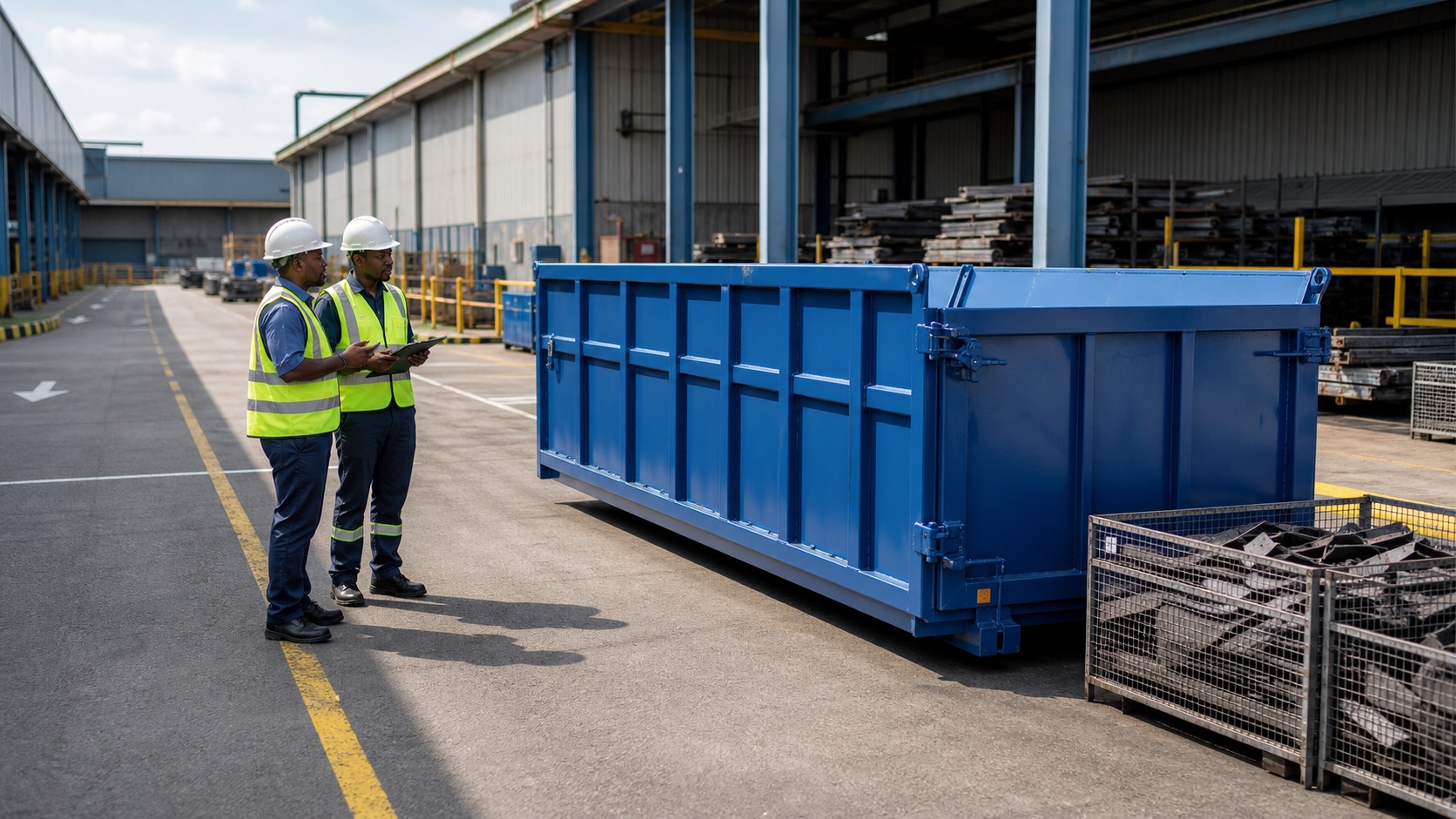
Scrap Metal Containers: Start with the Material, Not the Catalogue
List what the site actually generates: small pressings, long steel offcuts, swarf, cable, aluminium extrusion, motors, racking, drums, machinery or demolition steel. Record typical dimensions, volume, density, contamination and whether the stream should be kept separate for grading or control.
A bulky but light stream can fill a container long before it reaches a vehicle’s payload limit. Dense steel can do the opposite. Copper cable may need a lockable cage, while long sections need a design that prevents material projecting into walkways or above a safe fill line.
Common scrap metal container options
| Container | Often suited to | Watch for |
|---|---|---|
| Small bin or stillage | Point-of-use offcuts and components | Manual handling, sharp edges and forklift access |
| Metal cage | Separated non-ferrous items, cable and visible inventory | Security, load stability and weather exposure |
| Skip | General steel offcuts and project scrap | Safe loading height, access and mixed waste |
| Roll-on container | Recurring high-volume industrial scrap | Large vehicle envelope, ground condition and overloading |
| Covered or lockable unit | Higher-value or weather-sensitive material | Authorised access and fire controls |
These are functional categories rather than universal specifications. Confirm dimensions, safe working limits and compatible handling equipment with the provider before committing to a layout.
1. Size for the collection rhythm
Estimate average and peak generation, then decide how long material can remain safely on site. Production peaks, shutdowns and project work may need temporary capacity beyond the normal container fleet. A container that is constantly full encourages material to be placed on the ground or mixed elsewhere.
A much larger container is not always the answer. It may lengthen the time between collections, occupy valuable operating space or exceed the site’s loading and vehicle constraints. Compare container capacity with realistic fill rate, service response and safe payload.
2. Match the opening to the loading method
Observe how scrap reaches the container. Employees may load by hand, forklift, crane, conveyor, tipper or front-end loader. The opening height and orientation must support that method without encouraging climbing, throwing from an unsafe position or lifting beyond the site’s approved practice.
- Provide smaller point-of-use bins where scrap is generated.
- Use approved mechanical handling for heavy or awkward items.
- Keep people clear of suspended loads and moving equipment.
- Prevent long or spring-loaded material from shifting unexpectedly.
- Do not use the container walls as an improvised work platform.
3. Protect grade and value
Decide which streams deserve dedicated containers. Separating stainless steel, aluminium, brass, copper cable and clean production offcuts can make grading more transparent. The right number of scrap metal containers is the minimum that employees can use correctly and the site can manage consistently.
Use clear labels or colour coding supported by examples at the point of disposal. Inspect contents regularly and address the cause of contamination. If a stream is repeatedly mixed, check whether the correct bin is too far away, too small, locked or poorly understood.
4. Choose a safe location
Scrap metal containers should be positioned by agreement between operations, SHEQ, security and the collection provider. It must work for employees during normal production and for the collection vehicle during exchange.
- Use a firm, level surface capable of carrying the loaded unit.
- Maintain clearance from doors, hydrants, electrical equipment and emergency routes.
- Protect stormwater drains from residues and loose material.
- Separate pedestrians from reversing and container-handling zones.
- Check overhead services, canopies and tree branches.
- Provide adequate lighting and security where needed.
- Keep the collection route free of parked vehicles and temporary stock.
The Occupational Health and Safety Act provides South Africa’s overarching workplace safety framework, including risks connected with plant and machinery. Container placement and exchange should be incorporated into the site’s risk assessment, traffic rules and contractor controls.
5. Plan the vehicle envelope
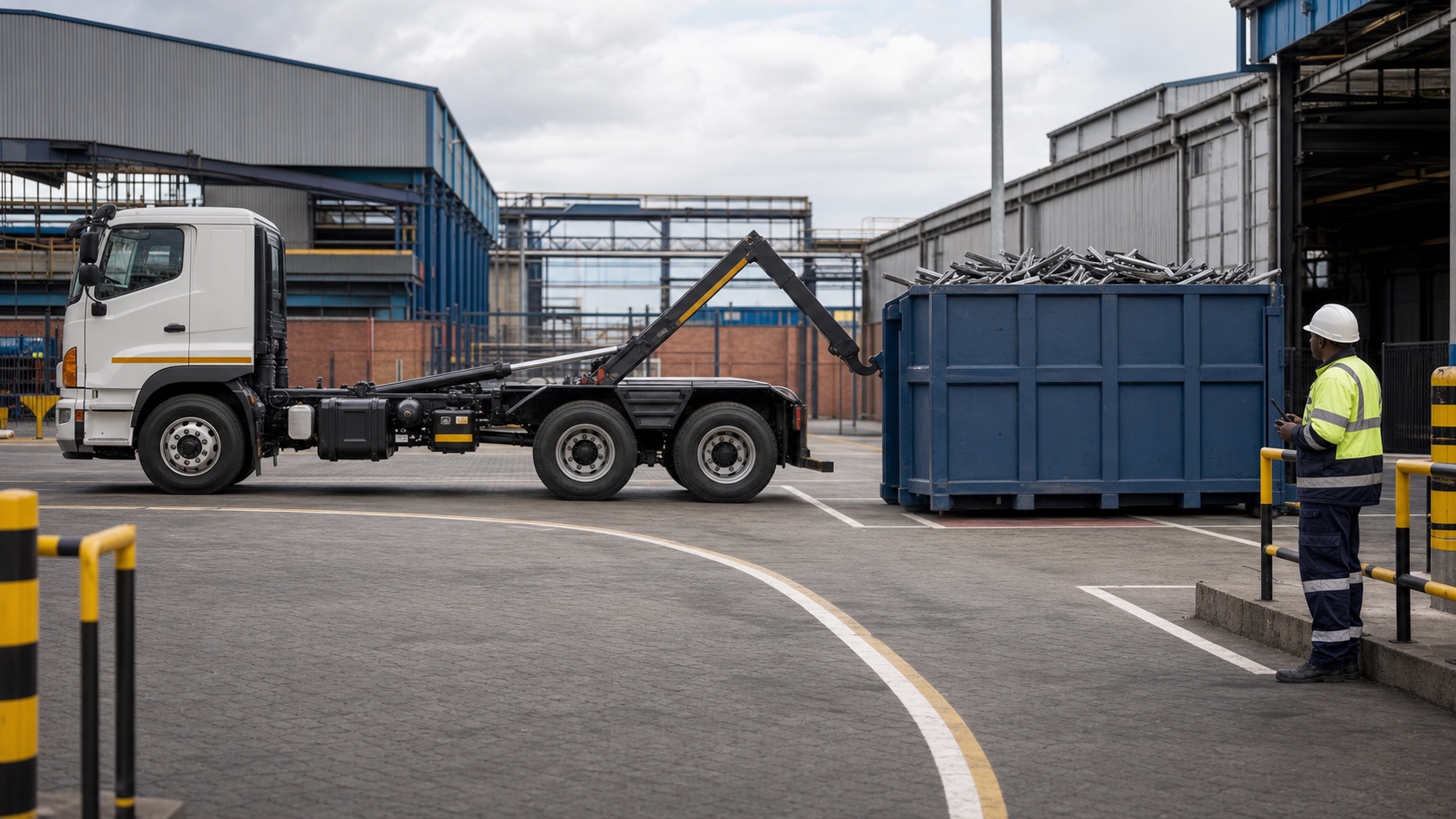
Roll-on scrap metal containers need substantially more operating room than its parked footprint. Ask the provider to confirm the vehicle’s approach, turning circle, lifting or tilting envelope and required overhead clearance. Walk the movement with the responsible site team before the first delivery.
Define a protected exchange zone and a communication method between the driver and site representative. No person should stand between the vehicle and container. If reversing cannot be removed from the route, control it under the site’s approved traffic-management procedure.
6. Set fill and load rules
Mark or communicate a maximum fill condition. Material projecting above the rim, hanging over the side or concentrated unevenly can create transport and handling hazards. Dense scrap may reach a safe mass before the container looks full, so visual capacity alone is not a loading rule.
Agree which items are prohibited and who may authorise special loads. Sealed cylinders, pressurised containers, batteries, liquids, hazardous residues and unidentified equipment should not be placed in a routine scrap unit unless an approved, material-specific process applies.
7. Control access and asset release
High-value material may justify a lockable cage, camera coverage, numbered seals or controlled keys. Security alone is not enough: retain a documented release process so that usable spares, tools, cable and recognisable infrastructure do not leave merely because they were found near a scrap area.
SAPS administers the Second-Hand Goods framework for dealers and recyclers. Procurement teams should verify the registrations and controls relevant to the proposed service and materials.
8. Assign inspection and housekeeping
State who checks scrap metal containers for condition, contents, fill level and the surrounding area. Inspect doors, hinges, lifting points and visible damage before use, while leaving formal equipment inspection and repair to competent authorised parties.
- Remove loose debris from the access area.
- Report leaks, damage or unstable material immediately.
- Replace missing labels and keep grade examples current.
- Escalate full containers before they interrupt production.
- Record contamination and rejected items.
9. Put the container plan into the service agreement
Your scrap metal collection SLA should list the container types and quantities, approved positions, included rental or exchange charges, normal service window, urgent escalation route and responsibilities for damage, cleaning and relocation.
Include the required collection record: date, vehicle, site authorisation, material grade, gross and tare weights, deductions and transaction value. The container system should make these records easier to reconcile, not create an anonymous mixed load.
Container selection checklist
- Which material and grade will the container hold?
- What are the largest item dimensions and typical density?
- How quickly will it fill during normal and peak periods?
- How will material be loaded without unsafe manual handling?
- Does the site have a suitable level surface?
- Can the collection vehicle approach, exchange and exit safely?
- Which streams require covers, locks or separate control?
- Who inspects contents and requests collection?
- What is the maximum fill or load condition?
- Which records will accompany every collection?
Choose the container as part of the whole service
D7 Capital Partners supports industrial and commercial sites with recycling, scrap metal removal, structural demolition and total waste management. The most effective container plan starts with a site assessment covering material streams, loading methods, traffic, collection rhythm and reporting.
Contact D7 Capital Partners to discuss container options and a collection plan shaped around your facility.
This article provides general operational guidance. Container suitability, loading limits, legal duties and safe systems of work must be confirmed for the specific site, equipment and material.