

Wondering what you can get for your copper scrap price per kg? Businesses comparing the copper price per kg South Africa-wide need a clear view of grade, purity, location and daily market movement. It's a question we hear all the time. To give you a rough idea, as of early 2026, you could see prices for top-quality bare bright copper in South Africa landing somewhere between R120 and R140 per kilogram.
Of course, that's just a starting point. The final price you walk away with hinges on a few key things we'll get into.
Current Copper Scrap Price Per Kg South Africa


Getting a fair deal for your scrap all starts with understanding the current market. The price you’re quoted isn't just plucked out of thin air; it’s a direct reflection of global commodity markets, local demand right here in SA, and, most importantly, the quality of the copper you’re selling.
Think of these prices as a live pulse of the market—they’re constantly shifting.
In South Africa’s scrap metal scene, copper has been a strong performer, even when global markets get a bit shaky. For instance, in early 2026, No. 1 bare bright copper was fetching around R120-R140 per kg at yards in Johannesburg. That’s a significant 15% jump from the average of R105 per kg we saw back in 2025.
To put it in perspective, copper makes up about 28% of all non-ferrous metals traded on the local metals exchange, with roughly 12% of that headed for export to Asia. It's a big deal.
To help you get a better handle on what your scrap might be worth, let's look at some typical prices you can expect for different grades.
2026 Estimated Copper Scrap Prices In South Africa (Per Kg)
Below is a table showing the average market prices for the most common copper scrap grades found in South Africa. Remember, these are just estimates. The final price can shift based on your location, the quantity you have, and the specific buyer you're dealing with.
| Copper Scrap Grade (ISRI Code) | Description | Estimated Price Range (Per Kg) |
|---|---|---|
| No. 1 Copper (Bare Bright) | Clean, uncoated, and unalloyed wire or cable. The highest grade, fetching top prices. | R120 – R140 |
| No. 2 Copper | May have light coatings, solder, or minor impurities. Often from plumbing pipes and tubing. | R100 – R125 |
| No. 3 Copper (Light Copper) | Typically copper sheets or downspouts with noticeable oxidation or contamination. | R85 – R105 |
As you can see, the grade of your copper makes a huge difference in the price. Knowing how to sort your material is the key to getting the best possible payout.
We'll dive deeper into identifying and preparing these grades later in the guide. If you’re not sure where to start, our team is always here to help you identify your materials. You can also get more tips from our guide on how to sell your scrap metal.
What Really Drives The Price Of Your Copper Scrap
Ever wondered why one pile of copper scrap gets a better price than another, even when they look almost the same? It’s not just guesswork. The copper scrap price per kg comes down to a handful of clear, connected factors. It's a bit like pricing coffee beans – where they come from, how pure they are, and what the market is willing to pay all play a part.
Getting a handle on these drivers lets you see your scrap metal through a buyer's eyes. This insight is what helps you anticipate what you'll be offered and decide on the best time to sell.
Grade And Purity: The Most Important Factor
The single biggest thing that determines your payout is the grade and purity of your copper. Clean, uncontaminated copper needs less work to process, which makes it far more valuable to refineries and mills. Think of it as bringing a chef ready-to-use ingredients versus a pile of raw materials that still need to be washed, peeled, and chopped.
A scrap dealer's main goal is to get material that can be turned around and resold efficiently. Copper that's already clean, sorted, and free from things like plastic, steel, or solder will always fetch a premium price. Why? Because it saves a huge amount of time and labour costs.
For instance, a load of Bare Bright Copper – which is basically pristine, uncoated wire – will get a much higher price per kilogram than a mixed jumble of old plumbing pipes covered in paint, solder, and brass fittings. The cost of stripping all that contamination off gets factored directly into the price you're quoted.
The Global Market Pulse
Your local scrapyard doesn’t just pick a price out of thin air. The rates you see are directly linked to the global commodities market, specifically the prices set on the London Metal Exchange (LME). The LME is the world's command centre for industrial metals, copper included.
When global demand for new copper shoots up, maybe from a construction boom or a surge in manufacturing, the LME price climbs with it. That positive wave ripples all the way down to local markets, pushing up the copper scrap price per kg you’ll get in South Africa. On the flip side, a global economic slowdown can cool off demand and drag prices down everywhere.
Local Demand And Processing Costs
While the world market sets the general price, local factors add the final touches. The demand from foundries and manufacturers right here in South Africa is a big piece of the puzzle. If our local industries are crying out for copper, they'll often pay more to secure a steady supply, which helps boost prices in the area.
And, of course, every scrap dealer has their own running costs that shape their final offer. These include:
- Logistics: The cost of getting the scrap metal from your site to their yard.
- Sorting and Labour: The wages paid to staff who have to manually sort mixed metals and get them ready.
- Processing: The electricity and machinery needed to shred, bale, or strip the copper.
This is why a larger, well-sorted load is more efficient to handle and often means a better price for you. These factors are always in motion, which is why keeping up with trends in the metal supply chain is so vital for predicting what your scrap might be worth down the line.
Your Field Guide To Common Copper Scrap Grades
In the scrap business, knowing your metals is knowing your money. And when it comes to copper, not all of it is the same. Learning to tell the difference between the various grades is probably the single most important skill you can develop to maximise your copper scrap price per kg.
Think of it like this: when you pre-sort your copper, you're doing a big chunk of the scrap yard's work for them. That effort doesn't go unnoticed. It translates directly into a better price for your material, every single time. This guide will walk you through the most common grades you’ll come across here in South Africa.
This flowchart breaks down exactly what drives the price you’ll get, showing you just how critical your sorting efforts are in the grand scheme of things.
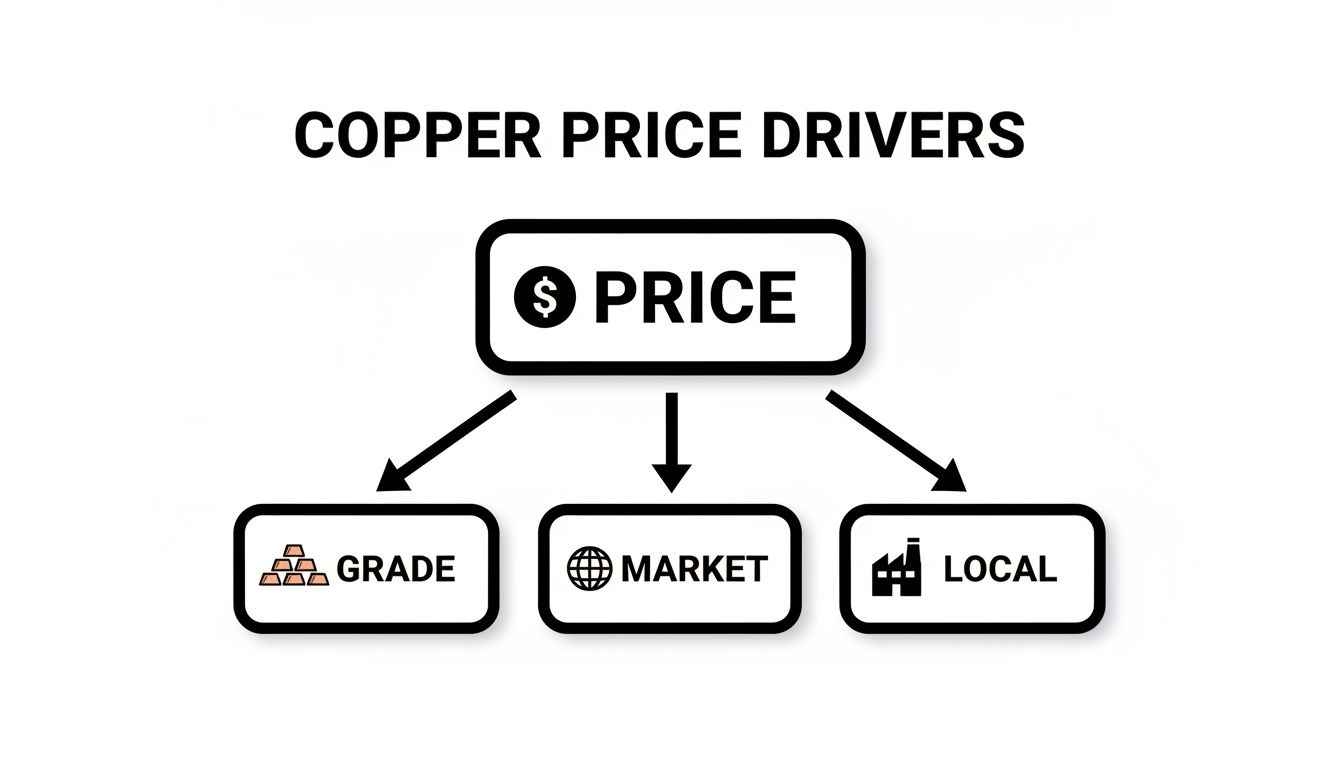

As you can see, the grade is a primary factor, right up there with market forces and local factors like processing costs. Let’s get into the specifics.
Number 1 Bare Bright Copper
This is the top-tier, the best of the best in the world of copper scrap. It's the cleanest, purest grade you can sell, and it consistently fetches the highest prices. No question.
- What It Looks Like: It should be shiny, bright, and completely clean. We’re talking no paint, no solder, no insulation, and no coating of any kind. It should have that brand-new penny lustre.
- Where To Find It: You'll mostly find this in electrical applications. Think thick, solid-core wires from heavy industrial machinery, main electrical feeds, and bus bars that have been stripped professionally.
To be classified as Bare Bright, the wire gauge needs to be thicker than a standard pencil lead (at least 1.6mm). Critically, it must show zero signs of tarnish or oxidation. Any hint of green immediately drops it to a lower grade.
Number 2 Copper
This is your bread and butter—the grade you’ll see most often, especially on construction sites or during plumbing tear-outs. It's still a very valuable grade, but it allows for a few minor imperfections that Bare Bright does not.
- What It Looks Like: It can look a bit dull or dirty. You might see some light solder on the joints or even a thin tin coating on the surface.
- Where To Find It: It's typically found in old plumbing pipes, copper tubing from air-conditioning units, and electrical wire where the insulation has been burned off (which, by the way, we don’t recommend doing).
The value here is still substantial. To give you a real-world example, we saw a sharp 22% price rally for No. 2 copper in the Gauteng region between December 2025 and February 2026. Prices jumped from around R85/kg to over R104/kg. During that window, construction firms clearing out old sites reported 30% higher yields on their recovered metals, turning tons of what might have been waste into serious revenue. You can dig deeper into these trends in this guide to global copper market trends from Fastmarkets.
Mixed Copper or Light Copper
This is the catch-all category for copper that has more significant contamination or is mixed with other materials. While it brings in the lowest price per kilogram, it’s absolutely still worth collecting and recycling. This often includes things like copper sheets, old roofing materials, and gutters, which are almost always oxidised.
Sorting your copper is a game-changer, but don’t forget that many other materials on a job site also have real value. It’s worth exploring some of the 10 common types of scrap metal you can recycle for cash to make sure you’re not leaving money on the table.
How To Prepare Your Scrap For Maximum Payout

Knowing your copper grades is a great start, but preparing your scrap properly is how you turn that knowledge into real, tangible profit. A bit of upfront effort can make a huge difference to the copper scrap price per kg you walk away with.
Think of it as the difference between being a passive seller and an active, savvy partner in the recycling chain. Taking these steps isn't just about cleaning up metal; it's about directly adding value and boosting your bottom line.
Sort And Separate Your Grades
The single most important thing you can do is sort your copper. Tossing high-value Bare Bright wire in with lower-grade, coated pipes is like pouring cheap wine into a bottle of vintage red—it just drags the overall value down. You need to keep the different grades physically separate.
Set up dedicated, clearly labelled bins or areas for each type:
- No. 1 Copper: For all your clean, shiny wire and solid pieces.
- No. 2 Copper: For pipes, tubing, and wire with a bit of solder or light tarnish.
- Light/Mixed Copper: This is for oxidised sheets, old gutters, and other heavily contaminated items.
This simple act of pre-sorting saves the scrap yard a significant amount of time and labour. That's a saving they'll happily pass on to you in the form of a better price.
Remove Contaminants Ruthlessly
Contaminants are the enemy of a good payout. They are anything that isn't pure copper. Smelters and refineries are only interested in the metal itself, so every scrap of plastic, steel, solder, paint, or insulation still attached to your copper reduces its value.
Think of it this way: you are selling copper by the kilogram. Any non-copper material attached to your scrap is dead weight that you won’t get paid for. In fact, it actively lowers the price of the actual copper you're trying to sell.
For example, taking the time to strip the plastic insulation off electrical wires can instantly upgrade it from a lower-paying category to a much higher one. Likewise, using a wrench to remove brass fittings from old copper pipes will have the same positive effect on your final payment.
Consolidate And Store Securely
Once your copper is sorted and clean, the next move is to consolidate it. Scrap buyers always prefer larger, well-organised loads because they are far more efficient to transport and process. A single, large pile of a specific grade is always more appealing than lots of small, scattered heaps.
On top of that, secure storage is absolutely critical. Copper is a prime target for theft, so always keep your sorted material in a secure, locked area. Storing it indoors or under a cover also protects it from the elements, which prevents the oxidation and corrosion that can downgrade its quality and lower its price.
To dive deeper into the entire process, check out our comprehensive scrap metal recycling a guide. By following these practical steps, you ensure that every kilogram of copper you collect delivers its maximum possible financial return.
Let Us Handle the Hassle: Partnering for Smart Scrap Management

Getting a handle on copper grades and preparing your scrap correctly are crucial first steps. But let’s be honest—that’s just the beginning. The next part, managing the entire process, can easily become a full-time job.
Trying to time the market, ensure every gram is graded accurately, and coordinate all the logistics—it all takes time and energy away from what you do best. This is exactly where a strategic partner makes all the difference. You don't need to become a scrap market expert overnight to get expert results. By teaming up with a specialist, you can hand off all the complex moving parts while making sure you get the best possible copper scrap price per kg.
From Collection to Compliance, We've Got It Covered
A real partnership is about more than just buying your metal. It’s about building a smooth, integrated system that works for your business, whether you’re running a construction site, a massive industrial plant, or managing a facility. We’re here to look after the entire lifecycle of your scrap materials.
Our support includes:
- On-Site Solutions: We provide durable, purpose-built scrap bins and containers delivered straight to your site. This keeps your collection organised, safe, and out of the way.
- Scheduled Collections: We’ll arrange timely and efficient pickups that fit your schedule, preventing scrap from piling up and keeping your worksite clean and productive.
- Accurate Assessment: We use calibrated scales and expert hands-on evaluation to make sure your material is graded transparently. You get paid fairly for every single kilogram—no guesswork.
This complete approach means you can stay focused on your main business, confident that your scrap is being turned into revenue efficiently and professionally.
Our core value is simple: we absorb the complexity of scrap management so you don't have to. The goal is to minimise your effort, ensure full compliance with all regulations, and maximise your financial returns.
Specialised Services for Major Projects
Got a bigger project on the horizon? Our capabilities scale up to handle full-scale demolition and material recovery jobs. We have the experience to manage complex industrial or commercial site clearances from start to finish.
This means we can safely dismantle structures, recover all the valuable ferrous and non-ferrous metals, and handle the responsible disposal of all other waste materials.
By partnering with D7 Capital, you’re not just getting a buyer; you're gaining a dependable ally committed to making your recycling efforts profitable and completely hassle-free. We turn what could be a logistical headache into a reliable revenue stream for your business.
The Future Outlook For Copper Prices
While the daily copper scrap price per kg can certainly jump around, the big picture for copper's value points firmly in one direction: up. This isn't just wishful thinking; it's a trend driven by massive global shifts that are fundamentally changing entire industries.
Understanding these long-term forces isn't just an academic exercise. It's about realising the true, growing value of the scrap assets you generate and why managing them professionally is so critical.
The Green Technology Boom
The worldwide shift toward a greener, more sustainable future is perhaps the single biggest factor supercharging copper demand. Just think about the building blocks of this new economy. Electric vehicles (EVs), massive wind turbines, and sprawling solar farms all share a common, critical ingredient: an enormous appetite for copper.
Take electric vehicles. A single EV can use up to four times more copper than its traditional petrol-powered counterpart. As the world pivots to renewable energy, the need for copper in wiring, motors, and countless other components is set to explode. This isn't a short-term blip; it's a powerful and sustained upward pressure on prices.
This long-term demand surge means the scrap copper you produce isn't just offcuts or waste. It's a valuable asset directly tied to the future of technology. Managing this resource smartly is the key to cashing in on its rising importance.
Historical Growth And Future Projections
A look back at the South African market tells a compelling story. Over the long term, the copper scrap price per kg in ZA has averaged R95 between 2016 and 2026, with an impressive compound annual growth rate of 9.2%. This isn't just inflation; it's real growth, fuelled by green technology and expanding markets.
When you remember the lows of around R70/kg back during the 2018 Rand crisis, it's clear how much stronger the market is today, offering fabricators far better returns. For a deeper dive into these global commodity trends, you can find excellent insights from Trading Economics.
This consistent growth story hammers home the point that your scrap copper is a reliable and appreciating asset. When you grasp these market forces, you can better appreciate the value you're sitting on and why partnering with an expert to manage it makes all the difference.
Your Questions Answered: Selling Copper Scrap
To wrap things up, let's tackle some of the most common questions we hear every day. Getting clear, straightforward answers is the best way to make sure you move forward with confidence when selling your copper.
How Often Does The Copper Scrap Price Per Kg Change?
Think of the copper price like the stock market—it’s always on the move. The copper scrap price per kg can, and often does, change daily. It’s directly linked to the global commodities market, especially the London Metal Exchange (LME), which reacts to global supply, demand, and economic news in real-time.
This is exactly why a price quoted in the morning might shift by the afternoon. For this reason, the best practice is always to contact your scrap partner for the day's rate just before you plan to sell.
What Is The Minimum Quantity Of Scrap You Purchase?
We work with everyone, from solo contractors with a bakkie-load to large industrial sites generating tonnes of scrap. We don’t enforce a strict minimum for drop-offs at our yard, but it’s true that larger quantities often fetch more competitive pricing due to the efficiencies of transport and processing.
For businesses that produce a steady or significant stream of scrap, we can set you up with dedicated on-site bins and arrange tailored collection services. This ensures you’re always getting the best possible value, no matter your output.
Do You Offer Collection Services For Scrap Metal?
Yes, we absolutely do. We know that for many businesses, figuring out how to transport heavy or awkward loads of scrap metal is a major headache.
Our logistics team is here to help. We can schedule regular pickups from your site, factory, or demolition project, making the entire recycling process as smooth and hands-off as possible. It's all about keeping your own operations running without a hitch.
How Is My Scrap Weighed And Graded Accurately?
Transparency is everything in this business. Every single load that comes into our yard is weighed on government-certified, regularly calibrated industrial scales. There’s no guesswork—just precise, accurate measurements.
From there, our experienced team personally inspects your material to grade it. They know exactly what to look for, following established industry standards to identify the exact type and quality of your copper. This hands-on evaluation guarantees you’re paid the correct, fair market price for every kilogram.
Partner with D7 Capital Partners (Pty) Ltd for dependable scrap metal solutions, professional demolition services, and integrated waste management across South Africa. Visit us at https://d7capital.co.za to learn more.
- Current Copper Scrap Price Per Kg South Africa
- What Really Drives The Price Of Your Copper Scrap
- Your Field Guide To Common Copper Scrap Grades
- How To Prepare Your Scrap For Maximum Payout
- Let Us Handle the Hassle: Partnering for Smart Scrap Management
- The Future Outlook For Copper Prices
- Your Questions Answered: Selling Copper Scrap