
If you’re searching for “sell scrap metal near me,” remember this: the key to getting the best price isn’t just finding a buyer. It’s knowing exactly what you have. Searches for cash for scrap and scrap for cash should lead to a transparent, documented valuation process rather than an unverified cash-only transaction.
Properly identifying and sorting your materials—separating common steel from higher-value metals like copper or aluminium—is the single most important thing you can do. A clean, well-organised load consistently commands a premium price from any recycler. It’s that simple.
Sell Scrap Metal Near Me for Cash: Understanding Your Scrap
Successfully selling industrial scrap metal isn’t about just hauling it away. It’s about recovering the maximum financial value from materials you already own.
Whether you’re managing a factory with consistent offcuts or clearing a large-scale demolition site, how you sort your scrap directly impacts your bottom line. Think of it as preparing an asset for sale—the better it’s presented, the more it’s worth.
The first, most fundamental step is separating ferrous and non-ferrous metals. This simple action is the foundation of scrap valuation and can make a massive difference to your payout.
Ferrous vs. Non-Ferrous: A Quick Field Test
A powerful magnet is your best friend in the field. It’s the quickest and most reliable tool you have.
Ferrous metals contain iron, which means they’re magnetic. This category covers the most common materials you’ll find on industrial sites, like structural steel, cast iron, and machinery casings. These metals are often graded according to specifications like HMS 1 & 2 (Heavy Melting Steel).
On the other hand, non-ferrous metals are not magnetic and are generally much more valuable. This group includes:
- Copper: Found in electrical wiring, pipes, and motors.
- Aluminium: Used in window frames, machinery housings, and vehicle components.
- Brass: Often found in plumbing fixtures, fittings, and decorative items.
- Stainless Steel: This one can be tricky. Some grades are slightly magnetic, but it’s valued very differently from standard carbon steel.
By separating these materials before they even hit the scale, you prevent high-value non-ferrous metals from being priced as lower-value common steel. This one act of sorting can dramatically increase your payout.
To make it even clearer, here’s a quick-reference table to help you distinguish between the two categories on site.
Ferrous vs Non-Ferrous Metals At a Glance
| Characteristic | Ferrous Metals (e.g., Iron, Steel) | Non-Ferrous Metals (e.g., Copper, Aluminum) |
|---|---|---|
| Magnetic? | Yes, they stick to a magnet. | No, they do not stick to a magnet. |
| Common Examples | Structural beams, rebar, car bodies, machinery. | Electrical wiring, pipes, window frames, radiators. |
| Corrosion | Prone to rust (oxidation). | Highly resistant to rust and corrosion. |
| Relative Value | Lower value per kilogram. | Significantly higher value per kilogram. |
This simple distinction is the first step towards getting the true market value for your materials.
The global recycled metal market underscores this value. The ferrous scrap recycling market alone is projected to grow from USD 70.40 billion in 2024 at a CAGR of 7.40% through 2034. This growth shows just how deeply scrap recyclers are becoming embedded in global supply chains, helping industries secure materials without the high cost of processing virgin ore. You can explore more insights about the recycled metal market on gminsights.com.
Here’s a real-world example I see all the time: a factory decommissioning. If you just pile up all the machinery, wiring, and structural beams, a yard might offer you a single, blended low rate for the whole lot.
But if you take the time to strip the copper wire, separate the aluminium housings, and isolate the steel frames, each component can be sold at its respective—and much higher—market price. This is where strategic scrap recovery turns a simple site clearance into a significant revenue opportunity.
Navigating the Scrap Metal Sales Process
Right, so you’ve got your materials identified and sorted. Now for the crucial part: turning that pile of metal into money in the bank. For anyone dealing with industrial-scale quantities, selling scrap isn’t like a simple drop-off at the local yard. It’s a structured process, and getting it right means getting a fair price without the logistical headaches that can eat into your profits.
The entire journey, from getting that first quote to seeing the final payment, hinges on clear communication and doing your homework. You need to know how your material is valued, what paperwork is non-negotiable, and how it’s all going to get from your site to the recycler’s. Nail these details from the get-go, and you’ll find the whole experience much smoother.
Preparing Materials for a Professional Eye
Before you even think about picking up the phone for a quote, your scrap needs to be presented properly. Recyclers don’t just guess the value; they base their pricing on established industry standards, most importantly the ISRI (Institute of Scrap Recycling Industries) specifications. Think of these codes as a universal language for grading scrap metal, ensuring everyone is on the same page.
Let’s take a real-world example. Imagine you have a load of structural steel from a demolition site. It could be graded as:
- HMS 1 (ISRI 201): This is the good stuff—heavy melting steel that’s at least ¼ inch thick and already cut to specific, furnace-ready dimensions.
- HMS 2 (ISRI 204): This grade is a bit more lenient, allowing for slightly thinner material and might include some galvanised or blackened steel.
Because HMS 1 is cleaner and needs less processing, it fetches a higher price. Simply taking the time to cut your steel beams to the required size before collection can upgrade your material from HMS 2 to HMS 1, putting more money directly in your pocket. Preparing your load to meet these specs isn’t just busy work; it’s a critical step to getting the best possible price.
Getting Accurate Quotes and Sorting Out Logistics
With your materials properly sorted and graded, you’re ready to talk numbers. When you approach a recycler for a quote, be ready with the details: what type of metal you have, a solid estimate of the tonnage, and its current condition. The more information you provide, the more accurate their initial quote will be.
A transparent quote should always be based on the verified weight of your material. Insist on seeing a certified weighbridge ticket as proof of tonnage. This piece of paper is non-negotiable in any reputable transaction and is the foundation for calculating your final payment.
This simple flow below really drives home how to get the best price for your scrap.

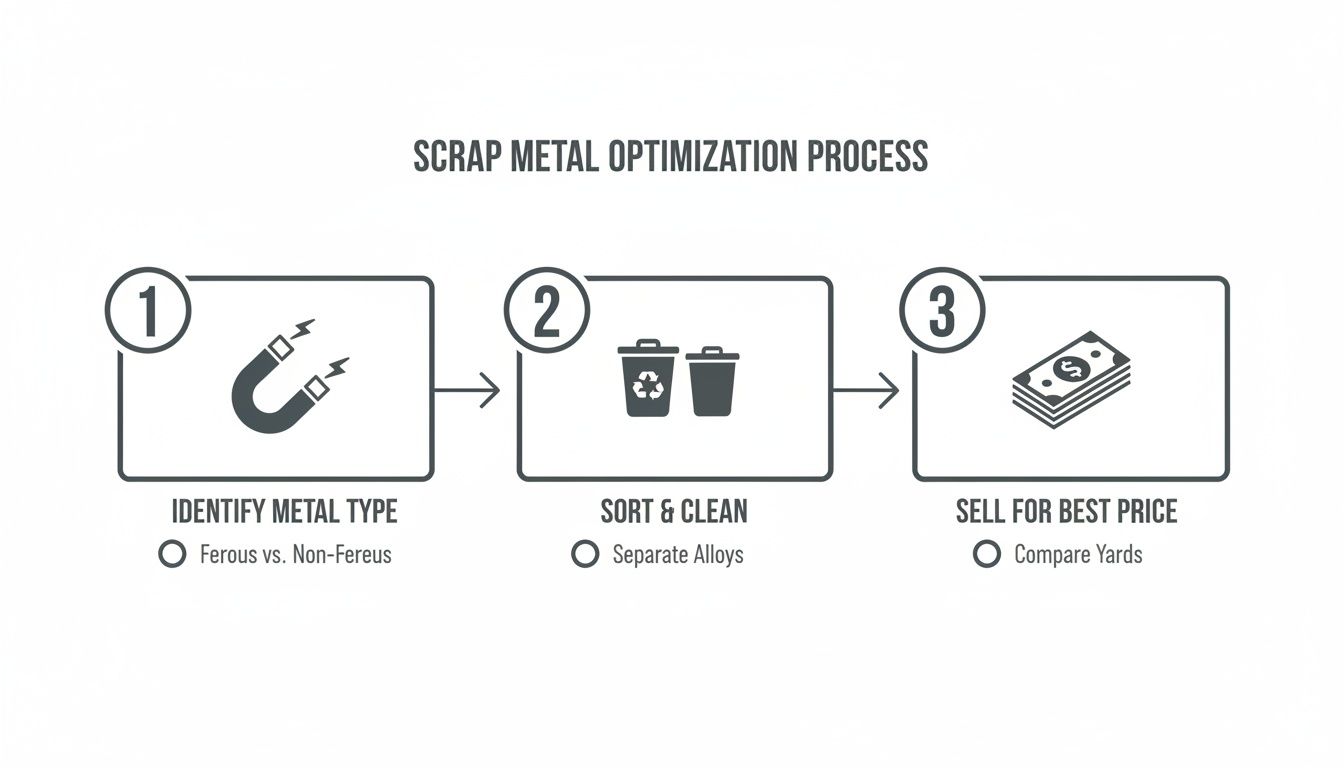
As you can see, the effort you put in upfront—identifying, sorting, and cleaning—directly impacts the profitability of the sale.
Finally, let’s talk logistics. For large industrial loads, a professional partner should be able to offer on-site solutions. This could mean placing large roll-on/roll-off bins at your facility for ongoing scrap collection or arranging specialised transport for oversized pieces from a demolition job. Clear planning here prevents delays and keeps your site safe and operational. A good recycler will work with you to create a collection schedule that fits your project’s timeline, not just their own, making the entire process seamless.
Finding a Reputable Scrap Metal Recycler in South Africa

The partner you choose to handle your scrap metal directly impacts your bottom line and, just as importantly, your legal standing. Finding a reputable recycler is more than just a quick search for “sell scrap metal near me”—it’s about vetting a true business partner you can trust with your material and your compliance.
A trustworthy partner operates with complete transparency. They should welcome questions about everything from how they weigh your material to their environmental policies. Doing this initial homework protects you from fly-by-night operators and helps you build a sustainable, profitable relationship for the long haul.
Asking the Right Questions
Before you commit to a recycler, you need to ask a few direct questions to get a feel for their professionalism and legitimacy. Honestly, their answers will tell you everything you need to know.
Here are the absolute essentials to cover:
- Licensing and Compliance: Ask to see their waste management licence and any other relevant permits. A legitimate business will have this documentation ready to go, no excuses.
- Weighing Process: How do they weigh your load? Ask about their weighbridge—is it certified and regularly calibrated? You should always get an official weighbridge ticket for every single load.
- Payment Methods: How do you get paid? Reputable companies offer traceable electronic payments. Cash-only deals are a massive red flag in this industry.
These questions aren’t just a formality; they’re your first line of defence. Any hesitation or vague response should make you think twice.
Key Takeaway: Choosing an integrated service provider that handles demolition, waste management, and recycling in-house simplifies everything. It means one point of contact, streamlined logistics, and clear accountability from site clearance to final payment.
To make this process easier, we’ve put together a checklist. Think of it as your vetting guide when you’re on the phone or visiting a potential partner.
Vetting Your Scrap Metal Partner Checklist
Here are the key questions and criteria to evaluate when choosing a scrap metal recycler for your business needs.
| Evaluation Area | What to Ask or Verify | Why It Matters |
|---|---|---|
| Licensing & Permits | “Can I see your current waste management licence and any other necessary permits?” | Ensures they operate legally within South Africa, protecting you from compliance risks and fines. An unlicensed operator is a deal-breaker. |
| Weighing & Measurement | “Is your weighbridge certified and calibrated? Will I receive an official weighbridge ticket for every load?” | Guarantees you’re getting paid for the exact weight of your material. Inaccurate scales cost you money. |
| Payment Process | “What are your payment terms and methods? Do you offer electronic transfers?” | Traceable payments (EFT) provide a clear paper trail for accounting and tax purposes. Cash-only deals are often a sign of shady operations. |
| Environmental Policy | “What are your procedures for handling hazardous materials and environmental compliance?” | Shows they are responsible operators who won’t expose your business to environmental liability. |
| On-site Operations | Observe: Is the yard organised? Are there clear safety protocols? Is the staff professional and helpful? | A clean, safe, and organised yard reflects a well-run business that values professionalism and safety—for their team and for you. |
| Market Knowledge | “How do you determine your pricing? How does it relate to current market rates?” | A knowledgeable partner can explain market fluctuations and provide fair, transparent pricing based on real-time data, not just guesswork. |
| Customer References | “Could you provide a few references from businesses similar to mine?” | Speaking to their existing clients is the best way to get an honest assessment of their reliability, communication, and overall service. |
Using this checklist helps you move beyond a simple price comparison and find a partner who is reliable, transparent, and legally compliant.
Spotting Red Flags and Understanding the Market
Knowing what to avoid is just as important as knowing what to look for. Be very cautious of any yard that seems disorganised, lacks obvious safety protocols, or pressures you into a quick, undocumented sale. These are classic signs of a business cutting corners, which could expose you to serious risk.
The South African scrap metal market itself is going through a massive shift. Recent regulations like Extended Producer Responsibility (EPR) and general market consolidation are reshaping the industry, pushing out the smaller, non-compliant players. In fact, South Africa’s scrap market concentration index (HHI) jumped from 3131 in 2017 to 8854 in 2023, a clear indicator that the industry is moving towards larger, more structured operators.
This regulatory climate actually creates an advantage for recyclers who already have the infrastructure and expertise to stay compliant. You can dig deeper into these South African scrap market dynamics from 6wresearch.com. Ultimately, partnering with a well-established company ensures you are working within the legal framework and aligning with a business built for long-term success.
Taking It to the Next Level: Industrial and Demolition Projects
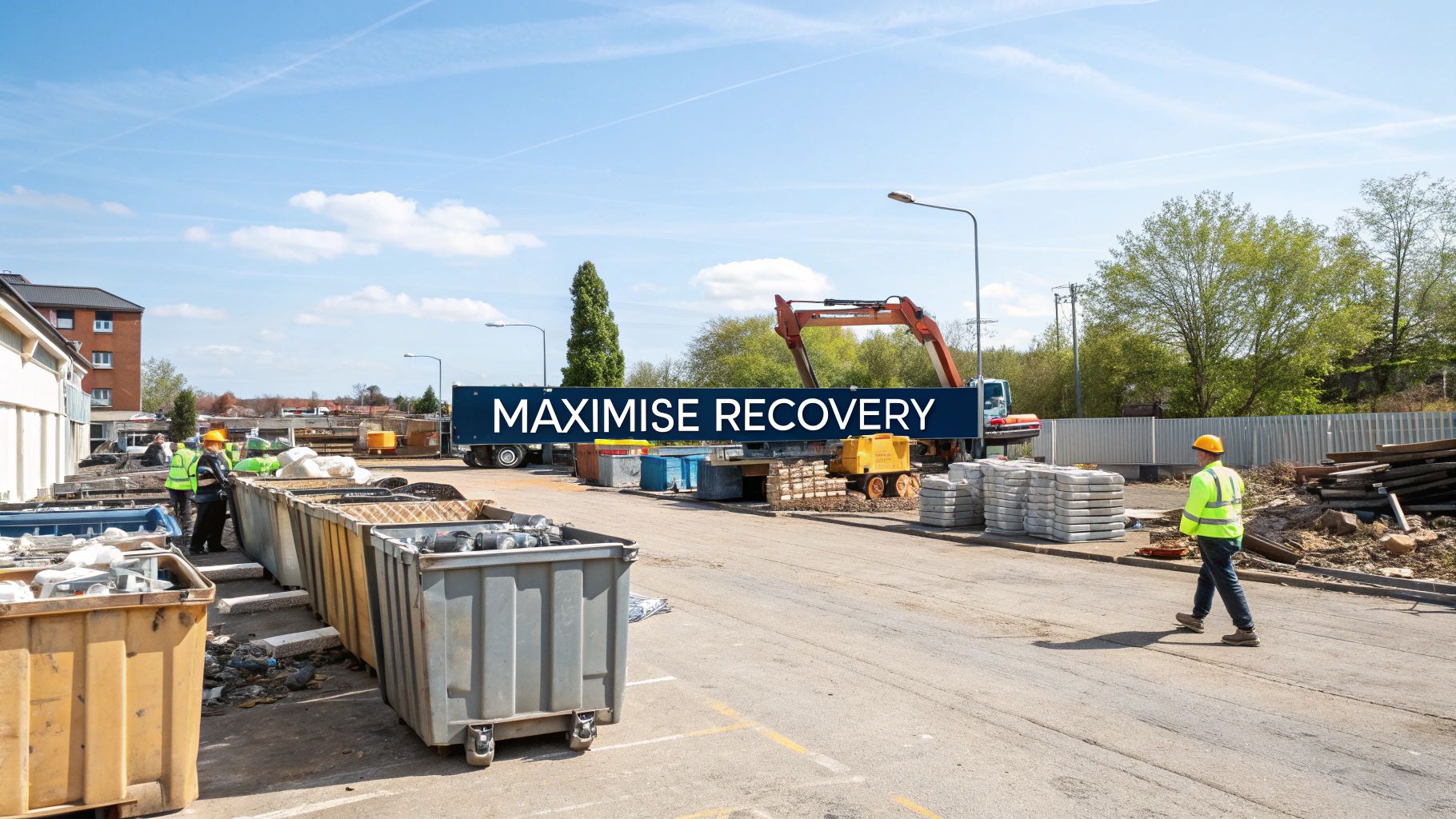
Moving from routine scrap collection to large-scale industrial and demolition projects is a whole different ball game. A factory clearance or dismantling a multi-storey building isn’t just about selling off the metal; it’s a complex logistical beast where recovery is woven directly into the project’s critical path. Get this right, and what looks like a liability on paper can become a major revenue stream.
The secret sauce here is integrated project management. Your demolition partner shouldn’t just be the team that knocks things down. From day one, they need to be an active part of the recovery and value-extraction plan. This simple alignment speeds up timelines, makes the site safer, and maximises your financial return by treating scrap recovery as a core objective, not an afterthought.
On-Site Sorting and Upgrading Your Material
The most profitable industrial jobs are the ones where material gets upgraded before it even leaves the site. Just chucking everything into a mixed-metal bin and hoping for the best is literally throwing money away. A sophisticated on-site sorting strategy is non-negotiable.
This goes way beyond just separating ferrous from non-ferrous metals. We’re talking about actively processing materials to hit higher-grade specifications right there on the ground.
For instance, a demolition crew with the right gear can:
- Process Structural Steel: Cut down I-beams and heavy plate to meet premium HMS 1 specifications.
- Strip Copper Cable: Get the insulation off heavy-gauge electrical wiring to produce clean, high-value copper.
- Isolate Contaminants: Keep metals separate from concrete, wood, and other waste to avoid getting hit with penalties for contaminated loads.
Doing this pre-processing work on-site dramatically increases the value you get. It’s the difference between being paid a low rate for mixed scrap versus getting premium, furnace-ready prices.
Handling the Big Stuff: Logistics for Oversized and Hazardous Items
Demolition projects always throw up items that need specialised handling and transport. Think massive industrial machinery, huge storage tanks, or structural steel beams that are tens of metres long. Nailing the logistics for these items is absolutely critical to keeping the project on schedule and, most importantly, safe.
An experienced partner will manage this entire headache for you, covering things like:
- Specialised Lifting Equipment: Arranging for heavy-lift cranes and the right rigging.
- Transport Permits: Getting all the necessary permits for moving abnormal loads.
- Hazardous Material Management: Safely identifying and removing materials like asbestos, lead-based paint, or residual chemicals, all while staying compliant with environmental regulations.
An experienced demolition and recycling partner sees a site not just as a structure to be removed, but as a resource to be harvested. Every ton of steel recovered is a direct contribution to the project’s bottom line and the circular economy.
The growing demand for steel in South Africa just sweetens the deal. Driven by infrastructure projects and industrial growth, the appetite for recycled steel is strong. The local market was valued at USD 6.82 billion in 2024 and is expected to hit USD 9.48 billion by 2033. This consistent demand creates a stable, valuable end market for high-quality ferrous scrap coming off demolition sites. You can learn more about the growth drivers in South Africa’s steel market at imarcgroup.com.
Ultimately, a successful large-scale project comes down to having a partner who gets both the demolition and the recycling game inside and out. They are the ones who can turn challenges into opportunities, making sure every last recoverable asset is managed efficiently.
Your Partner in Sustainable Scrap Metal Solutions

Getting the best value when you decide to sell scrap metal near me isn’t just about luck—it’s about having a smart, informed strategy. It starts with identifying your materials and understanding ISRI grades, then moves to vetting a recycler and managing the logistics of large projects. Every step is a chance to protect your bottom line and maximise your returns.
When you’re proactive and knowledgeable, what seems like a simple disposal task can become a genuine asset to your operation’s financial health.
Of course, this journey is much smoother with the right partner. At D7 Capital Partners, we bring a level of expertise that simplifies the entire process for industrial, commercial, and municipal clients across South Africa. We don’t just buy scrap; we deliver complete, end-to-end solutions.
Integrated Services for Complex Needs
Our real strength is in managing the full lifecycle of your project. Maybe you need a complex structural demolition, a full site clearance, or just a reliable collection schedule for your manufacturing offcuts. Whatever it is, our services are designed to work together seamlessly.
This integrated approach means you have a single point of contact and accountability, ensuring things run efficiently from start to finish.
We’re also deeply committed to the highest standards of safety, regulatory compliance, and environmental stewardship. Our team knows how critical it is to get the job done right, making sure your site is cleared safely and every piece of material is handled responsibly. We offer:
- Expert Demolition: Safe, compliant dismantling of industrial sites and structures.
- Efficient Scrap Collection: Customised recovery solutions built for industrial-scale volumes.
- Professional Trading: Fair, transparent, market-based pricing for all ferrous and non-ferrous metals.
Choosing a partner is about more than just the price on the table—it’s about reliability, compliance, and trust. We build long-term relationships by consistently delivering value and peace of mind.
If you’re ready to work with a team that can provide a customised, dependable, and value-driven solution for your scrap metal and demolition needs, we’re here to help.
Contact D7 Capital Partners today for a professional consultation. Let’s discuss how we can meet the specific requirements of your operation.
Still Have Questions About Selling Scrap Metal?
Diving into the scrap metal market for the first time, especially with industrial-sized loads, naturally brings up a few questions. We get it. Here are some straight-talking answers to the queries we hear most often, designed to give you the clarity and confidence you need to move forward.
What’s the Minimum Amount of Scrap You’ll Take?
We’re geared for industrial, commercial, and large-scale demolition projects. That’s where our logistics and pricing power really shine. However, we encourage you to give us a ring no matter the size of your load.
Our sweet spot is handling substantial volumes, like ongoing manufacturing offcuts or full site clearances, where we can set you up with on-site bins and regular collections. For smaller quantities that might not fit that mould, a quick chat is all it takes for us to figure out the most efficient way forward. Our aim is always to find a practical solution for every professional client.
How are Scrap Prices Set, and How Often Do They Change?
Think of scrap metal prices like the stock market—they’re tied directly to global commodity exchanges and can shift daily. It all comes down to international supply and demand.
The rates for big players like copper and aluminium are heavily influenced by trading on exchanges like the London Metal Exchange (LME). When we give you a quote, it’s always based on the live market rates for that day, factored in with a professional eye on your material’s quality, grade, and the total tonnage you’re selling.
For bigger contracts or ongoing partnerships, we can lock in pricing structures that help cushion you from some of that market volatility. We believe in total transparency—you’ll always get clear pricing based on certified weights and confirmed grades.
This way, you know exactly how your material is being valued from the get-go.
What Paperwork Do I Need to Sell Scrap in South Africa?
Getting the documentation right is non-negotiable. It’s a critical part of stamping out metal theft and ensures every transaction is legitimate and traceable for everyone involved.
Generally, you’ll need to have these on hand:
- Valid Identification: For an individual, that’s a South African ID or driver’s license. For a business, we’ll need your official company registration documents.
- Proof of Ownership: You must be able to show where the material came from or prove you have the legal right to sell it. This is for your protection as much as it is for ours.
On our end, every transaction is formally documented. We issue a certified weighbridge certificate confirming the exact tonnage and a proper invoice for payment. This gives you a clean, auditable paper trail for your business records.
Can You Deal With Scrap Metal That’s Mixed With Other Waste?
Absolutely. In fact, sorting out complex, mixed loads is one of our core strengths, especially on big demolition jobs and industrial clean-outs. We’re a total waste management provider, which means we have the right equipment and solid processes to separate everything efficiently—either on your site or back at our facility.
While clean, pre-sorted scrap will always fetch the best price, our integrated service is built for the real world of complex waste streams. We’re experts at recovering every last bit of valuable metal while making sure all the other materials are handled in a compliant and environmentally sound way. We turn a logistical headache into a smooth recovery operation.
Ready to turn your scrap metal into a valuable asset with a reliable, professional partner? D7 Capital Partners offers comprehensive demolition, scrap trading, and waste management services tailored to your needs.
Contact our team today to discuss your project and get a professional consultation.
- Sell Scrap Metal Near Me for Cash: Understanding Your Scrap
- Navigating the Scrap Metal Sales Process
- Finding a Reputable Scrap Metal Recycler in South Africa
- Taking It to the Next Level: Industrial and Demolition Projects
- Your Partner in Sustainable Scrap Metal Solutions
- Still Have Questions About Selling Scrap Metal?