A site supervisor finishes a shutdown, looks at a cage full of copper cable, busbar offcuts, pipe, and mixed fittings, then asks the same question everyone asks: what is the copper price per kg south africa right now?
That question sounds simple until the load reaches the scale. One pile is clean bright wire. Another has insulation, solder, paint, brass ends, or burnt residue. One buyer quotes a benchmark. Another quotes a delivered yard price. Finance wants certainty. Operations wants the scrap gone. Compliance wants paperwork before anything moves.
That’s where most value gets lost. Not because copper has no market, but because sellers treat all copper as one product when it isn’t. Grade, moisture, contamination, transport, paperwork, and timing all change what lands in your account.
Industrial clients, demolition contractors, fabricators, and municipal teams don’t need another generic commodities article. They need a practical field guide grounded in how copper is bought, sorted, weighed, documented, and moved in South Africa.
Your Guide to Unlocking the Value of Scrap Copper
A common situation on site looks like this. A maintenance team strips old cable during an upgrade. A demolition contractor removes copper pipe from a plant room. A factory clears obsolete panels and finds busbar, lugs, and wire tails mixed in one skip.
By the time someone asks for a price, the material has already been handled badly. Clean copper sits with dirty copper. Brass is still attached. Burnt cable has been thrown in with bright wire. The load might still have plastic, steel clips, insulation, or general rubble mixed through it.
That’s why the answer to copper price per kg south africa is never just one number.
The practical question is different. It’s this: what grade do you have, how should it be prepared, and what deductions will apply before payment is made?
On the ground, the biggest mistake isn’t selling at the wrong moment. It’s presenting good copper as mixed copper. Once that happens, the buyer prices the risk, the processing effort, and the uncertainty into the deal.
If you’re dealing with multiple metal streams, it helps to understand the wider scrap picture as well. This guide on common scrap metal types you can recycle for cash is useful when copper sits alongside aluminium, brass, stainless, and ferrous material in one project.
Clean separation beats negotiation. A seller who brings sorted copper usually does better than a seller who tries to argue after the load is mixed.
The useful approach is straightforward. Start with the benchmark. Convert it to per kilogram terms. Identify the grade. Then work back through logistics, quality, and legal requirements. That’s how you stop guessing and start protecting value.
How to Find the Current Copper Price Per Kg in South Africa
A plant manager gets a quote from an overseas copper chart, converts it to rand, and expects the yard to match it. Then the load arrives with lugs, insulation, oxidation, and a few kilos of brass still attached. The benchmark was useful, but it was never the settlement price.
That gap causes confusion all the time in the South African scrap trade. International references are quoted per ton. Local transactions are usually discussed per kilogram. Actual buying prices are then adjusted again for grade, recovery, transport, and compliance.

Start with a benchmark, then localise it
The right starting point is a recognised copper benchmark or a live market reference from your buyer, trader, or export channel. That gives you direction. It does not give you a payout figure for scrap sitting in a bin, on a demolition site, or mixed into a factory clean-out.
Refined copper pricing and scrap copper pricing sit in the same market, but they are not interchangeable. Refined metal is a standard product. Scrap is a recovery product, and recovery always comes with handling decisions, quality variation, and commercial risk.
In practice, I tell clients to use the benchmark as an anchor, then ask a harder question. What will this exact material net after sorting, deductions, freight, and paperwork?
Convert ton pricing into kg pricing
The maths is simple.
| Market quote | Conversion method | Result |
|---|---|---|
| Per ton | Divide by 1,000 | Per kg |
| Per kg | Multiply by 1,000 | Per ton |
If a market reference is quoted per ton, divide by 1,000 to get a per kilogram view. If a buyer gives you a rand per kilogram number, multiply by 1,000 if you want to compare it against a ton-based reference.
That conversion helps. It still does not solve the grading issue.
Why the local price moves away from the benchmark
A South African scrap buyer is pricing the metal and the work around the metal.
For example, clean bright copper wire is easier to verify, easier to process, and easier to place into the next trading channel than mixed braziery with solder, fittings, and dirt. A remote collection from a mine site or farm also carries a different cost from a delivered load at an urban yard. Payment terms matter too. Same-day settlement, collected loads, and small parcels rarely price the same way as larger delivered tonnages with confirmed grade.
These are the main adjustments that change the number on the scale ticket:
- Grade. Higher purity and cleaner preparation usually improve the return.
- Contamination. Insulation, paint, oil, solder, steel clips, and non-copper attachments reduce payable weight or trigger downgrades.
- Logistics. Distance, access, loading time, and whether the buyer collects all affect the net price.
- Processing cost. Stripping, chopping, sorting, and cleaning all have a cost.
- Trading basis. Delivered, ex-yard, collected, COD, and account terms produce different prices.
This is why two buyers can look far apart on headline price while being much closer once the deal terms are lined up properly.
A practical way to check the current copper price
The fastest method is to work from your material outward, not from a generic internet number inward.
- Get a current benchmark or live trade indication from a credible local buyer or trader.
- Convert it to per kilogram so the figure is usable on site.
- Identify the material category before requesting a firm price. If your load includes other metals, this guide to non-ferrous metal categories and uses helps your team separate copper from brass, aluminium, and mixed non-ferrous scrap.
- Confirm the basis of the quote. Delivered yard price, collected price, and export-related buying price are different commercial positions.
- Ask how deductions are applied before the truck moves. This avoids disputes after weighing.
A benchmark gives you direction. The settled copper price per kg in South Africa comes from the grade in front of the buyer, the cost to move it, and the amount of risk left in the load.
Practical rule: Compare like with like. A clean, sorted copper load on a delivered basis should be measured against another clean, sorted delivered load, not against a refined metal benchmark or a mixed-yard quote.
Understanding Copper Grades and Their Impact on Price
A kilo of copper isn’t always worth the same as another kilo of copper. In scrap, the difference comes down to grade. That means purity, oxidation, attachments, and the amount of work required before the metal can move back into the smelting stream.
The fastest way to lose money is to call everything “copper” and hope for the best.
What the common grades actually mean
In practical yard terms, sellers usually encounter a few broad copper categories.
MILB is bright shiny copper wire. It is clean, unalloyed, and free from insulation, excessive oxidation, and attachments. This is the material most sellers think of when they hear “top copper price”.
CANDY usually refers to copper busbar. It’s high-grade material, but it may not command the same level as bright shiny wire because form, surface condition, and processing route can differ.
BIRCH is a lower-grade category often associated with burnt cable or copper that needs more recovery work.
DREAM is braziery-grade material. In this category, you often find older copper with solder, joins, oxidation, or mixed condition.
If you want a broader primer on the category itself, this overview of what non-ferrous metals are helps place copper alongside brass, aluminium, lead, and other traded grades.
Indicative Copper Scrap Prices in South Africa April 2026
As of April 7, 2026, South African buying prices cited for copper scrap grades listed MILB at R176.00 per kg COD, CANDY at R172.50 per kg, and BIRCH plus DREAM at R137.50 per kg. The same price list notes that bright shiny copper carries a premium because of its more than 99% copper content and minimal oxidation, allowing direct smelting with less than 0.5% impurities. See the South African non-ferrous metal buying prices.
| Grade (ISRI-like code) | Description | Indicative Price per kg (ZAR) |
|---|---|---|
| MILB | Cu bright shiny | R176.00 |
| CANDY | Cu busbar | R172.50 |
| BIRCH | Cu2 burnt cable | R137.50 |
| DREAM | Cu3 braziery | R137.50 |
Those numbers show the market’s basic logic. Cleaner copper with fewer impurities attracts the stronger rate. Lower-grade copper attracts a lower rate because someone still has to remove risk and absorb processing losses.
Why the premium exists
The premium on bright shiny copper isn’t arbitrary. It reflects what the downstream processor sees.
A clean bright wire load is easier to inspect, easier to classify, and easier to feed into the next stage. A mixed braziery load carries questions. Is there solder? Is there brass attached? Is there ash or oxidation? How much of the weight is actual recoverable copper?
That’s why “close enough” sorting usually backfires.
If a load contains good copper and bad copper mixed together, the bad copper decides the price more often than the good copper does.
How to identify your grade on site
Yard terminology can intimidate operations teams, but physical identification is usually practical.
Bright and shiny material
This is bare, clean copper wire with a bright metallic finish. It should be free from tinning, lacquer, insulation, and burned residue. If it looks clean enough to go straight into a high-grade bin without debate, it probably belongs near the top end.
Busbar and heavy clean copper
This often comes out of switchgear, panels, substations, and industrial electrical equipment. It may be thicker, flatter, and structurally shaped. It’s still high value, but attached bolts, lugs, paint, or joint material can pull it down if left in place.
Burnt cable
Burning cable leads sellers into trouble. Burning cable might expose copper, but it also damages surface condition, creates compliance concerns, and can lower grade classification. Even when the copper is visible, burnt material is not the same as bright shiny.
Braziery and mixed copper
Braziery-grade material often includes old plumbing tube, mixed copper offcuts, and items with solder, oxidation, or residue. It still has value, but it is not premium copper.
What works and what doesn’t
A few habits consistently improve outcomes.
- Separate by origin. Cable, busbar, pipe, and mixed demo copper should not sit in one container.
- Remove obvious non-copper attachments. Brass valves, steel screws, clips, plastic, and insulation all affect grading.
- Keep wet and dirty material apart. Mud and site debris create argument at the scale.
- Don’t burn cable. It damages the material stream and raises avoidable compliance concerns.
What doesn’t work is trying to “average out” a mixed load. Buyers don’t reward uncertainty. They discount it.
A simple grading test
Before you request a quote, ask four questions:
- Is it bare?
- Is it clean?
- Are there attachments?
- Would a buyer need extra labour to recover pure copper from it?
The more often the answer is “yes” to the first two and “no” to the last two, the closer you are to the better-paying grades.
Key Market Drivers Influencing South African Copper Prices
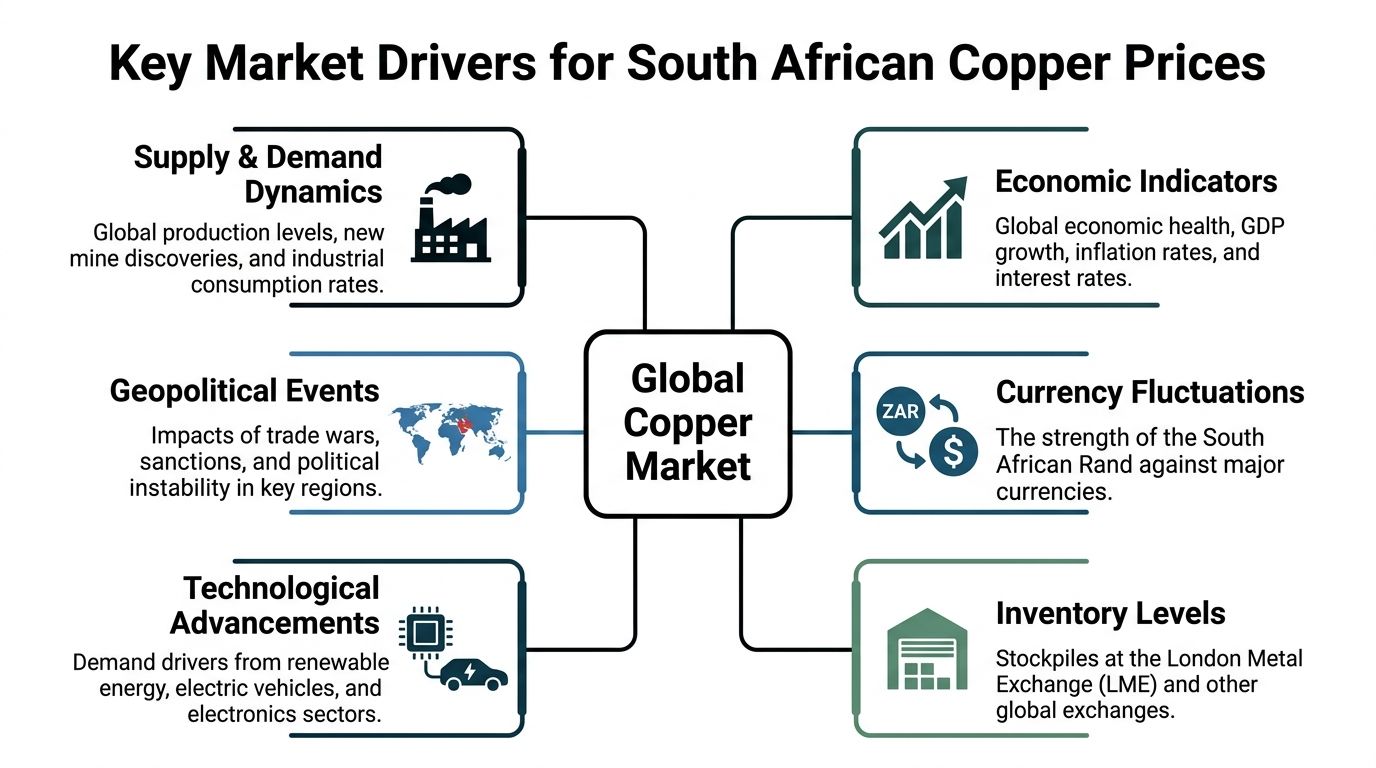
A seller calls in the morning after checking the copper chart overnight. The global price is up, but the local offer on his load has barely moved. On the ground in South Africa, that gap usually comes down to three things. Currency, outlet demand, and the cost of getting that specific material from site to a compliant buyer.
Global price direction
International copper benchmarks still set the tone for South African pricing. If refined copper firms offshore, local scrap buyers usually have more room to bid. If export sentiment weakens, yards and processors protect margin quickly, especially on mixed or lower-recovery material.
Local scrap does not track the benchmark one-for-one.
Processors buy against what they can recover, what they can move, and how much risk sits in the load. A strong copper market helps, but it does not erase deductions for difficult material, slow loading, or uncertain classification.
The rand changes the local picture
Copper is priced globally in US dollars and settled locally in rand. That conversion changes the number sellers see.
A weaker rand can support rand-based copper prices even if the dollar copper price is flat. A firmer rand can cap local price movement even during a positive global session. Industrial sellers who only watch COMEX or LME screens often miss why a South African quote feels behind the market.
This matters most on larger volumes. On a plant clearance, cable strip-out, or shutdown sale, exchange-rate timing can shift the value of a deal enough to justify holding for a better booking window, or closing quickly before the currency turns against you.
Domestic demand and processing capacity
South African copper prices also depend on who is buying this week and what form of copper they want.
Processor appetite
When local processors need clean feedstock and their lines are running properly, competition for good copper improves. The strongest bids usually go to material that can move straight into processing with limited sorting, cutting, or cleaning.
When buying desks are under pressure, the market gets selective. Loads that looked acceptable a week earlier can attract wider deductions because the buyer is managing labour, throughput, or stock levels more tightly.
Industrial activity and scrap flow
Scrap supply follows economic activity. Shutdowns, electrical upgrades, municipal replacement work, demolition, and fabrication all push copper into the market at different times and in different grades.
That affects price in two ways. Heavy inflows of clean industrial copper can improve trading volume but soften bids if several large sellers hit the market together. Thin supply can lift buyer appetite, especially for cleaner grades that are hard to source consistently.
Logistics can erase a good price
This is the part generic pricing pages usually miss.
A high quote means very little if the load sits 300 kilometres from the nearest practical outlet, needs hand-sorting on site, or loses half a day at collection because access control was not arranged. In South Africa, transport cost, security risk, loading equipment, and turnaround time all influence the effective price per kilogram.
I have seen loads with excellent copper content underperform because the handling cost was wrong from the start. Forklift delays, wet material, poor packing, and double-handling all reduce net value. Serious sellers price the whole movement, not just the metal.
The market signals that matter
The best operators watch a short list of indicators and act on them consistently.
- Global copper direction affects buyer confidence and replacement cost.
- USD/ZAR movement changes what offshore copper values mean in rand.
- Local processor demand affects how aggressively buyers compete for clean feed.
- Scrap flow from industry and infrastructure work changes supply pressure week to week.
- Freight, handling, and site conditions determine whether the quoted price holds after inspection and collection.
For a wider view of the forces shaping procurement and resale conditions, see our analysis of metal supply trends shaping 2025.
The practical point is simple. South African copper pricing is a trading decision, not just a screen price. Clients who track the benchmark, the rand, and the site realities at the same time usually get better outcomes and fewer disputes at the scale.
A Practical Guide for Scrap Copper Sellers and Buyers
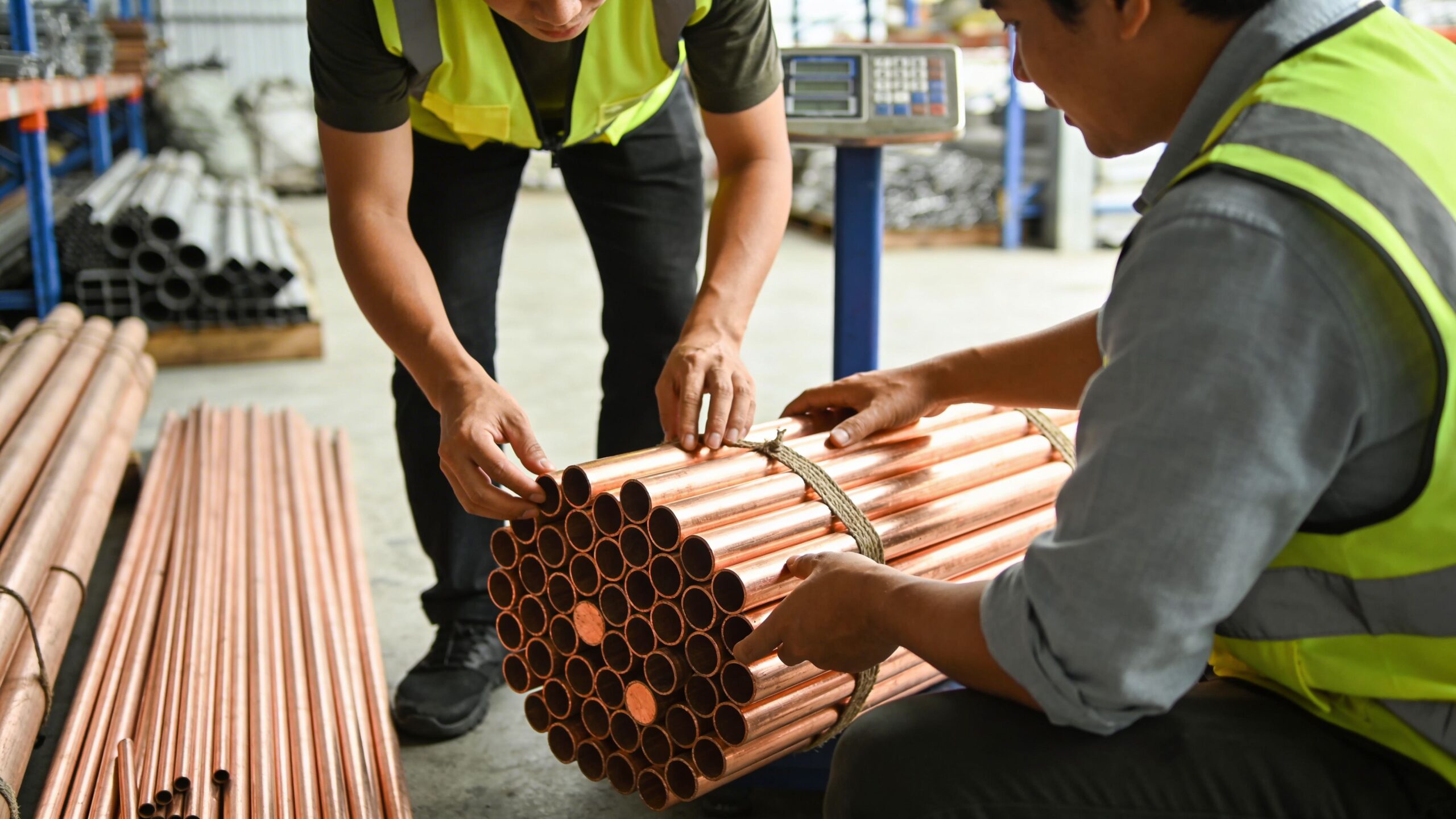
Good copper deals are usually decided before the truck leaves site. The condition of the material, the paperwork, the packing method, and the inspection standard all affect the final result.
For sellers
If you generate copper from shutdowns, fabrication, demolition, maintenance, or municipal works, your job is to protect grade integrity.
Prepare the load before pricing it
The sequence matters.
First, separate copper from everything else. Keep cable apart from pipe, busbar apart from braziery, and clean material apart from dirty material. If one skip contains every non-ferrous item from a site, you’ve already made pricing harder.
Then remove what obviously does not belong. Brass valves, steel fasteners, lugs, insulation, tape, and plastic all create deductions or downgrade risk.
Finally, keep the copper dry and visible. Mud, general rubble, and hidden contamination create disputes that waste time.
A broader operating checklist on scrap metal recycling practices is helpful when copper sits inside a larger site clearance or decommissioning job.
Ask better commercial questions
Don’t only ask, “What’s your copper price today?”
Ask these instead:
- What grade are you pricing this as
- Is the quote COD or subject to inspection
- Is the rate for collected material or delivered material
- How do you treat attachments and mixed loads
- Will the load be weighed gross and tare with documentation
Those questions force clarity. They also reveal whether both sides are discussing the same product.
For buyers
Buyers need discipline too. A sloppy intake process creates margin leakage and compliance risk.
Inspect by category, not by assumption
A load labelled “clean copper” should still be checked for solder, lacquered wire, mixed brass, oxidation, and hidden insulated sections. The easiest loads to overpay on are the ones that look right from the top.
Inspection should also look at packing condition. A neatly packed pallet or cage usually indicates better handling upstream. Loose mixed material often hides more surprises.
Buyers who rely on verbal descriptions instead of physical inspection usually end up paying for someone else’s sorting problem.
Standardise weighing and records
Every trade should have a clean weight trail. Site weight, transport weight if relevant, receiving weight, and a clear description of the grade accepted. That protects both parties.
It also prevents the familiar dispute where operations, transport, finance, and the receiving yard all hold slightly different versions of the same transaction.
A short visual on handling and recovery helps teams who don’t work with copper every day.
A sample price logic
The calculation should follow a simple order.
| Step | What to check | Why it matters |
|---|---|---|
| 1 | Identify grade | Grade sets the pricing band |
| 2 | Confirm weight | Net payable weight must be clear |
| 3 | Check contamination | Deductions must be understood upfront |
| 4 | Confirm trading terms | Collection, delivery, and payment affect value |
| 5 | Finalise documents | Payment should match accepted material |
If the material changes category during inspection, the number changes. That isn’t a trick. It’s how scrap trading works when the delivered load doesn’t match the assumed grade.
What works best is transparency before movement, not argument after unloading.
Navigating Legal and Quality Compliance in South Africa
Copper has value. That’s exactly why compliance matters.
In South Africa, scrap copper trading sits under close scrutiny because copper cable theft, unlawful possession, and undocumented trade create real legal and operational risk. Any serious seller or buyer should treat compliance as part of the transaction, not as admin that can be fixed later.

Documentation is not optional
A legitimate copper transaction should be supported by records that show where the material came from, what it is, and how it was weighed.
That commonly includes:
- Proof of ownership or site authority to dispose of the material
- Company details for the seller
- Weighbridge or receiving weight records
- Clear material description tied to the accepted grade
- Collection and delivery records where applicable
When documentation is weak, the risk moves quickly from commercial inconvenience to legal exposure.
Quality checks protect both sides
Compliance is not only about ownership. It is also about what is in the load.
Copper should be checked for contamination, hazardous inclusions, and material that does not belong in the declared grade. Industrial scrap can include oils, residues, mixed metals, non-metallic contamination, and occasionally items that require special handling.
A rushed transaction often misses these issues. A professional one doesn’t.
Why informal dealing is expensive
Informal trading can look faster at the start. It often becomes expensive later.
If the buyer doesn’t inspect properly, the load may be downgraded after the fact. If the seller cannot prove lawful origin, payment may be delayed or refused. If contaminated material enters the stream, downstream processors push the cost back up the chain.
The cheapest transaction is rarely the one with the highest headline price. It’s the one that closes cleanly, gets paid correctly, and doesn’t create legal problems after collection.
Professional standards reduce friction
The strongest copper trades have a few shared habits. The material identification is honest. The documents match the load. The weight trail is clear. The parties know who is carrying compliance responsibility at each handover point.
That isn’t bureaucracy for its own sake. It protects project managers, procurement teams, municipal officials, plant operators, and traders from avoidable risk.
How D7 Capital Partners Maximises Your Copper Value
Copper only delivers full value when the entire chain is managed properly. The metal must be recovered safely, separated by grade, weighed accurately, documented correctly, and moved through a compliant route.
That’s where D7 Capital Partners (Pty) Ltd adds practical value.
The company works across scrap metal recycling, structural demolition, and total waste management. That matters because copper doesn’t usually appear as a neat standalone product. It comes out of plant upgrades, strip-outs, decommissions, cable recovery, municipal works, and mixed industrial waste streams.
D7 Capital Partners operates from roots established in Jeppestown, Johannesburg from 2008, with the company founded in 2016. The team handles ferrous and non-ferrous recovery, custom grades, safe demolition, site collections, logistics, and responsible processing. For clients, that means fewer handovers and less value leakage.
The commercial advantage is straightforward:
- Better sorting protects higher copper grades
- On-site recovery planning reduces mixing and contamination
- Logistics coordination limits delays and handling losses
- Compliance controls reduce legal and payment risk
- National industrial experience helps on complex, high-volume jobs
If you’re dealing with copper from a shutdown, demolition, fabrication line, warehouse clearance, or municipal project, the challenge is not finding a benchmark. It’s turning a difficult scrap stream into a clean commercial outcome.
Frequently Asked Questions About Copper Pricing
A factory maintenance team strips out old cabling on Friday, checks an international copper chart, and expects one number. By Monday, the local offer has changed. The copper did not change. The grade, the rand, the paperwork, and the route to market did.
Does the rand really affect local copper prices that much
Yes. Copper trades internationally in US dollars, but South African scrap deals are settled in rand. If the exchange rate moves sharply, the local price per kg can rise or fall even when the dollar copper price is flat.
For industrial sellers, that matters most on larger loads and delayed sales. A short hold can improve the outcome, but currency can just as easily cut your margin.
Should I hold copper and wait for a better price
Only if the storage conditions and risk profile make sense.
Holding clean, dry, well-segregated copper in a secure yard is a commercial choice. Holding unsorted cable offcut, stripped conductor, and mixed demolition scrap on a busy site usually creates losses through contamination, theft, handling damage, and slower payment.
The right question is not whether the market might improve. It is whether the extra value from waiting is likely to exceed the cost and risk of holding the material.
Why can South African copper pricing feel tight even when copper demand is strong
Local pricing is affected by more than global demand. Processors and traders also deal with regional supply pressure, transport costs, power interruptions, and replacement cost.
Import pricing can add strain as well. Analysts at IndexBox note in their Africa copper market overview covering South African import pricing that South Africa faced relatively high regional import prices in 2024. That affects buyers who need imported copper units for blending or supply continuity, and it can narrow the room they have to pay up on domestic scrap.
What is the most common mistake sellers make
Mixing grades.
I see this often on strip-outs and shutdowns. High-value bright wire gets thrown in with oxidised copper, soldered pieces, terminals, insulation residue, or mixed cable. Once that happens, the whole load is usually priced closer to the lower grade because the buyer now carries the sorting cost and the quality risk.
What should buyers watch most closely
Consistency and proof.
A reliable supplier gives clear grade descriptions, honest photos, accurate weights, and the documents needed for a lawful transaction. Buyers also need to watch for moisture, attachments, excessive dirt, and load-to-load variation. One clean sample does not guarantee a clean second or third load.
If you need a compliant, commercially disciplined partner to recover, process, and realise maximum value from copper and other scrap streams, speak to D7 Capital Partners (Pty) Ltd. The team supports industrial, commercial, and municipal clients across South Africa with scrap metal recycling, structural demolition, logistics, and end-to-end waste management built around safety, transparency, and dependable recovery value.