A construction waste management plan South Africa project teams can use should be written before the skips arrive. This construction waste management plan South Africa guide provides a practical project-control baseline. Waste decisions made during design, procurement and site setup determine whether steel, concrete, timber, cardboard and packaging are recovered cleanly or paid for twice: once as material and again as mixed disposal.
This 11-step plan helps developers, contractors, quantity surveyors, environmental teams and facilities managers control construction and demolition materials from source to final evidence.
Why a construction waste plan matters
South Africa’s waste-policy approach is built around a hierarchy: avoid and reduce first, then reuse, recycle or recover, with treatment and disposal lower down the order. The National Waste Management Strategy specifically recognises the importance of recycling and recovery in the construction and demolition sector.
The business case is equally direct. Source separation can reduce contaminated loads, improve scrap value, make collection predictable and produce clearer records for clients and green-building targets.
11 steps for a construction waste management plan South Africa
1. Set the project boundary
State which enabling, construction, fit-out and demolition activities are included. Identify subcontractor interfaces and whether tenant, municipal or neighbouring waste enters the same site.
2. Forecast the material streams
Estimate concrete, brick, soil, steel, cable, aluminium, timber, gypsum, glass, cardboard, plastics, general waste and hazardous waste by phase. Forecasts do not need to be perfect; they need to guide space, container and collection decisions.
3. Apply the hierarchy at procurement
Reduce offcuts through accurate ordering and standard dimensions. Ask suppliers about returnable pallets, take-back schemes and reduced packaging. Protect delivered materials so damage does not create avoidable waste.
4. Assign ownership
Name the plan owner, area supervisors and subcontractor duties. Define who may approve a collection, sign a waste document and resolve contamination or rejected loads.
5. Design the waste zone
Place containers near generation points without blocking emergency routes, cranes or deliveries. Match openings to the loading method. D7’s scrap metal container guide explains how size and collection access affect safe use.
6. Separate at source
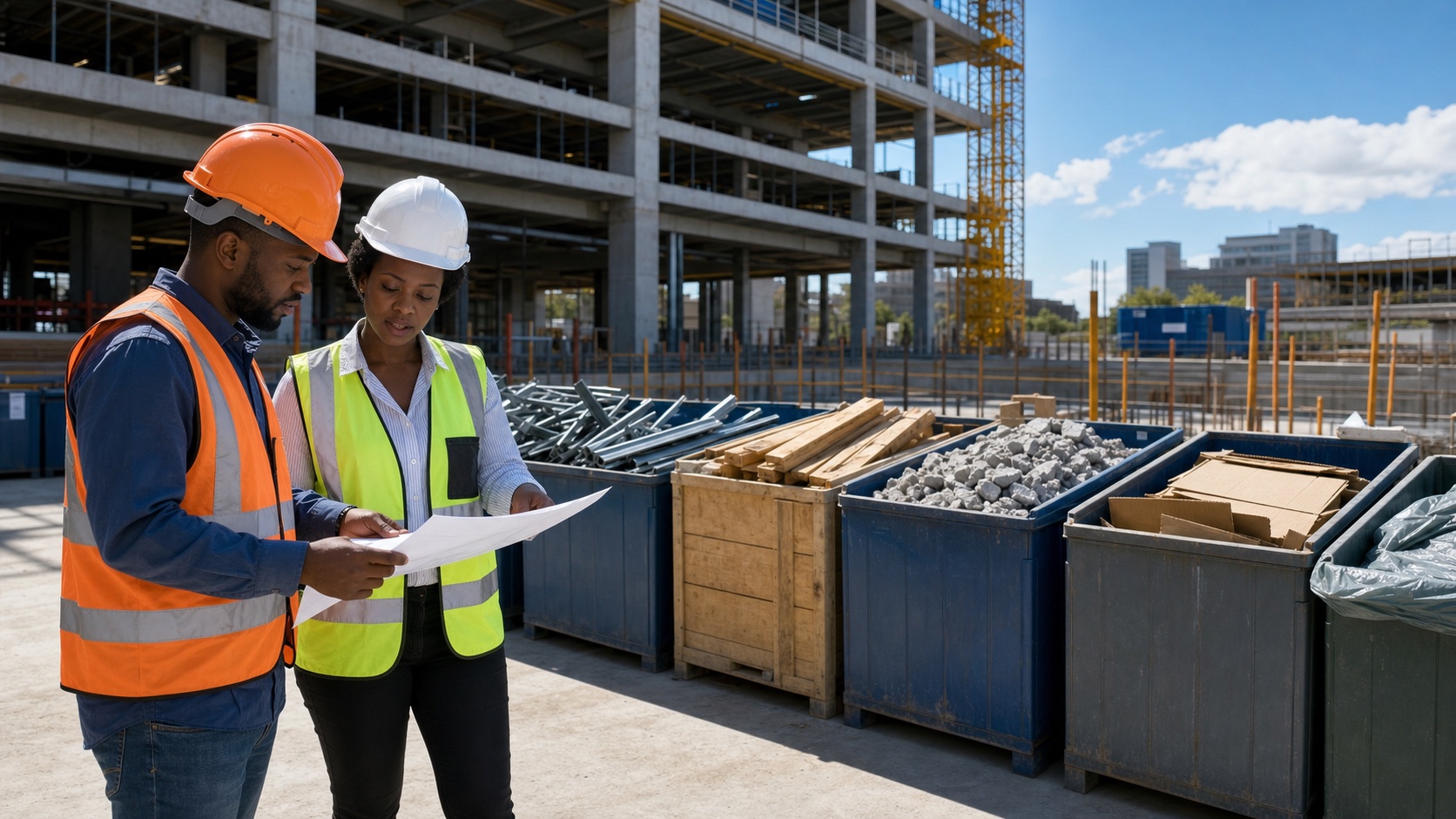
Keep clean steel, non-ferrous metals, timber, rubble, cardboard, plastic and general waste apart. Create dedicated controls for oils, chemicals, asbestos-containing material and other hazardous streams. One contaminated item can downgrade an entire load.
7. Make the standard visible
Use consistent colours, images and multilingual briefings. Show what belongs in each container and the escalation process for uncertain material. Inspect new work areas when the programme changes.
8. Schedule collections by production rhythm
Set trigger levels and response times. Avoid both overflowing containers and half-empty transport. Coordinate collection windows with concrete pours, deliveries and public traffic restrictions.

9. Verify destinations
Know which facility receives each stream and what acceptance rules apply. Keep contaminated or unknown material on hold until it is classified. Avoid vague claims that everything is “recycled” without evidence.
10. Measure performance
Track weight or volume by material, destination and project phase. Useful measures include total waste, waste per floor area, recovery rate, contamination incidents, collection cost and scrap revenue.
11. Report and improve
Review data at site meetings. A rise in mixed waste may indicate poor bin placement, unclear subcontractor scope or a programme change. Record actions and close out with a final material report.
Example construction waste register
| Material | Preferred route | Site control |
|---|---|---|
| Structural steel and rebar | Reuse or metal recycling | Keep clean and separate from rubble |
| Copper and aluminium cable | Authorised metal recycling | Secure cage and release record |
| Concrete and brick | Crush and reuse where suitable | Exclude general and hazardous waste |
| Timber | Reuse, return or recovery | Protect clean lengths from weather |
| Cardboard and plastic | Recycling | Keep dry and compact where practical |
| Hazardous material | Approved specialist route | Identify, contain, label and document |
Watch: recycling construction and demolition material
Site audit questions
- Are valuable metals secure and authorised before release?
- Can workers reach the right container without crossing plant routes?
- Are signs understandable to the actual workforce?
- Are waste documents matched to collection dates and destinations?
- Which recurring offcut could be reduced through procurement?
- Is mixed waste increasing at a specific subcontractor or phase?
For Johannesburg context, read D7’s article on metal waste management in Johannesburg.
Review the relevant industry and regulatory guidance before finalising scope. A construction waste management plan South Africa project should also be checked against site-specific legal, safety and environmental duties.
Daily waste-control rhythm
Translate the project plan into a short routine that supervisors can repeat at the start and end of every shift. Confirm container labels, available capacity, access routes, hazardous-material controls and the destination assigned to each material stream. Photograph recovery zones before work starts so that contamination, overflow or incorrect loading can be identified quickly.
The construction waste management plan South Africa team should reconcile transfer notes, weighbridge tickets and collection records against the site register every week. Compare actual tonnage with forecasts, investigate mixed loads and adjust container sizes or collection frequency before the workfront changes. Share simple recovery results with subcontractors so that good separation becomes part of production planning rather than an afterthought.
A practical construction waste management plan South Africa review also checks whether reusable materials are being damaged, whether hazardous waste is secure and whether vehicle movements conflict with pedestrians or deliveries. Close each reporting period with actions, owners and dates. This creates a traceable record for the client while helping the site recover more value and reduce avoidable disposal.
Frequently asked questions
When should the plan be written?
Before site establishment and procurement decisions are final. Update it when the programme, design, subcontractors or waste streams change.
Is one mixed skip acceptable?
It may be convenient, but it reduces control and often lowers recovery. Projects should compare space and handling constraints against the financial and environmental benefits of source separation.
How should scrap revenue be handled?
State ownership, approval, weighing and settlement rules in the contract. Transparent records prevent disputes between client, contractor and subcontractors.
construction waste management plan South Africa: Practical Next Steps
A construction waste management plan South Africa teams follow is visible, measured and owned. D7 Capital Partners provides scrap metal, demolition and total waste solutions for commercial and industrial projects. Contact D7 Capital Partners to design a practical collection and recovery system for your site.