A lot of “cars for scrap” advice assumes you’re dealing with one dead hatchback on a driveway. That’s not the reality for most industrial clients in South Africa.
You might be closing a plant, clearing a depot, replacing municipal pool vehicles, or stripping a demolition site where old bakkies, forklifts, passenger vehicles and written-off service units all need to leave the property in a controlled way. In that setting, scrapping vehicles isn’t a side task. It sits inside compliance, environmental controls, site access, contractor sequencing, asset registers and final project sign-off.
That’s why the right question usually isn’t “What will you pay for this car?” It’s “How do we move this fleet off site legally, safely and with the highest practical recovery value?”
Beyond Single Cars The Industrial Scope of Scrapping Vehicles
A facility manager under shutdown pressure doesn’t need a casual buyer. They need a process that can absorb mixed-condition vehicles, damaged units, incomplete paperwork, hazardous materials, access restrictions and audit requirements without creating a second problem.
That’s the industrial scope of cars for scrap. It’s part waste stream, part asset recovery exercise, part compliance job. When vehicles sit on a site for too long, they tie up space, complicate housekeeping, leak fluids, attract informal stripping and become a visible sign that a project is slipping.
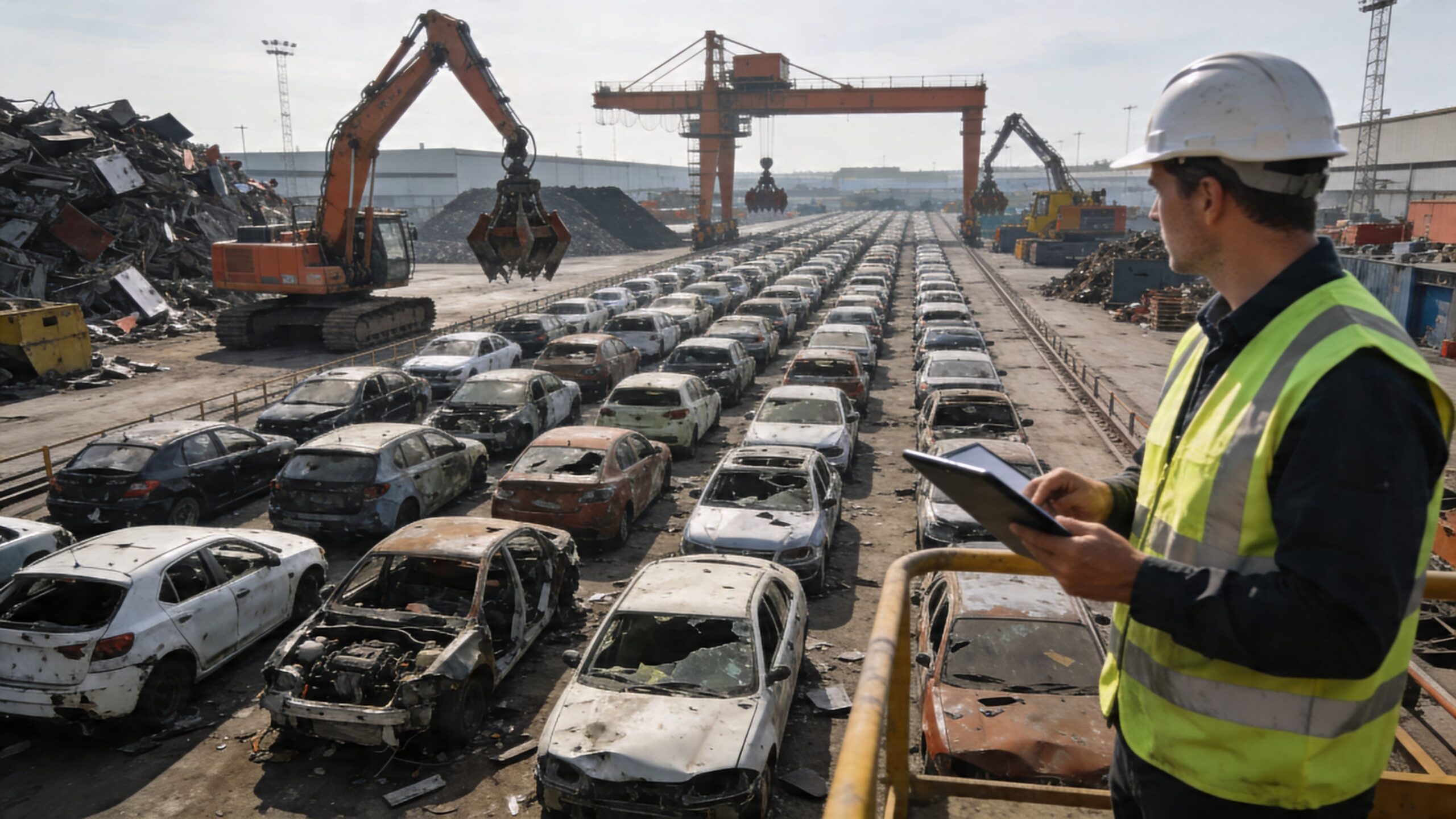
The broader market also shows why vehicle scrapping now matters beyond the yard gate. The global vehicle scrappage market is projected to grow from USD 72.25 billion in 2022 to USD 295.15 billion by 2032, at a CAGR of 15.1%, according to vehicle scrappage market projections published by Spherical Insights. For South African operators, that growth points to one thing. Retired vehicles are no longer just junk to remove. They’re feedstock that needs to be handled properly if you want value and compliance at the same time.
Why industrial scrapping is different
A private seller usually cares about speed. Industrial and municipal clients care about four things at once:
- Document control: Fleet assets need traceable disposal records.
- Site safety: Non-runners and collision-damaged units often need controlled loading.
- Environmental handling: Fluids, batteries and contaminated components can’t be treated casually.
- Material recovery: Ferrous and non-ferrous streams need correct segregation if you want full value.
Steel remains the dominant recovered material in end-of-life vehicle processing, and in practice that shapes most commercial outcomes. The shell carries bulk weight, but the margin often improves when teams also identify non-ferrous content, reusable assemblies where appropriate, and contamination risks before collection.
Practical rule: Industrial vehicle scrapping works best when it’s treated like a managed decommissioning activity, not an ad hoc collection job.
Where projects usually go wrong
The common failures are predictable. Someone waits until the site handover is near, then discovers some vehicles are still registered, some have no keys, some are blocked in by equipment, and some have been cannibalised for parts without any internal record. At that point, every delay becomes expensive because vehicle removal starts interfering with demolition, cleaning or civil works.
A better approach is to fold vehicle disposal into the same planning stream as site clearance. If you’re already managing multiple waste outputs, it helps to align vehicle scrapping with a wider total waste management approach for industrial sites. That keeps responsibilities clear, especially where vehicles are only one part of a larger shutdown or clean-out programme.
How to Assess the True Scrap Value of Your Fleet
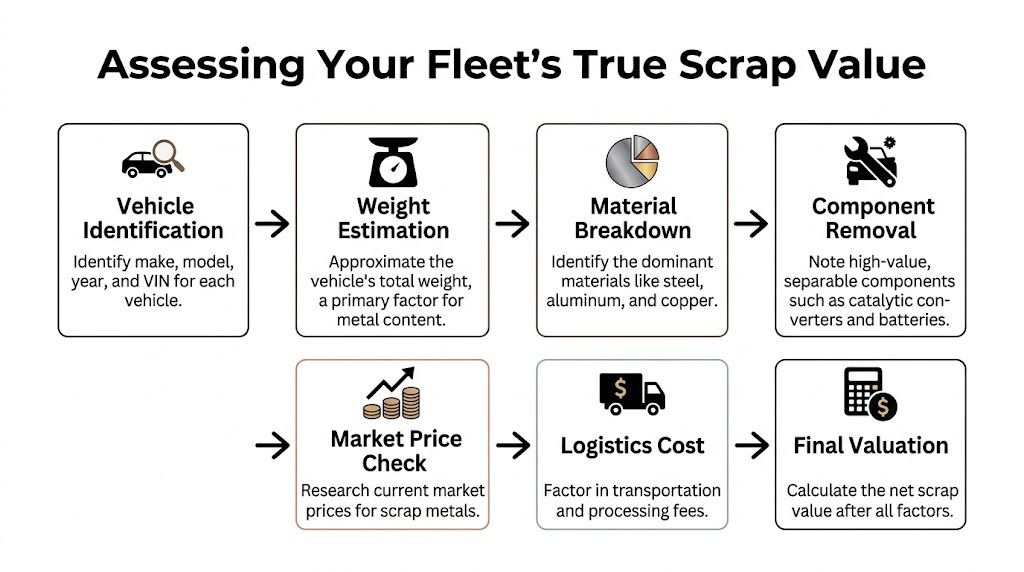
The fastest way to lose money on cars for scrap is to value everything by badge, age or a rough guess from the gate. Scrap valuation starts with material, not sentiment.
A fleet supervisor might look at two old vehicles and assume they’re worth roughly the same because both are beyond repair. A recycler looks at steel mass, non-ferrous content, recoverable components, contamination, loading difficulty and whether the vehicles arrive complete or partly stripped. Those details change the outcome.
Start with the shell, not the story
In industrial scrapping, the body weight usually drives the baseline. Most end-of-life vehicles still derive their core value from ferrous metal, especially the steel shell and structural components. That’s why weighable mass matters more than a running engine, service history or old resale expectations.
Before assigning any figure, build a simple assessment sheet for each vehicle:
- Record identification details: Registration, VIN, make, model and location on site.
- Note condition: Burnt, stripped, collision-damaged, non-runner, flood-affected or complete.
- Estimate access complexity: Can it roll, steer and load easily, or will recovery equipment be needed?
- Flag missing components: Wheels, engine, gearbox, battery and catalytic converter all matter.
- Mark contamination issues: Fuel left in tank, oil leaks, fire residue or embedded waste lower efficiency.
This is basic work, but it prevents valuation errors. If your internal team skips it, the final price often shifts later when the collector finds something different on arrival.
Identify high-value material streams
Not all value sits in the shell. Good assessment separates the hulk from the components and metals that deserve individual attention.
A practical fleet review usually looks for these streams:
- Ferrous content: Chassis, body panels, suspension parts, axles and cast components.
- Aluminium: Engine blocks, gearbox housings, wheels and some body parts.
- Copper-bearing items: Wiring looms, alternators, starter motors and certain electrical assemblies.
- Brass and mixed non-ferrous: Fittings, radiators and selected legacy components.
- Battery and catalytic converter handling: These need careful control, documentation and storage.
Some parts should be removed before the vehicle is processed. Others shouldn’t be touched if removal will damage traceability, create contamination, or leave the shell in a condition that slows loading. The answer depends on your site controls and who is doing the work.
If a vehicle has already been stripped informally, don’t expect a full-shell valuation. Missing non-ferrous content and missing assemblies show up quickly.
Vehicle age and type matter more than many buyers realise
A proper valuation also looks at what kind of vehicles are in the batch. Vehicle scrappage rate analysis shows significant variation by vehicle age and fuel economy. Older vehicles and less fuel-efficient light trucks often have different material compositions and survival longevity, meaning a one-size-fits-all valuation is ineffective, as noted in Statista’s vehicle scrappage rate analysis.
For a South African fleet owner, the lesson is practical rather than academic. Don’t lump sedans, half-stripped bakkies, panel vans and light trucks into one average. Their metal mix, recoverable components and loading requirements differ enough to distort planning.
What works and what doesn’t
The best fleet assessments usually follow a split-screen logic.
| Assessment approach | What happens in practice |
|---|---|
| Grouped by vehicle type and condition | Better forecasting, fewer price disputes, cleaner loading sequence |
| One flat rate for the entire yard | Faster on paper, but usually inaccurate and vulnerable to deductions |
| Pre-identified parts and hazards | Safer collection and more reliable recovery value |
| No pre-inspection | Delays at pickup, changed pricing, arguments over completeness |
One more trade-off matters. Removing every valuable component isn’t always the smart move. If your team spends too long extracting low-yield parts, labour and delay can wipe out the upside. The stronger method is selective separation. Pull what is clearly high value, easy to secure and easy to document. Leave the rest to a compliant processing stream.
A simple decision filter for fleet managers
Use this when reviewing cars for scrap across a site:
- Separate complete units from stripped units: They shouldn’t be priced the same.
- Keep non-runners accessible: Don’t let them get boxed in behind containers or machinery.
- Protect valuable assemblies early: Catalytic converters and batteries should be controlled, not left exposed.
- Review metal categories before disposal: A basic understanding of common scrap metal types and their recycling value helps internal teams avoid mixing high-value material into general waste.
- Match valuation to project timing: A slightly better price can be a bad decision if it delays shutdown or handover.
Navigating South African Legal and Paperwork Requirements
For industrial clients, paperwork is usually where vehicle scrapping turns from simple to risky. If the legal process isn’t handled correctly, the vehicle may be physically gone while the liability stays behind on your books.
That problem shows up most often with fleet disposals done in a rush. Operations teams focus on collection, then finance or admin later discovers the registration status was never properly closed out. In South Africa, that’s not a minor admin error.
Failure to properly de-register a vehicle for scrap via the eNaTIS system can result in fines up to R10,000. With over 150,000 vehicles deregistered annually for scrap, choosing a compliant partner is critical, especially since only an estimated 20% of scrap yards are fully licensed for the hazardous waste handling required, creating audit risks for businesses, according to the referenced South African scrapping compliance overview.
eNaTIS de-registration is not optional
A vehicle doesn’t become legally invisible because it’s old, immobile or already parked in a scrap yard. The registration record still matters. For companies and municipalities, the risk isn’t only a fine. It’s also the audit trail.
If your records show an asset disposed of, but the registration process was never closed properly, questions follow. Who authorised disposal? Where is the proof of transfer? Was the vehicle still technically on the road register after the site cleared it?
That’s why eNaTIS de-registration has to happen as a managed step, not an afterthought.
The paperwork industrial clients usually need
The exact document pack can vary depending on ownership structure and how the fleet is held, but the operational checklist is usually consistent.
| Document Name | Purpose | Who is Responsible |
|---|---|---|
| Proof of ownership | Confirms the company, municipality or entity has authority to dispose of the vehicle | Registered owner |
| Vehicle registration documents | Links the physical vehicle to the official record | Registered owner |
| Identity document or company representative details | Confirms the person acting has authority to sign or submit | Owner or authorised representative |
| Proxy letter or company authorisation | Allows a staff member, fleet controller or service provider to act on behalf of the entity | Company or municipal owner |
| eNaTIS-related de-registration forms | Initiates legal de-registration for scrapping | Registered owner or authorised agent |
| Disposal record or handover confirmation | Creates internal audit evidence that the asset left site | Owner and collector |
| Hazardous handling records where applicable | Shows controlled management of batteries, oils and similar materials | Licensed handling party |
The mistake many organisations make is assuming collection paperwork and de-registration paperwork are the same thing. They aren’t. A gate pass proves the vehicle left site. It doesn’t automatically prove the registration record was closed correctly.
What a compliant process looks like
A sound disposal process usually follows this order:
- Verify ownership first: Resolve any disputes between subsidiary, head office, leasing structure or municipal department before collection.
- Check vehicle identity against the register: Chassis details and registration records must align.
- Prepare authority documents early: Don’t wait until the truck is at the gate to chase signatures.
- Submit or process de-registration through the correct channels: This is the legal hinge point.
- Retain a full disposal pack: Keep proof of transfer, internal approval, de-registration evidence and collection records together.
A missing document rarely stops a scrap deal from being discussed. It often stops it from being closed properly.
Hazardous licensing matters more than clients expect
The compliance risk doesn’t end with registration. End-of-life vehicles contain oils, fuels, brake fluid, coolant, batteries and other materials that need lawful handling. On an industrial site, that matters because disposal practices can be tested during environmental reviews, contractor audits or broader site closure reporting.
If the receiving yard can’t lawfully handle those materials, the client inherits a practical problem even after the vehicles leave. That’s why the licensing position of the downstream handler matters as much as the collection vehicle at your gate.
Some fleet owners focus heavily on rate per ton and barely review legal capability. That’s backwards. If there’s any dispute later, the cheaper price won’t defend your files.
EPR pressure is making records more important
The broader regulatory direction is clear. Reporting expectations around recovery and responsible disposal are increasing, especially where original equipment manufacturers, fleets and public entities are under pressure to show that end-of-life assets were handled correctly.
That doesn’t mean every client needs the same reporting format. It does mean your internal record should be strong enough to answer simple but important questions:
- What was disposed of?
- Who approved it?
- When did it leave site?
- Was it de-registered?
- Who handled hazardous materials?
- What proof supports the disposal?
For teams building internal controls, it helps to align fleet disposal with a wider scrap metal recycling compliance guide for South African operations. The key is consistency. One documented method applied across all disposals beats a hurried file assembled after an audit request.
Preparing Vehicles for Safe and Efficient Collection
The easiest vehicles to move are the ones prepared properly before the truck arrives. The hardest jobs usually involve blocked access, leaking fluids, locked steering, missing wheels and site staff who assume the collector will “sort it out on the day”.
That approach slows everything down. It also creates avoidable safety and environmental exposure.
Depollution comes first
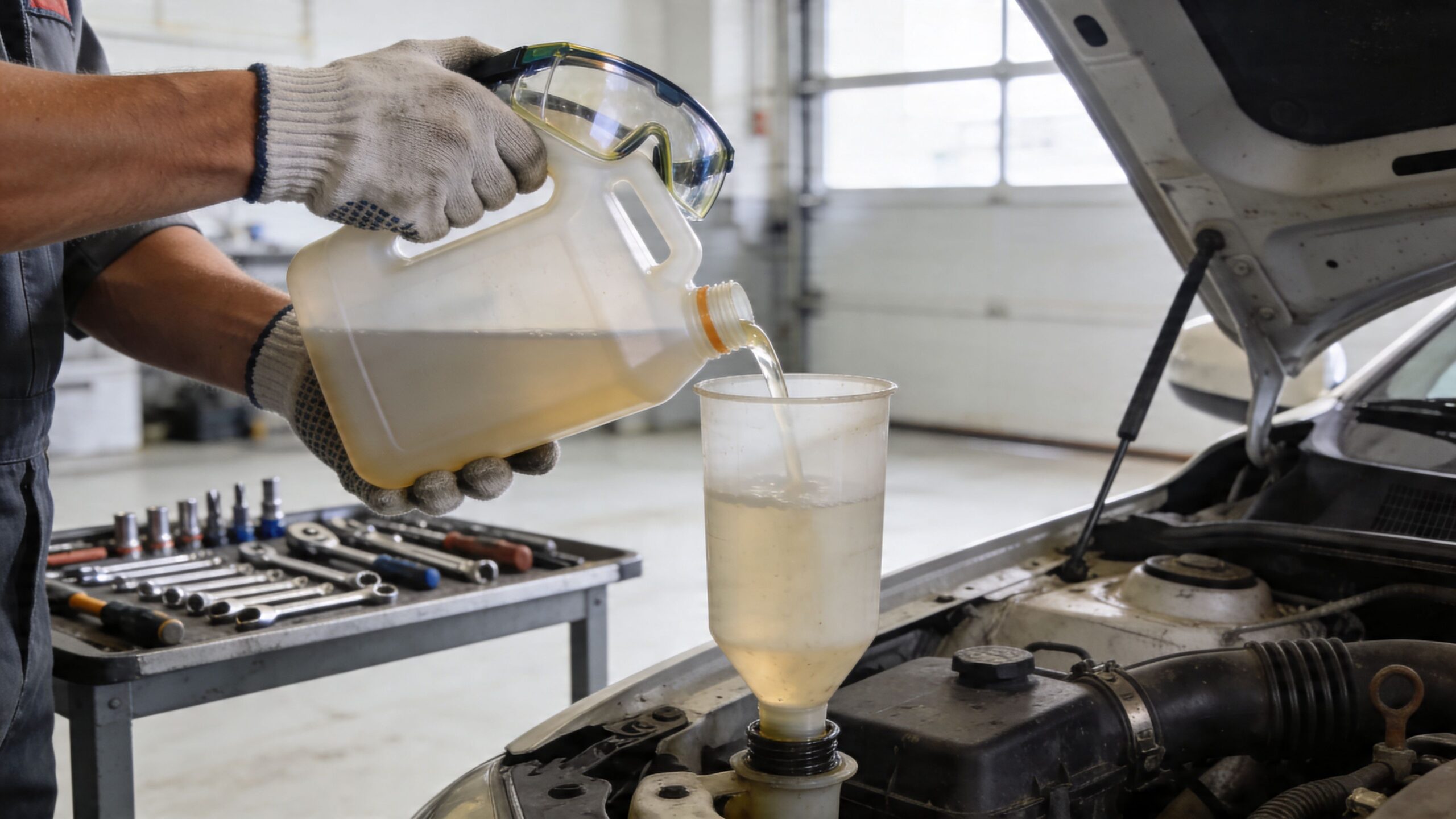
Before collection, every end-of-life vehicle should be treated as a potential contamination source. Fuel, engine oil, brake fluid, transmission fluid and coolant all need controlled removal where required. Batteries also need proper isolation and handling.
On a live industrial site, this matters for more than environmental reasons. A leaking vehicle on a concrete yard can trigger clean-up work, incident reporting and friction with other contractors. On a shutdown project, one spill in the wrong place can interrupt an already tight programme.
A practical preparation plan usually includes:
- Fluid checks: Identify units with remaining fuel or visible leaks.
- Battery control: Remove and store safely where project scope requires it.
- Tyre and wheel review: Confirm whether the vehicle can roll for loading.
- Fire-damaged vehicle assessment: Burnt units often need different handling.
- Waste segregation: Keep removed fluids and components out of mixed general waste.
Protect your own assets before collection
Industrial vehicles often carry more than metal. They carry company property, access tools, branding and sometimes sensitive information.
Before any cars for scrap leave the site, check for:
- Fleet tags and telematics devices
- Fuel cards, service books and internal log files
- Number plates where your policy requires controlled handling
- Branded wraps, decals and municipal markings
- Loose tools, PPE, radios or stock left inside
These details get missed all the time. Then someone asks for a tracker unit, a permit file or a branded panel after the vehicle is already gone.
Vehicles should leave site empty, identified, and ready to load. If your team still needs to “just check the boot” when the truck arrives, the prep wasn’t finished.
Site access and loading readiness
Collection efficiency depends heavily on the last few metres. A recycler can bring the right truck, but access still fails if vehicles are trapped in a basement, wedged behind scrap bins or parked on unstable ground.
Good preparation means clearing a loading lane and answering practical questions in advance:
| Site issue | Better approach |
|---|---|
| Vehicle boxed in by other assets | Move surrounding equipment before collection day |
| No keys or seized steering | Flag it early so recovery method can be planned |
| Soft ground or demolition debris around vehicle | Prepare a stable path for loading equipment |
| Mixed scrap piled around vehicle | Separate the car from general ferrous scrap |
| Vehicles spread across a large site | Stage them into a central collection zone |
A lot of clients underestimate how much time is lost walking a site, locating units and making room for loading. Central staging usually improves safety and speed.
Here’s a useful visual on how vehicle fluids and hazardous components are typically handled before recycling:
When on-site removal makes more sense
There are jobs where moving every vehicle to a distant staging area is not efficient. Large decommissions, municipal depots and demolition environments often benefit from coordinated on-site scrap metal removal services that handle vehicles as part of a broader clearance plan.
That works best when one team controls sequencing. The collection route, depollution controls, lifting plan and waste segregation all need to support each other. If different contractors are all improvising around the same vehicles, the process usually becomes slower, messier and more expensive than it should be.
Managing Logistics Collection and Final Payment
Once the paperwork is clean and the vehicles are prepared, the job becomes logistical. Proper planning at this point either safeguards your value or allows it to diminish.
The biggest misunderstanding in cars for scrap is the idea that collection is just transport. It isn’t. Collection affects labour, access time, equipment selection, loading speed, contamination handling and ultimately the final commercial outcome.
Fleet logistics are won before the truck moves
A single non-runner on a roadside verge is one kind of job. A mixed fleet spread across a factory, depot or municipal yard is another.
Commercial collection planning usually turns on these variables:
- Vehicle distribution across the site
- Whether units can roll and steer
- Need for flatbeds, crane trucks or towing combinations
- Security rules and booking windows
- Whether loading must happen around ongoing operations
- The amount of pre-sorted scrap or unrelated waste in the same area
When clients provide a clear asset list with conditions and locations, collections tend to run smoothly. When a collector arrives to “see what’s there”, surprises become deductions, delays or both.
Weighbridge transparency matters
Most industrial clients don’t want vague pricing. They want to know how the final figure is reached.
The standard commercial logic is straightforward. Vehicles are weighed, graded according to the recoverable material stream, and priced against prevailing market conditions for those grades. That sounds simple, but transparency depends on the details. Was the vehicle complete? Was it contaminated? Did loading require extra work? Were components missing that had been assumed to be present?
The fairest scrap transaction isn’t the one with the highest opening offer. It’s the one where grading, weight and deductions are clear before collection starts.
Where deductions usually come from
Clients often focus on the headline rate and miss the factors that reduce net recovery. In practice, deductions usually come from operational friction rather than unfair dealing.
Common examples include:
- Difficult loading conditions: Vehicles buried behind other materials take more time and equipment.
- Contamination: Mixed waste inside vehicles, fluid leaks or non-metal contamination can affect processing.
- Missing major components: If a unit arrives without key assemblies, the assumed material value changes.
- Unplanned waiting time: Security delays, inaccessible keys or blocked loading bays all have cost.
- Scattered pickups: Small clusters across multiple areas are less efficient than a staged batch.
That’s why the best-paying jobs often aren’t the biggest. They’re the most organised.
Choosing the right commercial model
Not every fleet should be sold the same way. Some sites benefit from batch valuation by category. Others work better with individual vehicle assessments where conditions vary sharply.
A practical comparison looks like this:
| Commercial model | Best use case | Main trade-off |
|---|---|---|
| Per-vehicle assessment | Mixed fleet with large condition differences | More admin, better accuracy |
| Batch pricing by category | Similar vehicles in similar condition | Simpler process, some averaging risk |
| Whole-site clearance deal | Vehicles form part of a broader clean-out | Convenient, but vehicle value can get blurred into overall scope |
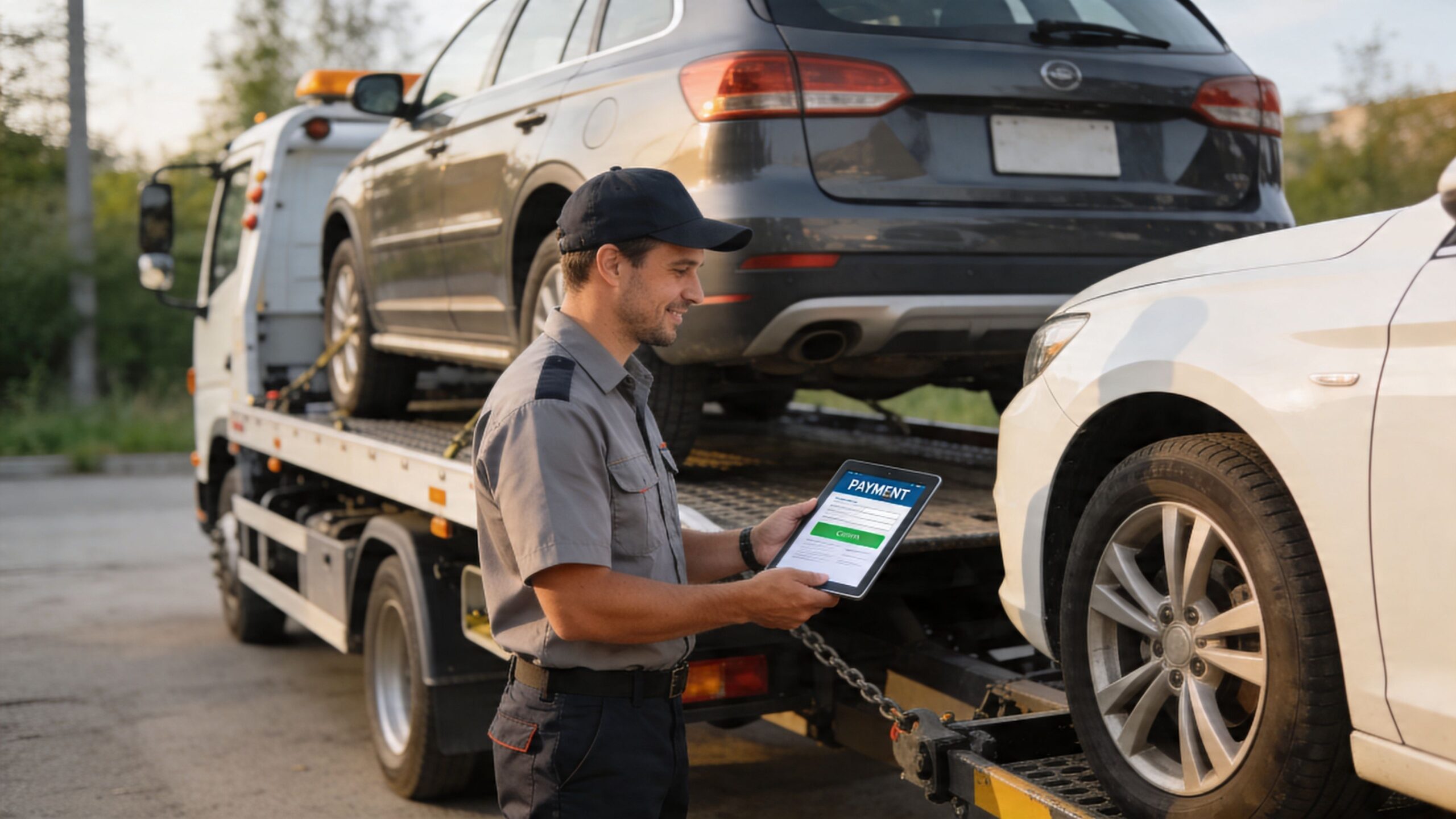
For finance teams, payment method matters too. Commercial scrap transactions are usually cleaner when the payment trail matches the disposal trail. Electronic transfer, matched to weighbridge and collection records, creates a better audit file than fragmented cash-style handling.
What clients can do to protect final value
These actions consistently improve outcomes:
- Send an asset list before pricing: Registration details, condition and location save time.
- Photograph unusual units: Burnt, stripped or damaged vehicles should never be “assumed standard”.
- Stage accessible collections: Grouping vehicles reduces loading time.
- Clarify whether parts have been removed: Surprises damage trust and price.
- Match commercial sign-off to operational timing: Delayed approvals often cause missed collection windows.
Final payment should feel like the closing step of a well-run disposal process, not a negotiation restart. When the site team, admin team and collector all work from the same facts, there’s far less room for dispute.
Your Partner for Maximising Value and Ensuring Compliance
Cars for scrap sound simple until you’re dealing with a real fleet, a live site, legal obligations and a deadline. Then every weak point shows up fast. Wrong paperwork keeps liability alive. Poor preparation slows loading. Weak hazardous controls create exposure. Rough valuation leaves money on the table.
Industrial and municipal clients need a different standard of handling. They need vehicle disposal to fit inside broader operational realities such as shutdowns, demolitions, fleet renewals, depot clearances and environmental reporting. That means looking past the quick-purchase mindset and treating scrapping as a controlled recovery process.
The practical route is consistent. Assess each vehicle properly. Separate true scrap from higher-value components where it makes sense. Close the legal record, especially de-registration. Prepare the units for safe loading. Use transparent collection and weighing practices. Keep a complete paper trail from internal approval to final payment.
When that system is in place, scrapping vehicles becomes useful instead of disruptive. Space opens up. Risks come down. Asset disposal stands up to scrutiny. The material still has value, but the bigger gain is control.
That’s what industrial clients should expect from any serious cars for scrap process in South Africa. Not hype. Not vague promises. Just competent handling from the first vehicle inspection to the final file.
If you need a reliable team to manage fleet scrapping, site vehicle clearance, metal recovery, demolition-linked disposal, or broader waste handling, D7 Capital Partners (Pty) Ltd can help. The company works with industrial, commercial and municipal clients across South Africa to recover value from end-of-life vehicles and scrap metal while keeping safety, compliance and operational efficiency in view.