Cable recycling South Africa projects can turn redundant power, control and data cable into a controlled copper, aluminium and polymer recovery stream. This cable recycling South Africa guide provides a practical project-control baseline. The commercial result depends on lawful ownership, cable type, conductor yield, contamination, security and the way the material is collected.
This eight-part industrial guide explains how to classify cable, protect value and avoid unsafe practices such as burning insulation. It is intended for factories, mines, utilities, demolition teams, data centres and electrical contractors managing legitimate cable waste.
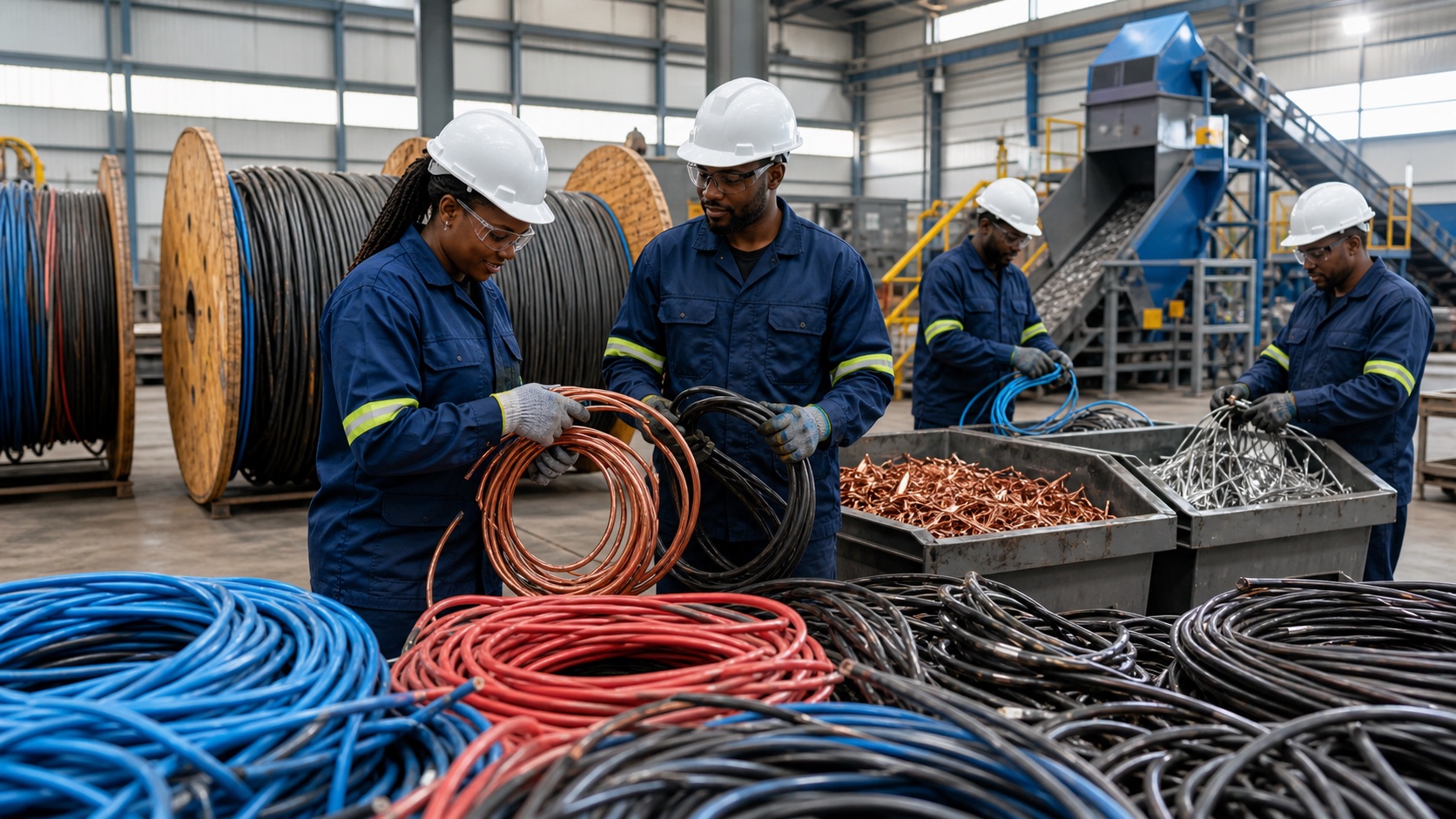
What happens during cable recycling?
After ownership and acceptance checks, cable is sorted by conductor and construction. Recyclers may strip suitable large cable or granulate mixed insulated cable. Granulation chops the material and uses mechanical and air separation to recover metal from polymer. Steel armour may require magnetic separation.
Open burning is not a legitimate preparation method. It creates harmful emissions, damages recoverable material and raises serious legal, environmental and safety concerns.
8 steps for cable recycling South Africa
1. Prove ownership and authority
Keep asset-release records, project scope, photographs and authorised signatories. Cable is a high-theft-risk material, so legitimate chain-of-custody evidence protects the site owner and recycler.
2. Separate cable from live systems
Isolation, lock-out, testing and removal must be completed by competent authorised people. Never treat an unidentified cable as redundant because it appears disconnected.
3. Sort by conductor
Separate copper from aluminium cable. Keep tinned copper, communication cable, armoured cable and mixed harnesses distinct where practical. A non-magnetic cable is not automatically copper.
4. Record construction and size
Thick single-core power cable can have a different recovery yield from fine data cable or steel-wire-armoured cable. Retain drum labels, specifications and sample photographs.
5. Keep it clean and dry
Remove obvious plugs, steel trays and unrelated attachments when safe. Keep cable free of oils, soil, rubble and general waste. Do not spend labour stripping cable without comparing the value gain with safe processing cost.
6. Secure the storage area
Use locked covered cages, controlled keys, cameras, lighting and frequent collection. Count or weigh high-value cable and reconcile it with release records. Avoid advertising quantities to unauthorised people.
7. Plan collection and weighing
Provide location, access, estimated mass, photographs and loading needs before dispatch. Record the collection vehicle and match the load to weighbridge documentation and settlement.
8. Review the recovery statement
Check conductor category, deductions, net mass and agreed rate. Repeated cable streams should be built into a service agreement with clear sorting, security and reporting rules.

Common cable categories
| Cable stream | Main recoverable material | Value consideration |
|---|---|---|
| Heavy copper power cable | Copper and polymer | Conductor percentage and insulation thickness |
| Aluminium power cable | Aluminium, polymer and sometimes steel | Lower metal value per kg but meaningful bulk volume |
| Steel-wire-armoured cable | Copper or aluminium plus steel | Armour reduces non-ferrous yield and adds processing |
| Data and communication cable | Fine copper and polymer | Lower conductor yield and complex construction |
| Mixed wiring harness | Copper, terminals and polymer | Attachments and contamination affect recovery |
Watch: cable granulation and material separation
How to protect cable recovery value
- Do not mix copper and aluminium cable.
- Keep cable provenance and project release records.
- Avoid burning, uncontrolled chopping or unsafe manual stripping.
- Keep armour, plugs, trays and unrelated steel out of clean cable grades.
- Use photographs and representative samples for pre-collection assessment.
- Reconcile high-value cable from removal point to final weight.
Cable value is connected to the wider copper market. Read D7’s copper scrap price per kg guide and its article on e-waste recycling for cash for related streams.
Review the relevant industry and regulatory guidance before finalising scope. A cable recycling South Africa project should also be checked against site-specific legal, safety and environmental duties.
Verify lawful ownership and safe preparation
Before collection, confirm who owns the cable, who authorised its release and whether any asset, network or project identifiers must be recorded. Keep release notes, photographs and vehicle details with the load. Do not accept burnt cable or material whose origin cannot be explained. Burning insulation creates environmental and safety risks and destroys evidence needed for legitimate chain-of-custody checks.
The cable recycling South Africa team should separate copper and aluminium conductors, armoured and unarmoured cable, clean offcuts and mixed demolition material. Store cable in a secure, dry area away from ignition sources and vehicle routes. Avoid hand-stripping methods that expose workers to sharp armour, uncontrolled blades or electrical uncertainty. Confirm isolation before any cable is cut.
A well-controlled cable recycling South Africa project combines lawful release, safe handling, grade separation, calibrated weighing and documented settlement. That combination protects the site, improves recovery value and gives finance, security and sustainability teams one consistent evidence trail.
Before settlement, sample mixed cable lots and agree how plugs, glands, reels, steel armour and insulation affect the payable grade. Record gross, tare and net mass separately. The cable recycling South Africa handover should identify the person releasing material and the person accepting the verified weight, with any deductions explained in writing.
Frequently asked questions
Should cable be stripped before recycling?
Not always. Large clean cable may justify safe stripping, while fine or complex cable is often better suited to industrial granulation. Compare safe labour and handling cost with the actual grade improvement.
Can armoured cable be recycled?
Yes. The conductor, steel armour and polymer can be recovered through appropriate processing. Keep it separate so its lower non-ferrous yield is assessed fairly.
Why are cable sellers asked for documents?
Copper cable is frequently targeted by thieves. Responsible buyers need to verify identity, ownership and authority, especially for utility, municipal and industrial material.
Does insulation colour determine cable value?
No. Value comes mainly from the conductor type, recoverable percentage, construction and condition. Colour may help operational sorting but is not a reliable grade on its own.
cable recycling South Africa: Practical Next Steps
Cable recycling South Africa clients can defend both value and reputation by controlling isolation, storage, release and weighing. D7 Capital Partners supports legitimate industrial cable and metal recovery within wider demolition and waste projects. Contact D7 Capital Partners with photographs, provenance, estimated mass and site details.