
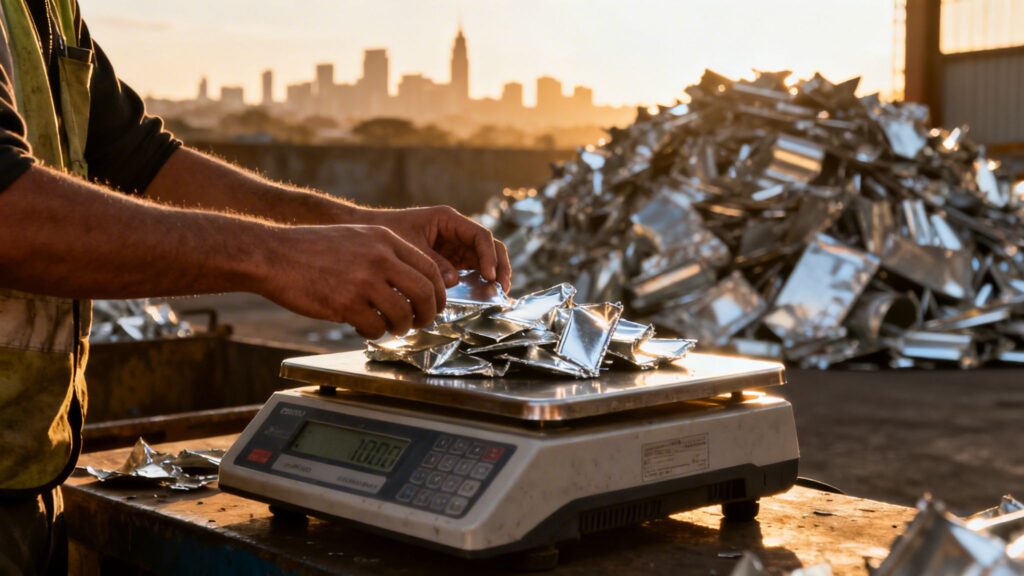
When you’re looking to sell scrap metal, one question stands above all others: what’s the current aluminium price per kg for scrap? Here in South Africa, the prices for 2026 can swing quite a bit depending on what you’ve got. The value ranges from lower-grade mixed scrap all the way up to premium, clean aluminium sheets. Getting a handle on this difference is your first step to getting the best possible price.
Your Quick Guide to Aluminium Scrap Prices
Diving into the world of scrap metal can feel a little overwhelming at first, but aluminium pricing actually follows a pretty clear logic. The cash you’ll get is directly linked to the quality and type of aluminium you bring in. Think of it like a jeweller sizing up a diamond—they look at its clarity and cut. A scrap dealer does something similar, evaluating your aluminium based on its purity, form, and how clean it is.
This is your starting point, a quick reference for what to expect for common aluminium grades in South Africa. These prices aren’t just plucked out of thin air; they’re shaped by global markets and what’s happening right here at home, which we’ll get into a bit later.
Estimated Aluminium Scrap Prices Per Kg in South Africa (2026)
The price you're offered per kilogram can vary dramatically from one grade to another. It makes sense, right? Clean, unpainted aluminium sheets are always going to be worth more than a pile of mixed scrap that has steel or plastic mixed in.
To give you a clearer picture, we've put together a table with some typical price ranges you're likely to see. Remember, these are just estimates to give you an idea. The final price will always depend on the day's market and the actual quality of your material.
A summary of typical price ranges for common aluminium scrap grades, from lower-quality mixed metals to high-purity solids. Prices are indicative and subject to change based on market conditions and material quality.
| Aluminium Scrap Grade (ISRI Code) | Description | Typical Price Range per kg (ZAR) |
|---|---|---|
| Mixed Aluminium (Taint/Tabor) | A common grade of mixed old alloy sheets, often from various sources. It should be free of non-metallic items. | R22.00 – R26.00 |
| Cast Aluminium (Tense) | Typically sourced from engine blocks, transmissions, and pistons. Must be free of steel and other contaminants. | R19.00 – R23.00 |
| Aluminium Extrusions (Talon) | Includes clean aluminium extrusions like window frames and door profiles, free of attachments like screws or plastic. | R28.00 – R33.00 |
| Clean Aluminium Cans (Taldon) | Used Beverage Cans (UBCs) that are clean, empty, and free of other materials. | R18.00 – R22.00 |
It really boils down to one simple rule: the cleaner and purer your aluminium is, the more you’ll get for it. Taking the time to sort your scrap before you sell is probably the single best thing you can do to boost your payout.
This chart below really drives the point home, showing how clean aluminium consistently fetches a better price than mixed or cast grades.
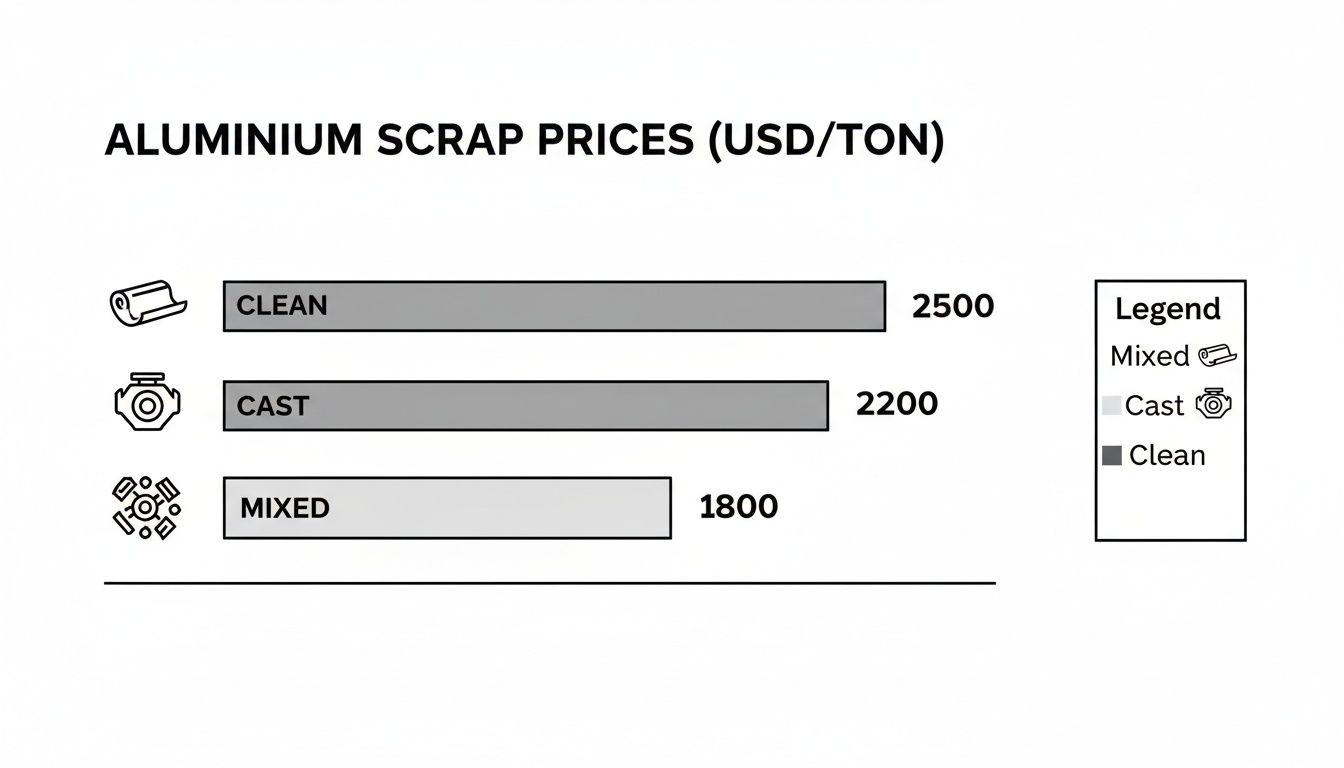

As you can see, well-sorted, clean aluminium is where the real value lies, which just highlights how important a bit of prep work is. If you want to learn more about what else you can recycle, have a look at our guide on the 10 common types of scrap metal you can recycle for cash.
How Global and Local Markets Determine Your Price
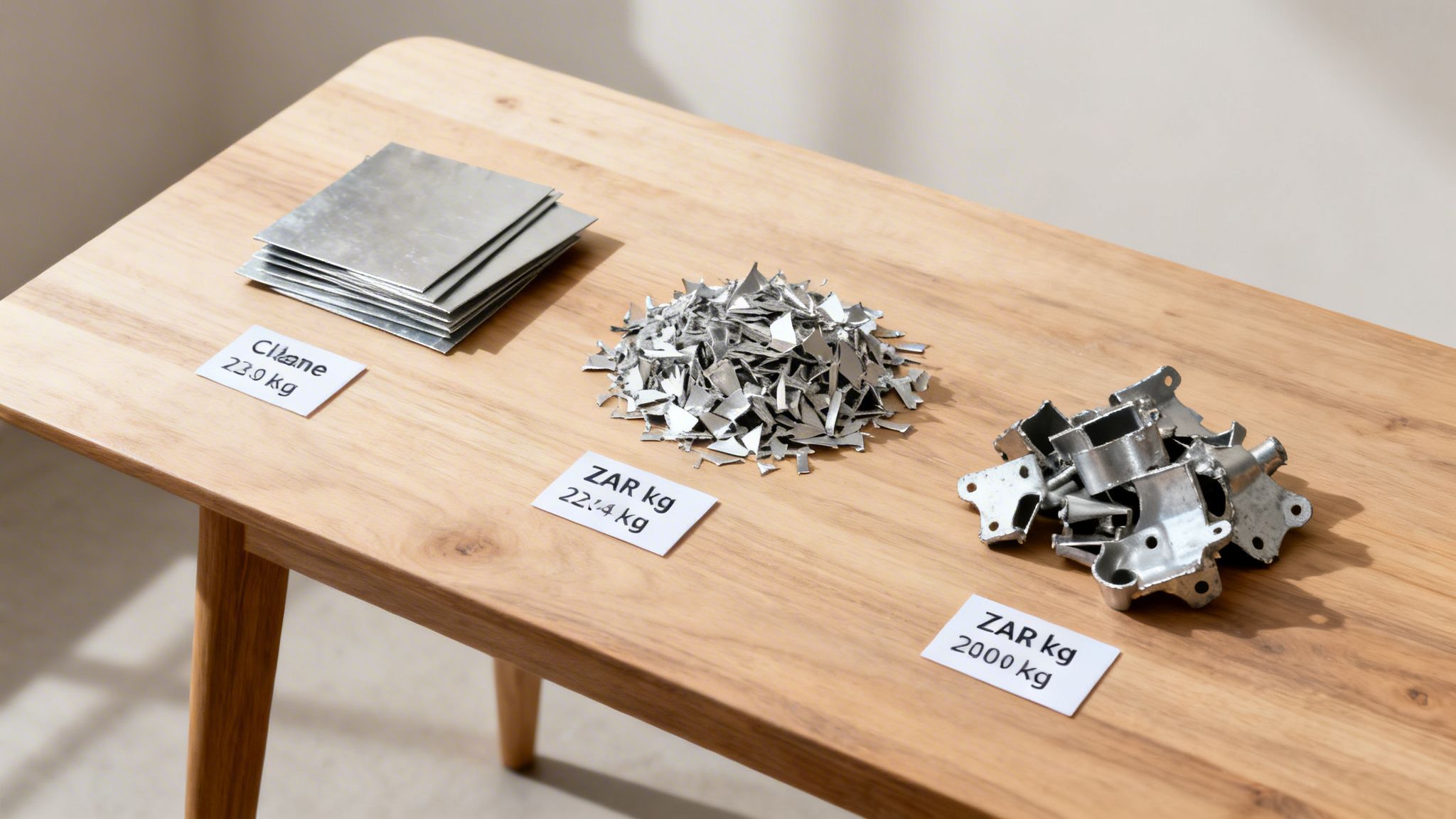

Ever wondered where the price for your scrap comes from? The aluminium price per kg scrap you’re offered isn’t just a number pulled out of thin air. It’s the final stop on a long economic journey that begins on the world stage and filters all the way down to your local scrap yard. Getting to grips with this system is the key to understanding why prices shift and what a fair offer really looks like.
At the very top of the chain sits the London Metal Exchange (LME). Think of it as the world’s stock market for industrial metals, including aluminium. The daily prices set here for brand-new, primary aluminium create the global benchmark that scrap yards everywhere use as a starting point.
When global demand for new cars, aeroplanes, or construction materials picks up, the LME price climbs. This has a direct knock-on effect, making recycled aluminium more valuable because it becomes a cheaper alternative to digging up and processing raw ore.
The South African Pricing Framework
But the LME price is just a global reference point. You won’t see that price quoted directly in Rands at your local dealer. Before it reaches you, the international price has to be translated for our own domestic market here in South Africa.
One of the biggest local factors is the Price Preference System (PPS), which is managed by the International Trade Administration Commission of South Africa (ITAC). This system was put in place to give local foundries and manufacturers the first chance to buy scrap metal at an affordable price before it gets exported.
The Price Preference System essentially creates a regulated local market price, often set at a discount to the international price, to support South Africa’s own industries. This directly impacts the base price that every local scrap dealer works from.
This framework gives the price journey for your scrap aluminium a distinctly South African flavour, shaped by national policy and our own economic realities.
The Basic Pricing Formula Explained
So, how does a scrap dealer take all this information and turn it into a final offer? It all comes down to a straightforward formula that starts with the global price and makes a few logical deductions along the way.
Here’s a look at how it generally works:
- Start with the Global Benchmark: The whole process kicks off with the current LME aluminium price.
- Apply Local Adjustments: Next, the price is adjusted based on the ITAC Price Preference System and, of course, the current ZAR/USD exchange rate.
- Deduct Operational Costs: The dealer then has to subtract their own costs. This includes things like transport, processing (sorting, baling, or shredding your metal), and general business overheads.
- Factor in Scrap Quality: Lastly, an adjustment is made for the specific grade and cleanliness of your scrap. Clean, well-sorted material will always fetch a price closer to the top end, while mixed or contaminated scrap gets a lower offer to cover the extra work needed to clean it up.
This step-by-step process shows that the final aluminium price per kg scrap is based on real market forces and operational costs—not guesswork. Knowing these drivers puts you in a much stronger position as a seller. To get a broader view of where the industry is heading, you can learn more about the top 5 trends in metal supply for 2025.
Understanding Aluminium Grades And Why They Matter

Ever wondered why one pile of aluminium scrap fetches a much higher price than another? The secret is in its grade. Think of it like a jeweller assessing a diamond—clarity and cut determine its value. For scrap metal dealers, the equivalent is purity, form, and alloy composition.
This grading system is everything because not all aluminium is the same. Different grades have different melting points, chemical properties, and end uses in manufacturing. A smelter needs a clean, predictable input to create new products without a hitch. Any contaminants, like steel screws, plastic bits, or even the wrong mix of aluminium alloys, can spoil an entire batch.
That’s why clean, well-sorted scrap is so much more valuable. Learning to spot these differences is the first step to getting the best possible aluminium price per kg scrap for your material.
The Most Common Aluminium Grades
The global scrap industry relies on a set of codes from the Institute of Scrap Recycling Industries (ISRI) to keep everyone on the same page. These codes are like a universal language, making sure a buyer in another country knows exactly what they’re getting. Here in South Africa, you’ll run into a few key ISRI grades time and again.
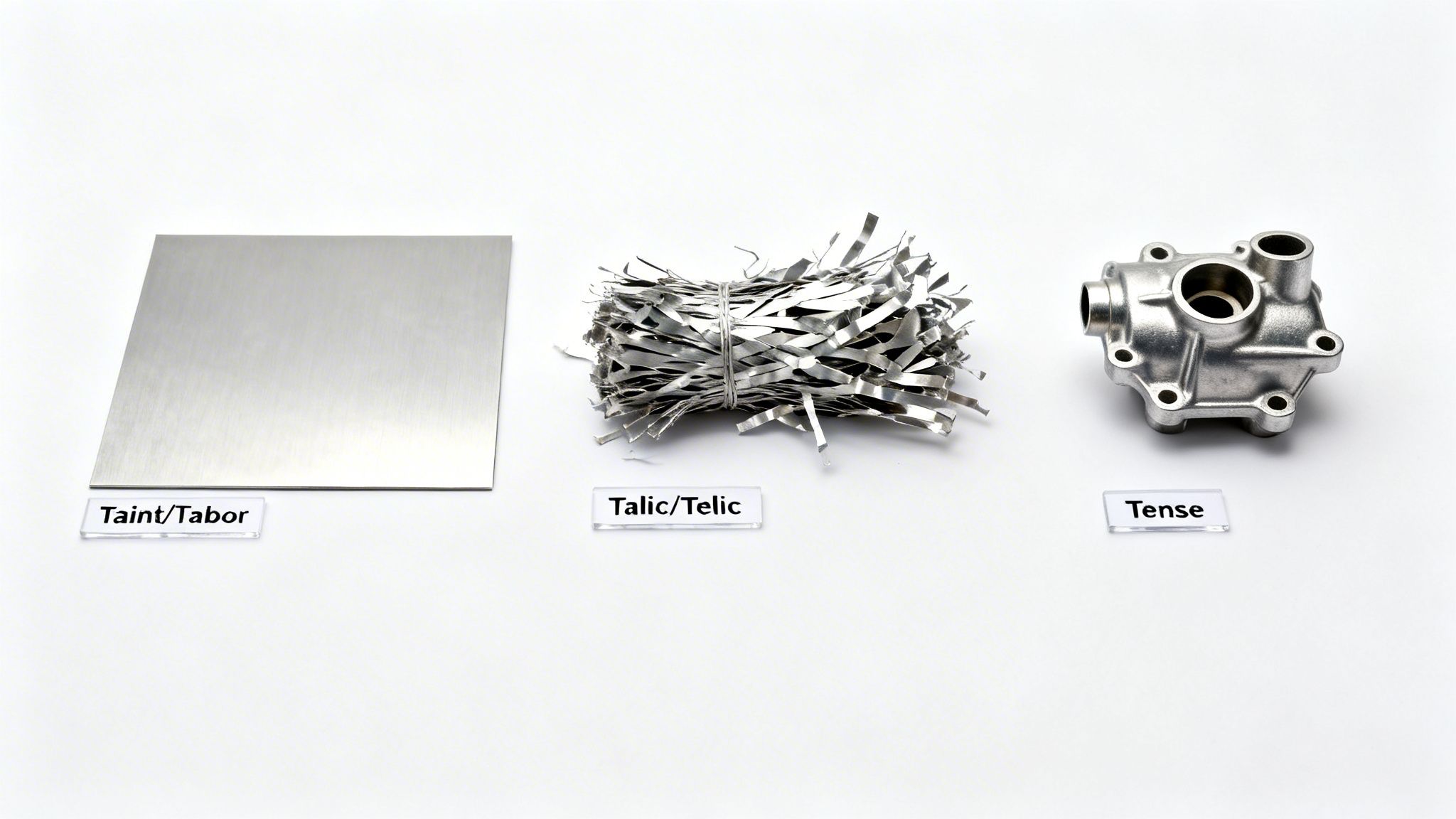
Taint/Tabor (Clean Mixed Old Alloy Sheet Aluminium): This is one of the most common grades you'll find. It’s made up of old, clean aluminium sheets from two or more alloys. Picture things like uncoated siding, gutters, and downspouts. To qualify, it has to be free of attachments like steel screws, excessive dirt, or other foreign materials.
Tense (Mixed Cast Aluminium): This grade usually comes from cast aluminium parts. The most famous examples are engine blocks, transmission housings, and pistons from vehicles. "Clean" is the key word here—all steel parts, bolts, and anything non-metallic must be removed for it to be graded as Tense.
Talon (New, Clean Aluminium Extrusions): This is a high-value grade. It includes new production offcuts and clean used extrusions like window frames, door frames, and structural channels. To get the top price for Talon, it must be completely free of paint, screws, weather stripping, and any other contaminants.
Simply knowing where your aluminium came from is a huge clue to its grade. A window frame is worlds apart from an engine block, and their prices will always reflect that.
Why Cleanliness And Form Factor Are Everything
At the end of the day, the value of your scrap aluminium boils down to three things: cleanliness, alloy type, and form factor. A buyer’s main concern is how much time, energy, and money it will take to turn your scrap back into a usable raw material. The easier you make their job, the more they’ll pay you.
Cleanliness is non-negotiable if you want a good price. Any non-aluminium material—whether it's steel, plastic, glass, or even just a thick coat of paint—is considered a contaminant. A recycler has to pay people to remove these impurities, and that cost comes straight out of your payout.
For example, a pile of aluminium window frames with the glass and steel screws still attached will be seriously downgraded. If you take the time to strip those contaminants off yourself, you instantly upgrade your material into a more valuable category.
Alloy type also plays a massive role. Aluminium is often mixed with elements like magnesium, silicon, or zinc to give it specific strengths and properties. A recycler needs to know the alloy to make sure it meets the specs for its final use. Mixing different alloys can cause major problems, which is why sorted, uniform scrap is always preferred. You can explore more about the properties of different non-ferrous metals in our detailed guide.
Finally, the form factor—the shape and density of the scrap—matters too. Bulky, light material like foil or swarf (the shavings from machining) takes up a lot of space and can be difficult to melt efficiently compared to dense, baled sheets or solid cast blocks. This directly impacts transport and processing costs, which in turn influences the final price you’re offered.
The South African pricing structure reflects all these details. For instance, new price systems coming into effect show this clearly. Effective 1 December 2025, prices include R21,705/tonne (R21.71/kg) for ISRI TALL, escalating to R32,798/tonne (R32.80/kg) for premium TAINT TABOR, and R22,669/tonne (R22.67/kg) for TATO/TUTU/TATA/TREAD—tied to an average LME price of R48,233/tonne amid global aluminium at USD3,275/tonne. This structure, inclusive of preferential discounts, benefits local processors serving construction contractors and municipalities by ensuring competitive exports, as evidenced by ZAR122M in scrap aluminium exports in 2025. You can read the full breakdown of this updated price preference system from ITAC.
Key Market Forces Driving Aluminium Prices In 2026
The aluminium price per kg scrap you’re offered isn’t just some number a scrap yard manager decides on. It’s the end result of massive global and local economic currents. Think of it like a ripple effect—a policy shift in a boardroom on the other side of the world can eventually change the price you get for a bakkie-load of scrap in Johannesburg.
Getting a handle on these bigger market drivers is key. It helps you see where prices might be heading and, more importantly, decide on the best time to sell your material.
Global Drivers Shaping Aluminium Demand
First, let's look at the big picture. A few major international trends set the baseline price for aluminium everywhere, including right here in South Africa. The worldwide appetite for the metal, new manufacturing trends, and the sheer cost of making new aluminium all feed into what your recycled material is ultimately worth.
Industrial Demand from China: As the world’s factory, China’s hunger for aluminium is a huge price driver. When its industries are running hot, churning out everything from electronics to building materials, they consume enormous amounts of both new and recycled aluminium. That high demand pushes global prices up for everyone.
The Electric Vehicle (EV) Revolution: The car industry is going electric, and that’s fantastic news for aluminium. To maximise battery range, EVs need to be as light as possible, and aluminium is the perfect material. This massive, ongoing shift creates a strong and steady demand for aluminium, which helps keep scrap prices firm.
Energy Costs and New Production: Making brand-new aluminium from bauxite ore is incredibly power-hungry. So, when global energy prices spike, the cost of producing this "primary" aluminium skyrockets. This makes recycled aluminium, which needs up to 95% less energy to process, a much more cost-effective and appealing option for smelters.
These global forces create the weather, but it’s the local conditions that determine if you’ll need a raincoat or sunscreen.
South African Forces Influencing Local Prices
While global trends set the stage, it’s the economic activity right here at home that really fine-tunes the aluminium price per kg scrap. Our own local demand, government spending, and the Rand’s performance all add their own flavour to the pricing mix.
South Africa’s scrap aluminium market, for instance, has become a significant exporter. In 2025, the country exported ZAR122 million worth of scrap aluminium, making it our 546th most exported product. This shows just how vital local processors and traders are in connecting South African supply with global demand. You can dig deeper into this data on South Africa's scrap aluminium trade at OEC.world.
This export-driven market is very sensitive to what’s happening locally.
The price you are offered for your scrap is a direct outcome of global demand being filtered through the lens of South Africa's local economic health, infrastructure goals, and currency stability.
Let's break down the three main domestic drivers:
Local Manufacturing Output: The health of our own manufacturing sector is a major factor. When South African factories are busy making beverage cans, window frames, and automotive parts, they need a steady supply of recycled aluminium. Strong local demand acts as a buffer, helping to keep prices stable even when global markets get a bit wobbly.
Infrastructure Projects: Big projects change the game. When the government or private sector invests in new power lines, transport networks, or large-scale buildings, the demand for metal goes through the roof. Aluminium’s light weight and resistance to corrosion make it a go-to material, and a boom in infrastructure spending creates a huge local appetite for scrap.
Currency Fluctuations (ZAR/USD): This one is huge. The global price for aluminium is set in US Dollars on the London Metal Exchange (LME). Because of this, the ZAR/USD exchange rate has a direct impact on local prices. When the Rand weakens against the Dollar, scrap exporters earn more Rands for the same dollar-priced metal they sell overseas. This often forces local buyers to pay higher prices to compete for material.
Actionable Steps To Maximize Your Scrap Payout
Understanding the market is half the battle. The other half is turning that knowledge into more cash in your pocket. This is where a little bit of prep work can make a massive difference to the final aluminium price per kg scrap you’re offered. By taking a few practical steps before you even think about heading to the scrap yard, you can directly boost the value of your material and walk away with a much better return.
Think of it like selling a car. You wouldn't expect top dollar for a vehicle that's dirty and full of junk. You'd clean it, service it, and present it properly. The exact same principle applies to your scrap aluminium.
Step 1: Sort and Segregate Your Metals
The single most important thing you can do is sort your metals. Mixing different grades of aluminium—or worse, mixing aluminium with other metals like steel—is the fastest way to tank your payout. Recyclers pay top ZAR for clean, uniform batches because it saves them a huge amount of time and labour on their end.
Start by separating your aluminium into piles based on what it is:
- Extrusions: Keep items like window frames, door frames, and structural channels together.
- Cast Aluminium: Group heavier items like old engine blocks, gearboxes, and machinery parts.
- Sheet Aluminium: Collect clean sheets, such as old roofing, gutters, and siding.
- Cans (UBCs): Used Beverage Cans are their own specific grade, so keep them separate from everything else.
Your best friend in this process is a simple magnet. Run it over your pile. Anything that sticks is steel or another ferrous metal and needs to be pulled out of your aluminium scrap immediately.
Step 2: Clean and Prepare Your Aluminium
Once your metals are sorted, the next step is to clean them up. Any non-aluminium attachments are considered contaminants and will drag down the value of your entire load. Taking the time to remove them yourself is a direct investment in a higher payout.
The core principle is simple: the less work the recycler has to do to process your scrap, the more they are willing to pay for it. Every screw you remove and every piece of plastic you strip off adds to your final payment.
Focus on removing these common contaminants:
- Steel Screws and Bolts: Go through your extrusions and cast parts to remove all steel fasteners.
- Plastic and Rubber: Strip away any plastic end caps, rubber seals, or the thermal breaks found on window frames.
- Glass: Carefully remove all glass from window and door frames.
- Excessive Dirt or Oil: A little bit of dirt is expected, but if you have heavily soiled material, cleaning it can improve its grade.
This preparation has a real, tangible impact on your bottom line. South Africa's scrap trade is a balance of strong exports and targeted imports, with exports projected to hit ZAR122 million by 2025. To complement this, imports of aluminium waste from regions like Mexico totalled US$134,020 (around R2.4 million). ITAC’s pricing schedule from 1 Dec 2025 shows just how much this matters, with prices ranging from R16,881/tonne (R16.88/kg) for mixed grades like TALAP/TALC to R32,316/tonne (R32.32/kg) for clean, specific ISRI codes. This spread highlights how sorting and cleaning to meet a higher-grade code directly maximises your return. You can learn more about these trade dynamics at Trading Economics.
Step 3: Accumulate and Organise Larger Volumes
Finally, size and organisation matter. While scrap yards will happily take small loads, you’ll have a much better negotiating position if you arrive with a larger, well-organised quantity. A bakkie-load of neatly sorted and cleaned material is always more appealing to a buyer than a few loose, mixed pieces.
By accumulating your scrap over time, you can present a more significant volume, which often commands a better price per kilogram. If you're looking for reliable buyers for your prepared scrap, take a look at our guide on how to sell scrap metal near me.
Finding The Right Partner For Your Scrap Metal Needs
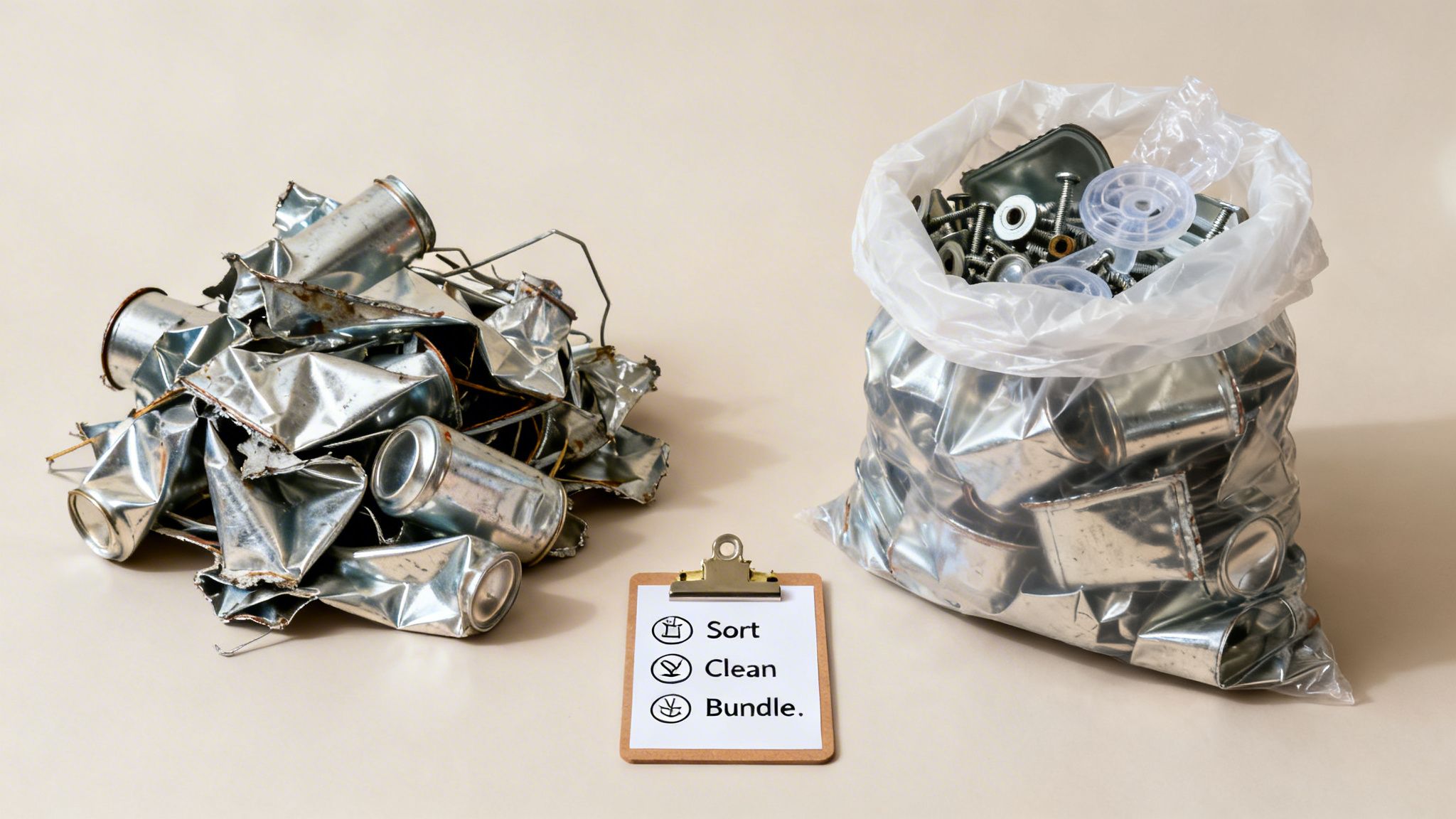
Making your way through the scrap metal market is much easier when you have a knowledgeable and dependable partner by your side. A great fit isn't just about finding a company that knows the aluminium price per kg scrap; it's about choosing one that truly understands the operational pulse of your specific industry. The right partner works with you, turning what was once a waste stream into a streamlined and valuable source of revenue.
This kind of partnership goes beyond a simple transaction. It’s about building a system that adds real value at every turn. At D7 Capital Partners, we focus on cultivating these exact relationships, shaping our services to meet the distinct needs of everyone from large-scale industrial producers to public sector bodies.
Solutions For Industrial Manufacturers
If you're an industrial manufacturer or fabricator, you know that waste metal is an inevitable part of production. The real challenge is managing that scrap efficiently without slowing down your core business. We tackle this head-on by providing structured, on-site scrap removal and full-circle waste management services.
Our approach is built around your workflow:
- Scheduled Collections: We work with you to set up regular pick-up times that sync perfectly with your production cycles, keeping your workspace clear, productive, and safe.
- On-Site Bins and Logistics: Forget the logistical headaches. We supply all the necessary bins and equipment for proper on-site sorting, which helps maximise the value of your scrap right from the start.
- Transparent Reporting: You’ll get detailed tracking and reports, giving you a clear picture of the volume and value of all the materials we recover for you.
Expertise For Demolition Contractors
Demolition jobs bring their own unique mix of challenges, demanding a fine balance of safety, strict compliance, and getting the most value out of recovered materials. For demolition contractors, we offer integrated services that start well before the first wall comes down.
A successful demolition project isn't just about safe takedown; it's about maximising the value of recovered assets. We integrate material recovery planning into the demolition strategy to ensure every kilogram of metal is accounted for and recycled efficiently.
We manage the safe and compliant dismantling of commercial and industrial sites, making sure all recovered metals—both ferrous and non-ferrous—are processed by experts. This method reduces risk for the contractor while pushing the financial return from salvaged materials like aluminium, steel, and copper to its highest potential.
A Reliable Partner For Municipalities And Buyers
Municipalities and international buyers need one thing above all: a partner who can guarantee a steady, reliable supply of high-quality metals that meet exact specifications. We are that source. Our nationwide logistics network allows us to gather, process, and trade large volumes of scrap consistently.
Our firm commitment to meticulous sorting and grading means all materials meet precise ISRI specifications. This reliability is vital for local foundries that need quality feedstock to operate and for international buyers who must be able to trust the integrity of their supply chain. With D7 Capital, you don’t just get a supplier; you gain a partner committed to transparency, efficiency, and delivering real value without compromise.
Common Questions About Aluminium Scrap
Getting into the world of scrap metal often brings up more questions than answers. To help you feel more confident, we’ve put together some straightforward answers to the most common queries we hear about the aluminium price per kg scrap and the selling process in South Africa.
How Often Does The Aluminium Price Per Kg Scrap Change?
Scrap aluminium prices can, and often do, change daily. Think of it like the stock market. The price is tied directly to the London Metal Exchange (LME), where global supply and demand are in constant flux.
On top of that, local factors like the ZAR/USD exchange rate add another layer of volatility. Because the market moves so quickly, the best approach is always to phone your recycling partner for the day’s price before you head over to sell.
What Is The Difference Between Ferrous And Non-Ferrous Scrap?
The easiest way to tell them apart is with a magnet. Ferrous metals, like your typical steel and iron, are magnetic because they contain iron. Non-ferrous metals—which include aluminium, copper, and brass—have no iron and won't attract a magnet.
This simple distinction is absolutely critical for getting the best payout. Non-ferrous metals are almost always more valuable, which is why sorting your aluminium away from any steel contaminants is one of the most important things you can do.
Do I Need Documentation To Sell Scrap Aluminium?
Yes, you do. To stay legally compliant and keep the transaction transparent, any reputable recycler in South Africa will ask for documentation. This is a crucial step in preventing the trade of stolen materials and protects both you and the buyer.
You'll typically need to provide:
- Proof of Identity: A valid ID document or driver's licence.
- Proof of Origin: Paperwork showing where the scrap came from, which is especially important for larger industrial or commercial loads.
Is It Worth Separating Aluminium Cans From Other Scrap?
Absolutely. In almost every situation, it pays to separate them. Used Beverage Cans (UBCs) fall under a specific ISRI grade (Taldon) and are made from a very consistent, high-quality aluminium alloy.
While they might feel lightweight, keeping them separate from heavier, mixed-alloy scrap like cast aluminium or old sheets is a smart move. It helps the recycler process cleaner, more uniform batches, and that efficiency often translates into a better overall price for your entire load. A little sorting really does go a long way.
At D7 Capital Partners (Pty) Ltd, we believe in transparent pricing and offering expert guidance for all your scrap metal needs. Whether you're dealing with industrial scrap, demolition materials, or sorted recyclables, our team is here to help you maximise your returns.
Partner with us for dependable scrap solutions across South Africa. Find out more at https://d7capital.co.za.
- Your Quick Guide to Aluminium Scrap Prices
- How Global and Local Markets Determine Your Price
- Understanding Aluminium Grades And Why They Matter
- Key Market Forces Driving Aluminium Prices In 2026
- Actionable Steps To Maximize Your Scrap Payout
- Finding The Right Partner For Your Scrap Metal Needs
- Common Questions About Aluminium Scrap