In the South African scrap industry, the term yellow metal gets thrown around a lot. It refers to a family of valuable, non-magnetic alloys, mostly brass and bronze. You'll find these materials everywhere, from common plumbing fixtures to critical parts in industrial machinery, representing a significant and often overlooked source of revenue.
What Exactly Is Yellow Metal In South Africa?
When you hear "yellow metal," your mind might first jump to gold. While that’s historically accurate, in the modern scrap and recycling world of South Africa, the term has a much more practical, industrial meaning. It's a catch-all phrase for a specific group of valuable non-ferrous metals, primarily alloys based on copper.
Think of it this way: if steel and iron are the strong, magnetic backbone of construction (ferrous metals), then yellow metals are the resilient, corrosion-resistant components that keep things running smoothly. They don’t rust like iron, which makes them perfect for any job involving water, electricity, and friction.
This is precisely why you'll find yellow metal everywhere in industrial, municipal, and demolition settings. It’s the hidden value in piles of what looks like discarded material.
Where You Will Find Yellow Metal
Yellow metals are a core component in many common items that get scrapped during demolitions, factory upgrades, or routine municipal maintenance. Recognising these sources is the first step in turning a waste stream into a valuable asset.
A quick reference table can help you get started on identifying these valuable alloys on-site.
Common Yellow Metals At A Glance
| Metal Type | Primary Composition | Common Industrial Sources |
|---|---|---|
| Brass | Copper and Zinc | Taps, pipe fittings, valves, electrical connectors, bullet casings |
| Bronze | Copper and Tin | Bearings, bushings, gears, marine propellers, bells |
| Gunmetal | Copper, Tin, and Zinc | Steam and hydraulic castings, valves, pump components |
This table is just a starting point, but it shows how widespread these materials are. Key examples to look for include:
- Plumbing Fixtures: Taps, pipe fittings, and valves are frequently made of brass due to its durability and resistance to corrosion.
- Electrical Components: Connectors, terminals, and certain types of wiring often use brass for its conductivity and strength.
- Mechanical Parts: Bushings, bearings, and gears in heavy machinery are typically made from bronze and brass to withstand intense friction.
- Decorative Hardware: Items like door handles, light fixtures, and architectural trim often use brass for its classic aesthetic appeal.
For manufacturers, contractors, and municipalities, what might seem like a pile of old fittings is actually a collection of valuable alloys. For a deeper dive into the broader category, you can learn more about what non-ferrous metals are and why they're so important in recycling.
The key takeaway is that yellow metals are not just waste; they are a resource. Understanding this shifts the perspective from simple disposal to active revenue recovery. Every kilogram of sorted brass or bronze holds a market value waiting to be unlocked.
This practical understanding is crucial. It bridges the gap between daily operations—whether manufacturing goods, demolishing a building, or maintaining city infrastructure—and the circular economy. By identifying and segregating these materials, businesses and public entities can turn a routine cost centre into a consistent source of income. This is the core principle behind effective scrap management in the yellow metal SA market. The corrosion-resistant nature of these alloys means they can be recycled repeatedly without losing their core properties, making them a cornerstone of sustainable industrial practice.
How To Identify And Grade Yellow Metal Alloys
Telling the difference between valuable yellow metal alloys and common scrap is a skill that directly translates into cash. If you're managing industrial, municipal, or demolition scrap, getting this right is what separates a decent return from a fantastic one. The good news? You don't need a fancy lab to do it.
With just a few simple on-site tests, you can accurately identify and pre-sort your material. This puts you in a powerful position, allowing you to know the value of your scrap pile before you even pick up the phone.
First things first: the magnet test. This is your number one tool. Yellow metals like brass and bronze are non-ferrous, which means they don't have enough iron to be magnetic. Grab a strong magnet and put it against the metal. If it sticks, it's a ferrous metal like steel or iron—not the yellow metal you're looking for. It's the quickest way to filter out the wrong stuff.
This flowchart breaks down the initial steps of metal identification, showing how a simple magnet can immediately point you in the right direction.
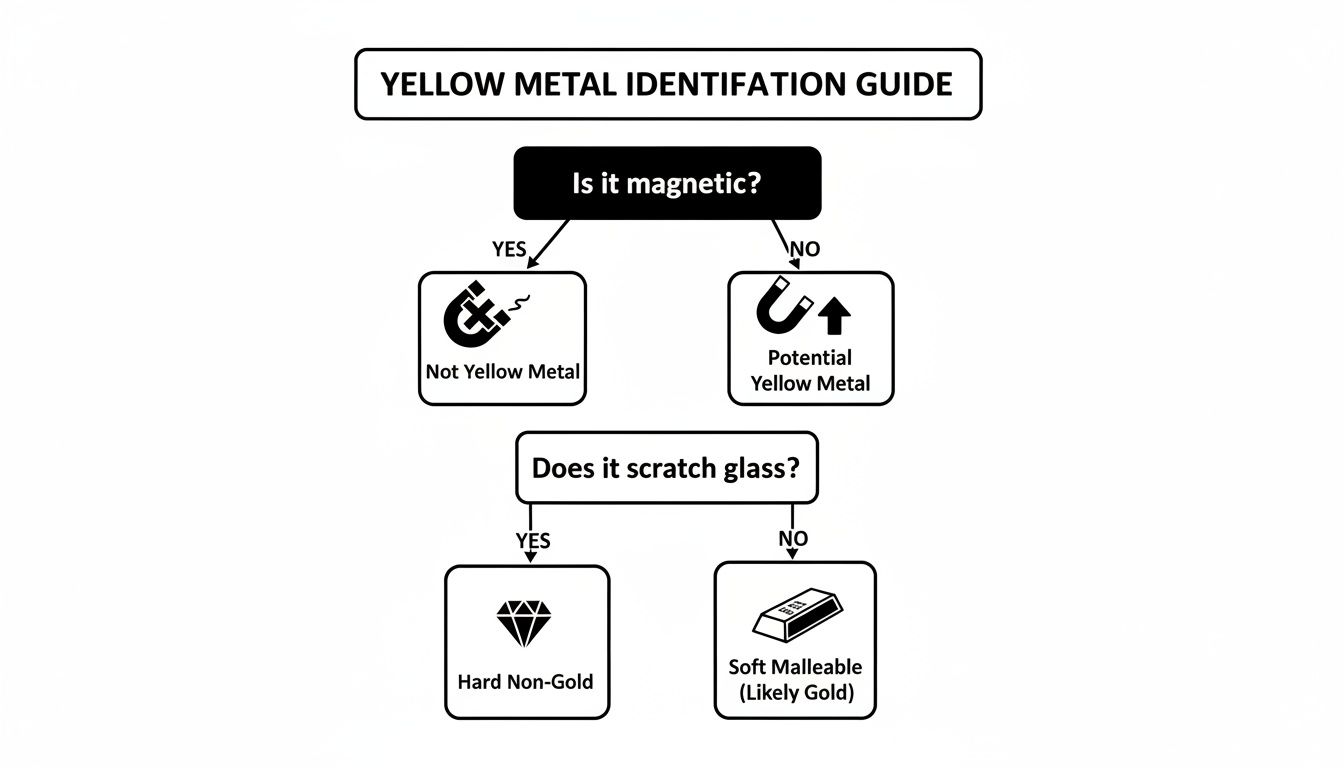
As you can see, if the magnet doesn't stick, you've likely got a non-ferrous metal on your hands. Now it's time to dig a little deeper.
Simple Visual and Physical Tests
Once you've sorted out the non-magnetic metals, the next clues are all about appearance and physical properties. Start with the colour.
- Brass: Usually has a bright, muted yellow colour, much like a dull gold. Think of a brand-new musical horn or a standard plumbing tap.
- Bronze: Has a much redder or browner tone because of its higher copper content. It often looks darker and more "antique" than brass, even when it's new.
To get a true look at the metal, you might need to do a scratch test. Find a clean spot and use a file to scratch the surface. This simple action cuts through any surface plating, paint, or patina, revealing the alloy’s true colour underneath.
Be warned: a shiny, silvery scratch on a yellow-coloured item is a red flag. It probably means you have brass-plated steel, which is nowhere near as valuable.
Another handy trick, though it requires a bit of caution, is the spark test. When you touch a piece of metal to a grinding wheel, the sparks it creates—or doesn't create—can tell you a lot.
Yellow metals like brass and bronze produce very few sparks, if any at all. Ferrous metals, especially carbon steels, will throw off a shower of bright, branching sparks. The absence of sparks is another strong clue that you're dealing with a valuable non-ferrous alloy.
Understanding Common Scrap Grades
After you've identified your material, the next step is grading. In the scrap world, we use standard grades to make sure everyone is on the same page. The Institute of Scrap Recycling Industries (ISRI) provides codes that define the composition and cleanliness of different types of scrap.
For yellow metal in South Africa, a couple of common grades you'll hear about are:
- Honey: This is the name for yellow brass scrap. It's the stuff you'll find in taps, plumbing fittings, and pipes. To get top price, it must be clean and free of iron, grease, and other attachments.
- Ebony: This ISRI code refers to red brass, which has a higher copper content and is therefore more valuable. You’ll find it in items like valves, machinery bearings, and certain plumbing fixtures.
Let’s put it into practice. Imagine you've got a massive bin full of old plumbing fixtures from a building renovation. By taking the time to separate the bright yellow "Honey" brass taps from the reddish "Ebony" bronze valves, you've already graded your scrap.
This simple act of pre-sorting adds significant value because you've done some of the processor's work for them. For more ideas on what to look for, check out our guide on the 10 common types of scrap metal you can recycle for cash. By applying these straightforward identification and grading techniques, you can turn a random pile of metal into a clearly defined, valuable asset.
Understanding The South African Scrap Pricing Market
Ever wondered how the price for a kilogram of brass or bronze is actually decided? It’s not just a number pulled out of thin air. The South African scrap pricing market is a living, breathing system, acting a lot like a stock market for recycled metals, influenced by global trends and our own local realities.
Getting your head around this system is the first step to unlocking the real financial potential sitting in your scrap bins. The price for yellow metal in South Africa isn't set in a vacuum. It's directly tied to global commodity markets, with the London Metal Exchange (LME) holding the most sway. The LME is the world centre for industrial metals trading, the place where global supply and demand for base metals like copper and zinc set the pace for everyone else.
Think of the LME price as the big, international wholesale number. The prices we see here at home are built on that foundation, but with a few local layers added on top.
From Global Markets to Local Prices
While the LME sets the benchmark, the price an industrial operator in Johannesburg actually gets for a skip of scrap is shaped by distinctly South African factors. It’s a multi-layered equation that spits out the final gate price.
Here are the key things that come into play after the LME has its say:
- Domestic Demand: The appetite of our local foundries, smelters, and manufacturers is a massive factor. If they’re busy and need a lot of brass or bronze, you’ll see prices firm up. If local industry is slow, prices might soften.
- Logistics and Transport Costs: South Africa is a big place. The cost of getting scrap from a factory in Mpumalanga to a processing yard in Gauteng or a port in Durban is a real number, and it gets baked into the final price.
- Currency Fluctuations: This is a big one. Since scrap is a global commodity traded in US Dollars, the ZAR/USD exchange rate is always in motion. A weaker Rand can sometimes mean higher ZAR prices for exported material, while a stronger Rand can do the opposite.
In essence, the price you receive is the global market value minus the costs of getting it there. This includes logistics, processing, and the dealer's margin. This is why a partnership with an efficient logistics provider is so important—it minimises these deductions and maximises your return.
This complex dance of factors is why prices for yellow metal SA can change daily, sometimes even hourly. To keep on top of it, many in the industry watch these moving parts closely. You can get a better feel for what’s ahead by reading up on the top 5 trends in metal supply for 2026 to understand where the market might be heading.
Why Cleanliness and Sorting Are Not Negotiable
If there’s one lesson every business generating scrap needs to learn, it’s this: the quality of your material directly and dramatically impacts its price. A bin of clean, sorted yellow brass fittings will always, without fail, fetch a much higher price than a mixed, dirty load.
But why? It’s simple. A mixed load forces the recycler to spend time, labour, and money sorting and cleaning it. That work involves pulling out all the things that don't belong, like:
- Ferrous metals: Steel screws, iron bits, and any other magnetic metals.
- Other materials: Plastic, rubber, wood, glass, or caked-on grease and oil.
- Mixed alloys: Different grades of brass and bronze all thrown in together.
Those separation costs get passed straight back to you, the seller, in the form of a lower price. On the flip side, if you deliver your scrap already sorted and clean, you’ve done the work for the processor. That value is passed directly back to you as a higher payout. A bin of "Honey" grade yellow brass scrap, free of attachments, can be worth up to 30% more than a contaminated, mixed-metal load of the exact same weight.
This direct financial reward is the biggest incentive to get your scrap management right. It takes scrap from being a low-value nuisance and turns it into a high-yield asset. The effort you put into sorting pays for itself many times over, every single time.
Navigating South Africa's scrap recycling laws isn't just about good practice—it's a non-negotiable part of running a responsible business. These rules are in place for some very important reasons: to clamp down on metal theft, keep operations safe, and protect our environment. If your business generates scrap, understanding and sticking to them is absolutely essential.
At the heart of these regulations is the Second-Hand Goods Act. This piece of legislation is crucial. It dictates that anyone buying or selling scrap metal must register as a dealer and keep meticulous records of every single transaction. This means logging the seller's ID, the type and weight of the metal, and the date. The idea is to create a clear, transparent paper trail that makes it incredibly difficult for stolen materials to be laundered into the legitimate recycling system.
Why Compliance Is Not Optional
For any business, compliance is far more than just ticking boxes on a form. It's about shielding your operation from serious risk and aligning with our national drive towards a more sustainable, circular economy. Operating outside of these rules, even by accident, can bring on some severe headaches.
Think of it as a safety net for your business. When you follow the law, you're not only helping fight crime, but you're also protecting your company's reputation and financial health. The risks of getting it wrong are just too high to ignore.
- Heavy Financial Penalties: The fines for breaking the Second-Hand Goods Act can be steep, hitting your bottom line directly.
- Operational Shutdowns: Authorities have the power to shut down non-compliant operations, leading to expensive downtime and a complete halt in revenue.
- Reputational Damage: Being linked to illegal scrap activity, even indirectly, can permanently tarnish your brand's image with customers, partners, and the public.
The entire system is built on one core principle: accountability. The regulations ensure that every kilogram of yellow metal in SA is tracked from its source right through to processing. This is fundamental for both crime prevention and responsible environmental management.
The Environmental Imperative
Looking beyond the legal and financial side of things, recycling yellow metals has a massive environmental upside. Producing metals like brass and bronze from virgin raw materials is an incredibly energy-hungry process. It involves mining ore, shipping it, and smelting it—all of which come with a substantial carbon footprint.
Recycling, on the other hand, is vastly more efficient. Take copper, a key component in all yellow metals. Recycling it can use up to 85-90% less energy than producing new copper from scratch. That's a huge reduction in greenhouse gas emissions and a lot less strain on our planet's finite resources. Getting this right hinges on effective waste management; you can see how structured processes make a real difference by exploring metal waste management in Johannesburg.
The Informal Sector and Our Shared Responsibility
The sheer scale of recycling in South Africa is enormous. The informal sector alone is thought to handle around 300,000 tons of metal scrap every year, which really shows you the scope of the industry. This often comes with risks, however. This is why proper regulation and partnerships with compliant recyclers are so critical, especially as the country aims to recycle 70% of e-waste by 2026 to tackle illegal dumping, an issue costing the economy an estimated R10 billion annually. If you want to dig deeper into the data, you can read the full research about South African commodity production.
This is exactly why strong partnerships between industrial generators and formal, compliant recyclers are so important. By choosing to work with a professional partner, you’re plugging your scrap into a regulated system that prioritises safety, legality, and environmental responsibility. It's the smartest way to protect your business while making a real contribution to a healthier, circular economy.
How To Prepare Your Scrap For The Best Price
Getting the best price for your yellow metal scrap isn't about luck. It’s all about preparation. This is where a little bit of effort on your part directly translates into a healthier bottom line, turning a messy pile of factory floor offcuts into neatly sorted bins that command top dollar.
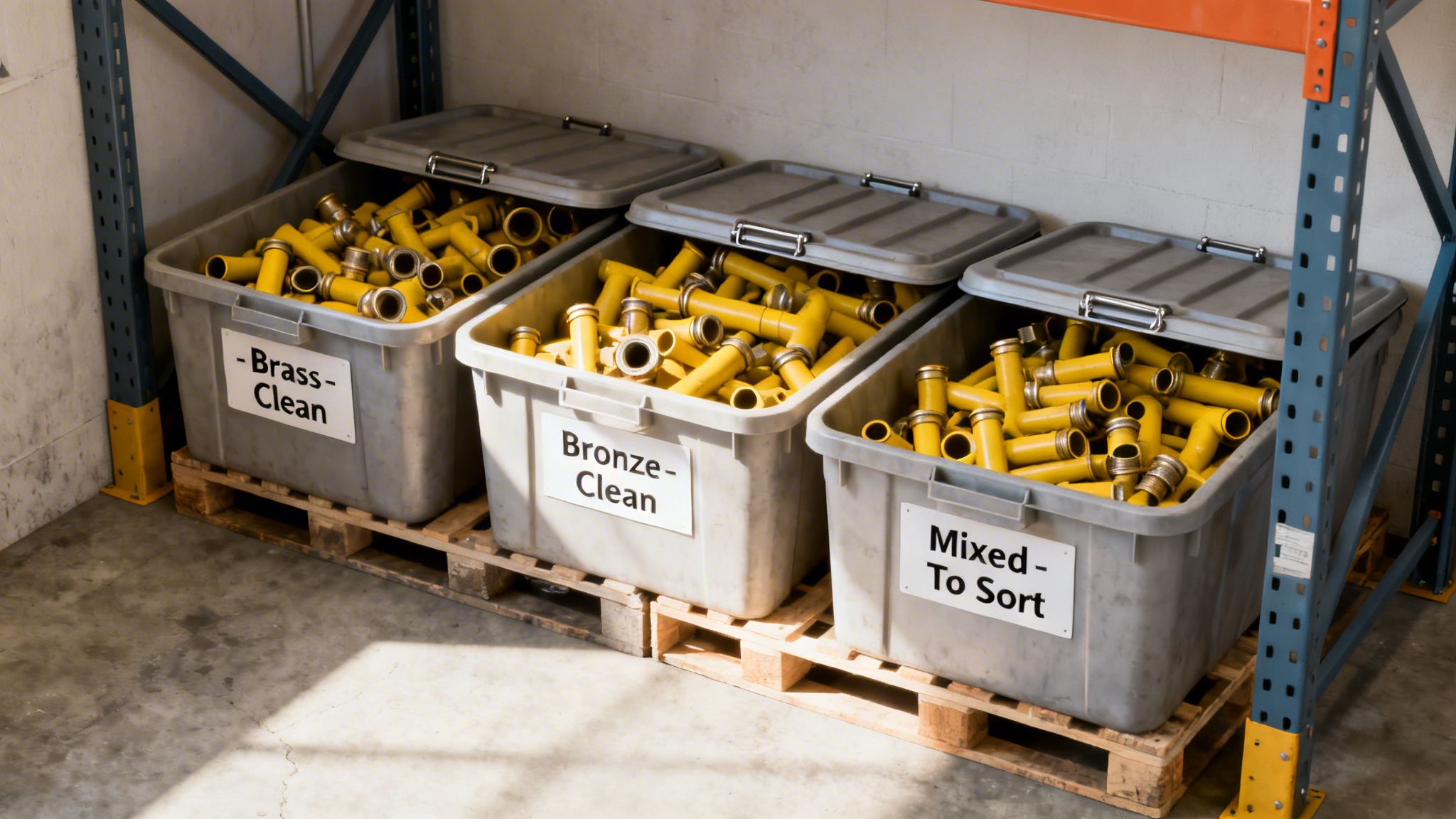
Think of it like this: you could sell a car with a dirty interior and a boot full of junk, or you could take the time to clean it out. One requires work from the buyer, which they'll deduct from their offer. The other is a high-value item, ready to go. A little prep makes all the difference.
The First Step: Segregation
The single most critical part of this process is segregation. In simple terms, this means keeping different metals separate. The moment you mix valuable brass with lower-grade steel, or even other non-ferrous metals like aluminium, the entire load’s value plummets.
Why? Because recyclers pay for purity. If they have to spend time and money sorting through your scrap, you can bet that cost will come directly out of your payment. It's a simple equation.
- Keep Brass and Bronze Separate: As you now know, brass has a distinct yellow tinge, while bronze is more reddish-brown. They have different values, so use separate, clearly labelled bins for each one.
- Isolate Ferrous Metals: The magnet test is your best friend here. Run a magnet over your scrap to pull out any contaminating iron or steel. Even a small amount can downgrade an entire batch of clean brass.
- Set Up a Sorting Station: Designate a specific area on your site with labelled bins. This simple system makes it easy for your team to sort scrap correctly as it’s generated, preventing costly mix-ups.
Cleaning For Maximum Value
Once your metals are sorted by type, the next step is cleaning. In the scrap world, "clean" means the material is completely free of any non-metallic attachments or contaminants. Clean loads always fetch a premium price.
A common mistake we see is scrap arriving with attachments still on. Things like plastic casings on plugs, rubber seals, steel screws, or even just excessive grease and oil will result in a lower price. Taking a few moments to strip these off can dramatically increase your payout.
For example, a brass tap full of steel parts and plastic washers is considered contaminated. The recycler has to break it down, which costs them labour. But if you deliver a bin containing only the clean brass tap bodies, the value jumps. The transformation from a pile of dirty fixtures to a bin of pure metal is where you make your money.
Secure Storage To Prevent Theft
Finally, once your yellow metal SA scrap is sorted and cleaned, you absolutely must store it securely. These materials are valuable commodities and, unfortunately, a prime target for theft. Leaving all your hard work in an unsecured area is just asking for your profits to walk away.
A smart storage strategy is simple but effective:
- Designated Secure Area: Store your sorted bins in a locked, well-lit area. If you can, put it under camera surveillance.
- Regular Collections: Don't let large, tempting quantities of valuable scrap pile up. Schedule frequent collections to keep inventory on-site to a minimum.
- Controlled Access: Limit who can access the storage area. Fewer hands mean greater accountability.
By following these three steps—segregation, cleaning, and secure storage—you can turn what might be a waste management headache into a streamlined and profitable revenue source. The effort you put in upfront will be directly reflected in the cheque you receive. It's as simple as that.
Turning Your Scrap Metal Into A Revenue Stream
Getting your scrap sorted and prepared is only half the battle. The other, more critical half is finding the right professional recycling partner. This relationship is what truly turns a waste management headache into a consistent, reliable revenue stream.
A proper end-to-end service doesn't just pick up your metal. It covers everything from on-site evaluation and collection right through to transparent, prompt payment. It's a system designed to make the entire process profitable and painless for your business.

Whether you’re overseeing a massive demolition project or just dealing with the daily offcuts from a factory floor, a good partnership is far more than simple collection. It’s a fluid operation built to maximise your financial return safely, sustainably, and in full compliance with all regulations.
From On-Site Evaluation To Prompt Payment
An effective partnership begins long before a truck ever shows up at your gate. It starts with a thorough on-site evaluation to get a real feel for your operations, the specific kinds of scrap you generate, and your daily workflow.
This first step is crucial because it allows for a customised solution that actually works for you. This typically includes:
- The Right Bins for the Job: Based on the assessment, the correct type and number of collection bins are delivered to your site. This makes it simple for your team to segregate materials like brass and bronze right from the start.
- Smart, Efficient Logistics: Collection schedules are planned around your business hours and operational peaks. This prevents scrap from piling up and keeps your site clear without disrupting your work.
- Expert Grading: Once collected, the material is brought to a processing facility where it's professionally weighed and graded against industry standards. This expert grading is what confirms the quality and purity of your yellow metal, forming the foundation of its value.
- Transparent and Fast Payment: The final, most important step. A professional partner will give you a clear, itemised report detailing all weights and grades, followed by fair and prompt payment for your materials.
This structured approach takes all the guesswork and admin burden off your team. Instead of managing a complex waste stream, you're simply overseeing a new source of revenue, all backed by a system built for safety and compliance.
Turning Waste Into A Sustainable Asset
Working with a professional recycler isn't just about selling scrap; it’s about creating real value where there was once only a cost. Every kilogram of yellow metal recovered and put back into the system represents a tangible financial gain.
While 'yellow metal' in the scrap industry usually means brass and bronze, it’s impossible to ignore its historical link to gold. South Africa's primary gold production hit its peak in 1970 at an incredible 1,000,417 kg, but by 2022, that figure had plummeted to just 88,883 kg.
This staggering 91% decline shines a spotlight on just how critical secondary recovery from industrial and demolition scrap has become. To get a deeper look at this historical trend, you can discover more insights about South African gold production on Statbase.
This market shift makes recovering industrial alloys like brass and bronze more vital than ever. A strategic recycling partnership provides the framework to consistently tap into this value. For large-scale industrial operations, demolition contractors, and even municipalities, this transforms scrap metal from a logistical problem into a dependable financial asset that benefits both your bottom line and the circular economy.
Frequently Asked Questions About Yellow Metal SA
Diving into the scrap metal market can feel complex, and it’s natural to have questions. We often hear from industrial, municipal, and commercial partners, so we’ve put together answers to some of the most common queries about yellow metal in SA to help you operate with confidence.
What Is The Most Common Mistake When Selling Scrap Metal?
Hands down, the single biggest error we see is a failure to separate materials properly. When you have brass, copper, aluminium, and steel all jumbled together in one container, the value of the entire load plummets.
A recycler has to factor in the labour and time required to sort it all out, and that cost comes directly off your payment. A clean, well-sorted bin of brass will always be far more valuable than a mixed-metal container of the exact same weight.
How Can I Tell If A Yellow Metal Is Brass Or Bronze?
Although they look similar, you can usually tell these two copper alloys apart just by looking at their colour. Brass, which is a copper-zinc alloy, tends to have a brighter, more muted yellow shine—think of a classic trumpet or saxophone.
Bronze, on the other hand, is a copper-tin alloy and has a noticeably redder or browner hue. If the metal has a patina or is dirty, a quick scratch with a file can reveal the true colour underneath, giving you a much clearer idea of what you're dealing with.
Remember the pencil analogy: Just as the distinct yellow barrel of a pencil signals its specific brand, the specific yellow or reddish hue of your metal scrap signals its alloy type and value.
This simple visual check is your first, most important step for effective grading right on your site.
Do I Need A Permit To Sell My Company’s Scrap Metal?
This is a great question that often causes confusion. According to South Africa’s Second-Hand Goods Act, any business whose primary function is buying and selling scrap metal must be a registered dealer and keep detailed records.
However, if your business is simply generating scrap as a by-product of its main operations—like a manufacturing plant, plumbing company, or demolition contractor—your responsibility is to sell that scrap to a fully compliant and registered recycling partner. This ensures the transaction is properly documented and legally sound, protecting you from any potential liability down the line.
Why Do Scrap Metal Prices Change So Often?
Scrap metal is a global commodity, not just a local one. Its value is directly tied to international markets, most notably the London Metal Exchange (LME). Prices can shift daily, influenced by global supply and demand, currency fluctuations (especially the ZAR/USD exchange rate), and local factors like demand from South African foundries or even transport costs.
This dynamic is exactly why it’s always smart to get a current quote before committing to a sale. Partnering with a team that understands these market movements is key to helping you sell at the most opportune moments.
At D7 Capital Partners (Pty) Ltd, we turn your scrap metal challenges into a reliable revenue stream. Our expertise in collection, grading, and logistics means you get the maximum value for your materials, all while ensuring full compliance. Partner with us today to unlock the hidden value in your industrial scrap.