A shutdown line is waiting for clearance. The skip outside the workshop is full. A demolition crew wants the laydown area cleared before the next delivery arrives. Someone on site types scrap yard open now near me and hopes the answer is simple.
It usually is not.
For an industrial or construction site in South Africa, an “open” scrap yard is only useful if it can receive your material, process it correctly, issue the right paperwork, and do so without exposing your business to compliance problems. A small cash yard and a professional industrial scrap operation are not the same thing. One takes metal. The other manages risk, logistics, grades, access, and accountability.
That distinction matters in a market where South Africa’s ferrous scrap recovery reached approximately 3.2 million tonnes in 2022, up 12% from 2021, according to SEIFSA. The volume tells you something practical. Scrap is not a side issue. It is part of how factories, contractors, and municipalities keep projects moving.
Your Guide to Immediate Scrap Metal Solutions
A project manager usually does not start with recycling strategy. The trigger is operational pressure. A site gets congested. A machine strip-out leaves steel frames, guards, cable trays, motors, and offcuts in the wrong place. A contractor needs a fast clearance before the next trade comes in.
That is when the search for scrap yard open now near me starts to mean more than opening hours.
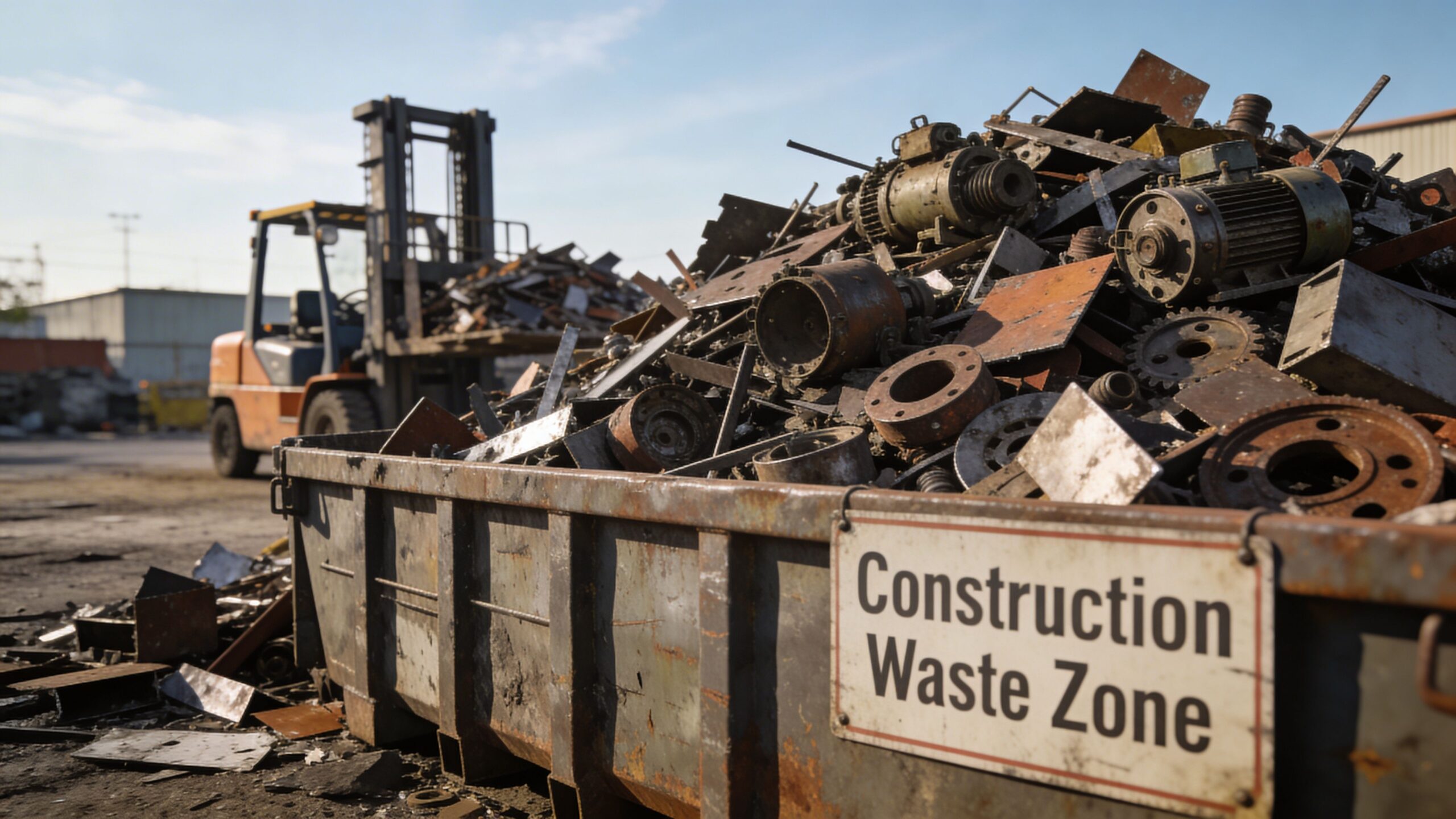
An industrial client usually needs four things immediately. They need collection or receiving capacity. They need clear rules on what will be accepted. They need evidence that the load was handled properly. They need value protection, not a rushed disposal that turns good scrap into a mixed, discounted pile.
What an urgent scrap job really requires
If the material is from a factory, warehouse, plant, civil works package, or structural demolition, the question is not “who is nearby”. It is “who can handle this professionally today”.
That means checking for:
- Receiving capability for industrial quantities, not just small public drop-offs.
- Material knowledge so ferrous, non-ferrous, and mixed loads are not all priced as low-grade scrap.
- Site-safe logistics including bin placement, truck access, loading sequence, and turnaround.
- Traceable documentation for internal controls and environmental records.
A fast scrap decision should reduce pressure on the project. It should not create a second problem in finance, safety, or compliance.
Many general online results are built for household sellers. Industrial sites need a tighter process. If you are handling plant decommissioning, recurring production scrap, or demolition arisings, it helps to start with a specialist service built around commercial collections and processing such as scrap metal recycling near me.
The practical standard to use
Use a simple filter. If the yard cannot confirm status, receiving rules, paperwork, and access arrangements on the spot, it is not ready for your job. That is true even if the gate is open.
The rest of the decision follows from that. Verify availability. Prepare the load properly. Know your material. Then insist on compliant handling from collection through weighbridge and final recovery.
How to Confirm a Scrap Yard Is Open Now
A map listing is a starting point. It is not verification.
When someone on your team searches scrap yard open now near me, they usually get listed hours, a pin location, and maybe a phone number. For industrial work, none of that confirms that your load can be received today. Yards change intake rules, stop accepting certain materials, limit large vehicle access, or pause receiving while they clear the floor.

Start online, then verify by phone
Use Google Maps or your preferred directory to narrow the field. Check distance, listed hours, and whether the business appears active. Then call.
That call matters because industrial scrap is operational, not retail. Your team needs to know whether the yard can receive a side tipper, a rigid truck, a bin truck, or a loaded flatbed. You also need to know whether they are taking the exact grade you have.
Ask direct questions:
- Are you receiving industrial loads right now
- What materials are you accepting today
- Can you receive mixed scrap, or must it be pre-sorted
- What are your cut-off times for weighbridge intake
- What vehicle types can access your site safely
- What documents must the driver bring
- Can you arrange collection if drop-off is not practical
A short call saves wasted trips, queueing, rejected loads, and rehandling on your site.
What a reliable answer sounds like
You are listening for specifics. A professional operation should be able to explain intake rules clearly. It should not give vague responses like “bring it through and we will see”. That answer usually means the burden shifts to you if the load is refused or downgraded.
Useful answers mention practical details such as:
- Receiving windows tied to weighbridge or yard flow
- Load restrictions for oversized sections, sealed units, or contaminated scrap
- Unloading method required on arrival
- Contact person for the driver at the gate
If the person answering the phone cannot tell you whether your material can be received, your truck is likely to become the test case.
Check for operational fit, not just open gates
An open yard may still be the wrong yard. Industrial scrap jobs often fail on fit. The load is too mixed. The truck is too large for the entrance. The site wants public drop-offs only. The yard takes ferrous but not insulated copper, stainless, or demolition mixeds. These are common failures.
Treat the call as a dispatch check, not a courtesy call. Confirm the job before the wheels move.
Preparing Your Materials for Collection or Drop-Off
The best time to improve scrap value is before the truck leaves your site.
Too many industrial loads lose money because the site treats scrap as waste first and material second. Once clean grades are mixed with rubbish, rubber, plastic, soil, timber, or general demolition debris, separation becomes slower and the whole load becomes harder to price fairly.
South Africa demolishes over 150,000 tonnes of structural steel annually from commercial and industrial sites, with compliant operations recovering up to 85% for recycling, according to the Construction Industry Development Board. That figure reflects a basic operational truth. Recovery improves when material is handled deliberately.
Sort before anyone arrives
The simplest way to protect value is to split materials into sensible groups on site.
Create separate areas or bins for:
- Heavy ferrous steel such as beams, plate, channel, and machine sections
- Light iron and steel such as offcuts, sheet, ducting, and frames
- Stainless steel kept away from carbon steel contamination
- Copper-bearing material including cable, busbar, and clean pipe
- Aluminium and brass separated from mixed non-ferrous
Do not wait for the yard to do all the thinking. The more mixed the load, the more conservative the assessment tends to be.
Remove obvious contamination
Many loads go wrong at this point. Scrap is valued as recyclable metal, not as a bundle of unknown attachments.
Before collection or drop-off, remove what you reasonably can:
- Plastic and packaging
- Rubber linings and hoses
- Wooden pallets or dunnage
- Excess dirt, concrete, and insulation
- Liquids, oils, and residues from plant items
A site does not need laboratory-level preparation. It does need discipline. If you know a pile contains clean steel, keep it clean.
Mixed scrap is sometimes unavoidable during shutdowns and demolition. Even then, separating the top-value items first usually pays for the effort.
Get your paperwork in order
Commercial scrap should move with records. The exact document set depends on the project and the operator, but facility managers should have the following ready:
| Document or record | Why it matters | Who usually holds it |
|---|---|---|
| Internal release or disposal approval | Confirms the material can leave site | Facility or project manager |
| Driver and vehicle details | Supports gate control and dispatch | Transport coordinator |
| Material description | Helps receiving staff plan handling | Site supervisor |
| Weighbridge ticket or receiving record | Supports reconciliation and audit trail | Yard and accounts team |
If the scrap comes from a factory strip-out or demolition package, align these records with your internal asset and waste controls before collection day.
Plan access like a logistics job
A scrap collection should be run like any other heavy vehicle movement. Walk the route. Check turning space, overhead clearance, loading equipment, and staging area. If you are using bins or skips, decide where they can be swapped without disrupting production or creating a safety issue.
For regular arisings, container placement often works better than repeated ad hoc pickups. For shutdown work, schedule removals around the critical path so that scrap never becomes the bottleneck.
Poor preparation creates delays at both ends. Good preparation creates a cleaner yard experience, quicker unloading, and easier reconciliation when the paperwork lands on your desk.
Understanding Accepted Scrap Metal Specifications
If you want a fair outcome, describe your material properly. “Metal scrap” is not a useful commercial description. Yards price and process by grade, cleanliness, density, and contamination risk.
In industrial work, that matters because one load can contain high-value segregated material beside low-grade mixed scrap. If the whole lot is presented as a single undifferentiated pile, you hand control of the valuation to someone else.
Ferrous grades you are likely to encounter
Ferrous scrap is the backbone of most industrial clearances. Common categories include heavy melting steel, plate and structural, cast iron, borings, turnings, and shredded or processed steel scrap.
D7 Capital handles specific ferrous grades including ISRI 201 and HMS 1&2, and high-density baling can significantly cut transport costs for clients dealing with bulk movements. That is especially relevant when material is moving from site to processor over distance.
A few practical distinctions matter on site:
- HMS 1&2 is often used for heavier iron and steel scrap from fabrication, decommissioning, and demolition.
- ISRI 201 refers to shredded clippings or borings in a defined processed category.
- Cast iron should be kept separate where possible.
- Borings and turnings need attention because fluids and contamination affect acceptance.
Non-ferrous material needs tighter control
Non-ferrous scrap usually carries more upside, but only if it stays separated. On many sites, value is lost because copper, brass, aluminium, stainless, and mixed cable are all thrown into one bin for convenience.
Typical industrial non-ferrous streams include:
- Copper from cable, busbar, pipe, motor windings, and electrical upgrades
- Brass from valves, fittings, and plumbing assemblies
- Aluminium from extrusions, window sections, offcuts, and plant components
- Stainless steel from food, chemical, pharmaceutical, and processing environments
- Lead and zinc from specialist plant or roofing systems
Do not assume all bright-looking metal belongs together. Stainless and aluminium mixed into copper-bearing scrap create sorting work and reduce clarity at intake.
Why ISRI language helps
ISRI codes give both sides a shared trading language. They are useful because they turn vague site descriptions into something closer to a tradable specification.
Here is a practical working table for common material groups.
| Metal Category | Material Type | Common ISRI Codes | Typical Sources |
|---|---|---|---|
| Ferrous | Shredded clippings and borings | ISRI 201 | Engineering swarf, processed production scrap |
| Ferrous | Mixed cast iron | ISRI 204 | Machine bases, cast housings, industrial components |
| Ferrous | Borings and turnings | ISRI 236/238 | Machining operations, fabrication shops |
| Ferrous | Heavy melting steel | HMS 1&2 | Structural steel, plate, demolition steel |
| Non-ferrous | Aluminium scrap | ISRI 200-series tension scrap | Extrusions, frames, fabrication offcuts |
| Non-ferrous | Brass heavy clippings | ISRI 300 | Fittings, valves, plumbing and industrial brass |
| Non-ferrous | Copper | ISRI 1-3 bare or insulated | Cable, busbar, tubing, electrical strip-out |
| Non-ferrous | Stainless steel | Custom graded 304/316L | Process equipment, tanks, pipework |
What yards look for during grading
Receiving staff typically assess four things quickly:
- Metal family
- How clean the material is
- Whether attachments are present
- Whether the load is uniform or mixed
The more uniform the load, the easier it is to process and value.
For example, a stack of clean stainless pipe with minimal attachments tells a clear story. A bin containing stainless, painted mild steel, cable, and rubber hose does not. The second load takes more labour to classify and usually attracts more caution.
The site that labels and separates material before collection usually gets fewer disputes after weighing.
For a broader reference on the categories many sites generate, this overview of common types of scrap metal you can recycle for cash is useful as a working checklist for supervisors and buyers.
What does not work on industrial sites
Three habits repeatedly reduce value:
- Using one mixed bin for all metals
- Leaving attachments on because “the yard will strip it”
- Describing everything as steel when the load contains stainless, cast, or non-ferrous items
If you manage recurring scrap arisings, train the people at source. The welder, electrician, maintenance fitter, or demolition foreman determines quality long before the load reaches a weighbridge.
Ensuring Fair Pricing and Full Compliance
Price matters. Compliance matters more. If you fail on compliance, a good price on the day does not protect the business.
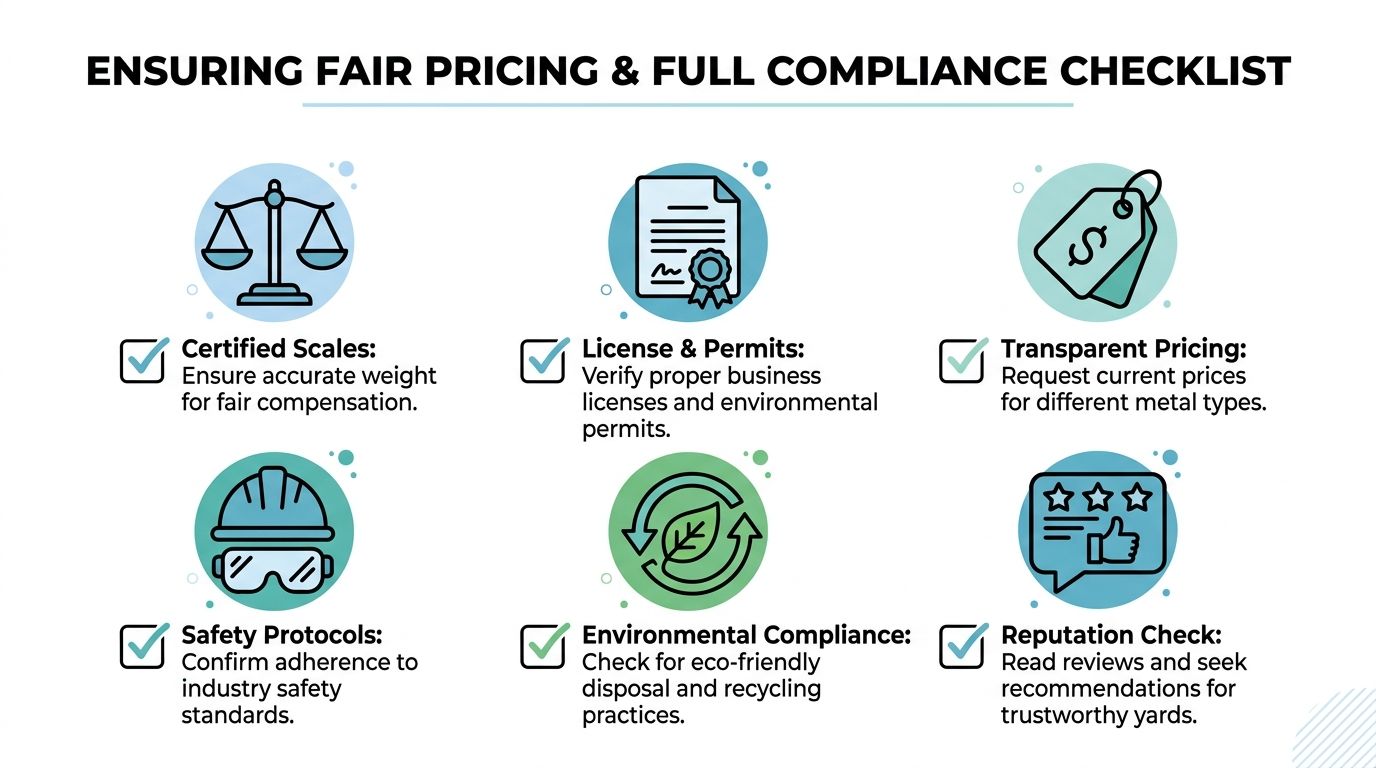
A Department of Forestry, Fisheries and Environment audit found that a significant percentage of Johannesburg scrap yards operated without full waste management licences, creating risk for industrial clients handling site clearances and disposals. That is not a technicality. It affects traceability, environmental exposure, and the defensibility of your disposal decisions.
Why cheap and fast can become expensive
An unlicensed or poorly run yard can create problems in several ways. It may not document the transaction properly. It may not manage stockpiles or waste streams correctly. It may not weigh accurately or transparently. If your company later needs to account for where regulated or industrial material went, weak records become your problem too.
This is why “open now” is the wrong final criterion.
The better test is whether the operator can demonstrate:
- Valid operating status
- Clear receiving procedures
- Traceable paperwork
- Safe handling standards
- Consistent grading practice
Pricing is not just a number on the phone
Scrap pricing depends on what the material is when it arrives. A quoted figure without a clear grade is only a rough indication. Professional buyers and processors look at cleanliness, separation, density, and whether the load matches the description given over the phone.
That is why fair pricing and proper preparation sit together. If your team sends mixed or contaminated material, the transaction becomes more subjective. If the load is clean, separated, and accurately described, the assessment is easier to defend internally.
A practical vetting approach includes:
- Ask how the material will be classified before dispatch.
- Confirm that weighing records will be issued.
- Clarify any deductions for contamination, attachments, or mixed loads.
- Check whether they can receive your specific material legally and safely.
A professional transaction is easy to audit later. That should be one of your buying criteria on day one.
Build a simple compliance screen
For facility managers and project managers, a lightweight screening process is usually enough. You do not need to overcomplicate it.
Use this short decision test:
| Check | What to confirm |
|---|---|
| Legal status | The operator is properly licensed for its activities |
| Documentation | The transaction will produce usable records |
| Weighing | The site can issue formal weight confirmation |
| Safety | The receiving site can handle your vehicle and load type |
| Material fit | The yard accepts the exact grades you are sending |
If any one of those is unclear, pause the load.
For organisations that need an operator capable of handling industrial scrap with the right documentation and collection options, a specialist route such as sell scrap metal near me is usually more appropriate than relying on a generic local search result.
Your Next Steps for Immediate Scrap Removal
The right response to scrap yard open now near me is not speed alone. It is controlled speed.
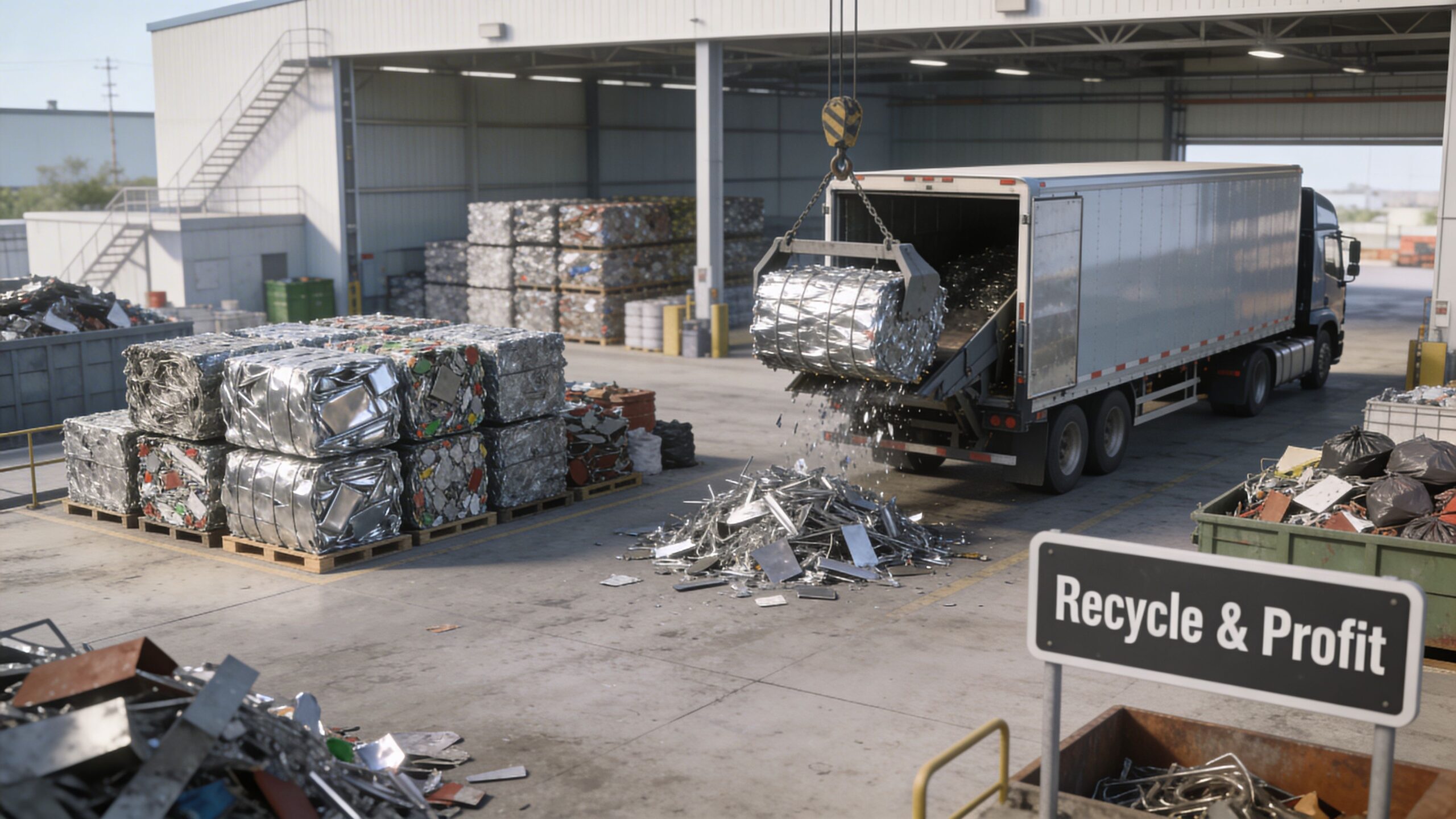
You need a yard or collection partner that can confirm intake, handle the load you have, and support the decision with proper records. You also need your own team to do the basics well. Sort material. Remove obvious contamination. Prepare the access route. Make sure the driver and paperwork are aligned before the truck moves.
A practical action list for today
If you need immediate removal, work through these in order:
- Identify the material properly. Separate ferrous, stainless, copper-bearing, aluminium, and mixed scrap.
- Call before dispatch. Confirm receiving status, cut-off time, load type, and paperwork requirements.
- Prepare the load area. Make sure access, loading equipment, and traffic flow are safe.
- Document the movement. Keep internal release records and match them against receiving weights.
- Choose compliance over convenience. Do not let urgency push the load to the wrong outlet.
What experienced teams do differently
The strongest sites do not treat scrap as an afterthought. They assign ownership. Someone is responsible for segregation, dispatch information, and record matching. That single change often makes urgent removals smoother because the receiving side gets a clear, accurate description before the truck arrives.
Where volumes are recurring, scheduled removals and on-site container planning usually work better than emergency cleanup. Where the job is a one-off strip-out or demolition, a specialist removal arrangement is the safer route.
For teams that need collection rather than drop-off, scrap metal removal is the more practical starting point.
If you need a reliable partner for industrial scrap recycling, structural demolition, or urgent metal removal in South Africa, contact D7 Capital Partners (Pty) Ltd. The team supports facility managers, contractors, municipalities, and industrial operators with compliant collection, processing, logistics, and recovery solutions built for real project conditions.