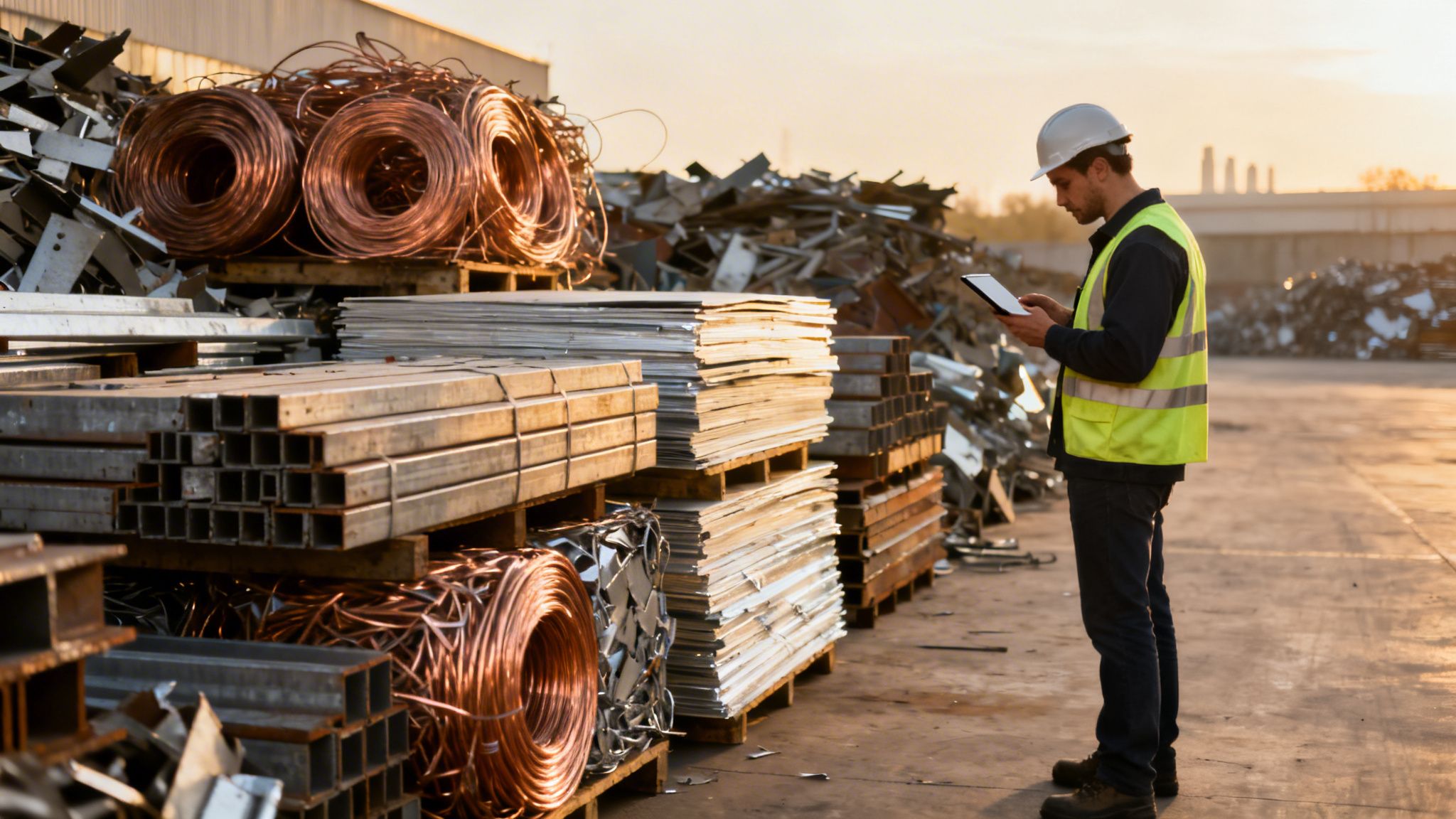
That pile of metal off-cuts from the factory floor, the twisted beams from a demolition site, or the old equipment from a municipal yard isn't just waste. It's a hidden opportunity. Metal scrap recycling is all about recovering this end-of-life metal and transforming it from a disposal headache into a valuable commodity. It’s a simple shift in perspective that can make a huge financial and environmental difference.
Why Scrap Is a Resource, Not Refuse
If you’re a manager in industry, construction, or a municipality, leftover metal is just part of the job. It could be anything from manufacturing off-cuts and structural steel to decommissioned machinery. For years, the standard approach was to treat this material as refuse—an expense to be hauled to a landfill.
But that old way of thinking misses the mark completely. It overlooks the real, tangible value locked inside the metal itself. Metal recycling reframes this material, seeing it not as rubbish but as a critical raw material for a circular economy.
This process closes the loop. It allows metals to be used over and over again without ever losing their core physical properties. It’s a powerful strategy for turning what was once a cost centre into a reliable revenue stream.
Turning Scrap into a Strategic Asset
A professional scrap management programme is the key to unlocking this hidden value. By properly recovering, sorting, and processing these materials, they’re turned back into furnace-ready commodities that mills and foundries—both here in South Africa and abroad—are actively looking to buy.
So, instead of paying to get rid of your scrap, you get paid for it. This simple switch delivers some major advantages:
- Financial Returns: You create a new source of income from materials you might have previously paid to throw away.
- Environmental Compliance: Your materials are managed according to South African environmental laws, helping you sidestep potential fines and penalties.
- Enhanced Sustainability: You shrink your operation’s carbon footprint. Recycling steel, for example, uses up to 74% less energy than making it from virgin ore, which is an incredibly energy-hungry process.
Ultimately, a structured approach to metal recycling is just smart business. It lines up your financial targets with environmental responsibility, creating tangible wins across the board. When you start seeing scrap metal as an asset, you tap into a valuable and sustainable part of your operation. To get a better feel for what materials qualify, check out our guide on the 10 common types of scrap metal you can recycle for cash.
Distinguishing Ferrous and Non-Ferrous Metals
Before you can get the best price for your scrap, you need to know what you’re dealing with. In the scrap recycling world, every piece of metal falls into one of two main families: ferrous or non-ferrous. Getting this basic distinction right is the first step toward accurate sorting and better returns.
Think of ferrous metals as the strong, magnetic workhorses of the industrial world. Their defining feature is iron content, which is what makes them magnetic. This group includes everything from the carbon steel and cast iron that form the backbone of buildings and machinery to the various steel alloys used in vehicles.
Non-ferrous metals, on the other hand, are the specialists. They contain no iron and aren’t magnetic. Valued for unique properties like light weight, corrosion resistance, or conductivity, these materials—like copper, aluminium, and brass—are critical components in everything from electrical wiring and plumbing to window frames.
The Simple Magnet Test
So, how do you tell them apart? The easiest and most common method is one used on scrap yards every single day: the magnet test. It’s simple, quick, and reliable.
- If a magnet sticks firmly to the metal: It’s ferrous. This is your steel off-cuts, I-beams from a demolition site, or old industrial equipment.
- If a magnet doesn’t stick at all: It’s non-ferrous. You’re likely looking at copper pipes, brass fittings, aluminium siding, or stainless steel tanks.
This simple separation is the most important first step you can take. Throwing high-value copper wiring in with a pile of lower-value structural steel will seriously hurt your payout.
To make it even clearer, here’s a quick breakdown of what you'll typically find on a worksite or in a municipal collection.
Common Ferrous and Non-Ferrous Scrap Metals
| Metal Type | Key Characteristics | Common Industrial Sources | Examples |
|---|---|---|---|
| Ferrous | Magnetic, contains iron, prone to rust, high strength | Construction & demolition, vehicle manufacturing, machinery | Structural steel, rebar, cast iron pipes, engine blocks, steel beams |
| Non-Ferrous | Not magnetic, no iron, lightweight, high conductivity, corrosion resistant | Electrical wiring, plumbing, automotive parts, roofing, window frames | Copper wire, brass fittings, aluminium sheeting, stainless steel tanks |
As you can see, knowing which is which is fundamental to organising your scrap recovery efforts efficiently.
Understanding the Language of Scrap Grades
Once sorted into ferrous and non-ferrous, metals are graded using a global standard. The industry relies on specifications from the Institute of Scrap Recycling Industries (ISRI) to classify materials. These ISRI codes are like a universal language, ensuring a buyer in Durban and a seller in Dubai are talking about the exact same quality of metal.
Think of ISRI codes like a quality guarantee. They eliminate the guesswork. An ISRI grade ensures a batch of "HMS 1" steel from a Johannesburg construction site meets the same specs as a batch with the same label from anywhere else in the world. This is what makes transparent and fair pricing possible.
For instance, some common grades you’ll run into are:
- HMS 1 & 2 (Heavy Melting Steel): Standard grades for thick, dense steel scrap that comes from demolished buildings and dismantled heavy equipment.
- Birch/Cliff: An ISRI code referring to clean, unalloyed copper wire and tubing—some of the most valuable copper scrap available.
- Tabor: The ISRI term for clean, mixed old alloy aluminium sheets, like what you’d find in window frames or siding.
Familiarity with these grades helps explain why some materials command a much higher price. It all boils down to purity, density, and the amount of processing required before the metal can be melted and given a new life.
This system is the bedrock of a thriving industry. In 2025, South Africa exported over 700,000 metric tons of ferrous scrap, valued at roughly R4.5 billion. On the ground, recycling rates for steel in urban construction can hit an impressive 85-90%. For businesses, this is more than just good environmental practice—compliant recovery of structural steel can slash project costs by up to 30% by turning waste into a revenue stream.
The Scrap Recycling Journey from Site to Smelter
Once metal has been identified and sorted on-site, its real journey begins. This is where a pile of discarded material from a project site gets transformed into a valuable, furnace-ready commodity. It’s a meticulously managed process that prioritises safety, efficiency, and getting the maximum value from every kilogramme.
We can break this path down into four key phases. Let's follow a piece of scrap on its trip from the collection point all the way to a new beginning at a smelter.
Phase 1: On-Site Collection
It all starts at your location, whether that's a bustling manufacturing plant, a demolition site, or a municipal yard. Getting the collection right is the bedrock of a successful metal scrap recycling operation. This means deploying the right equipment and skilled personnel to gather all the materials safely, causing minimal disruption to your day-to-day work.
This is far more than just throwing metal onto a truck; it's a planned logistical exercise. Depending on the volume and type of scrap you're generating, dedicated skips and bins might be placed at your facility for easy segregation or regular, convenient pick-ups can be scheduled. For huge projects, like decommissioning a factory, a specialised team is needed to handle oversized or dangerously heavy items.
Phase 2: Sorting and Grading
After collection, the scrap is transported to a processing yard. This is where the most critical, value-adding step happens: detailed sorting and grading. Here, materials are meticulously separated into very specific categories, going much deeper than the simple ferrous vs. non-ferrous check done on-site.
Expert graders use a combination of visual inspection, specialised tools, and years of industry knowledge to classify metals according to the universal ISRI specifications. They’re trained to spot specific alloys, check for contaminants like plastic or rubber, and make sure every pile meets the strict quality standards that mills and foundries demand.
This stage is where expertise directly translates into profit. A single piece of stainless steel accidentally tossed in with ordinary carbon steel can downgrade an entire batch, slashing the final payout. Precise sorting ensures every gramme of high-value material is properly identified and you get paid what it's truly worth.
This simple flowchart shows that first, fundamental sort that often happens right on site.
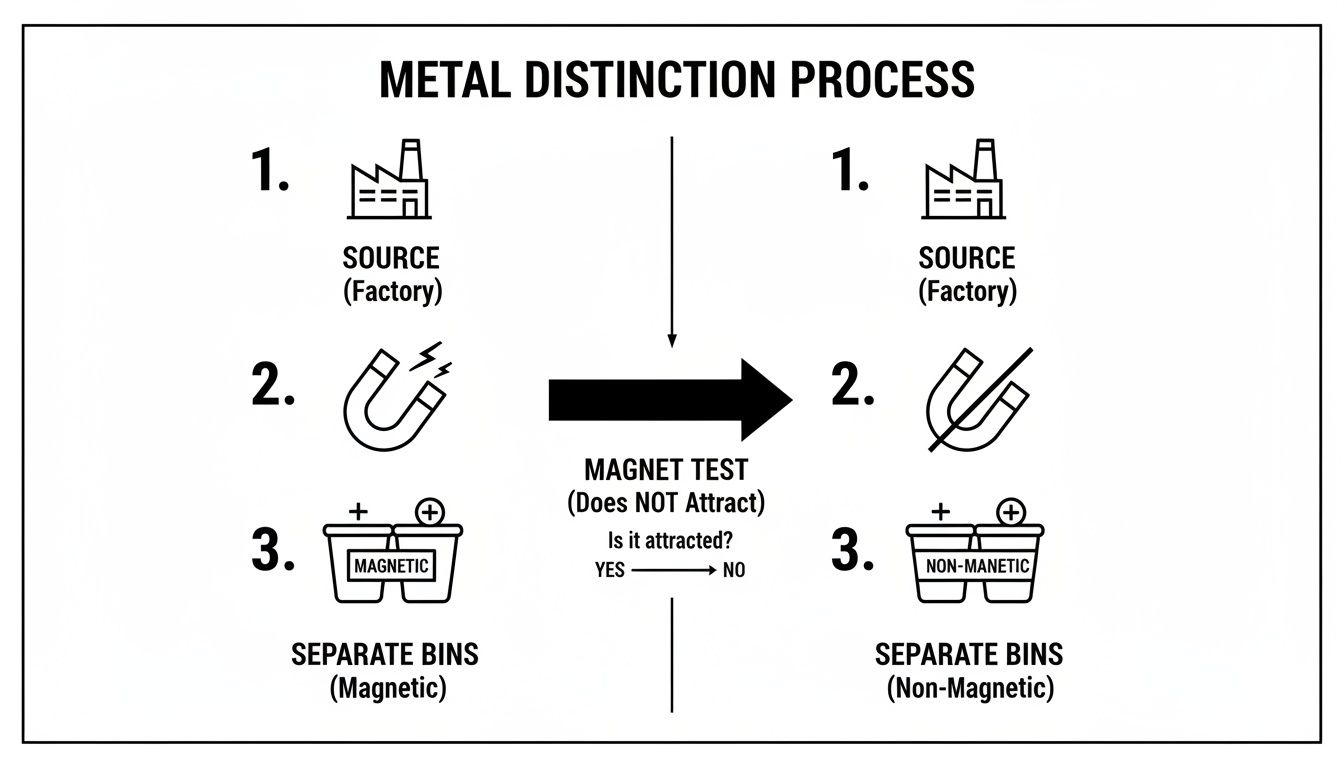
It’s all about separating the lower-value magnetic metals from the more valuable non-magnetic ones, which sets the stage for the more detailed grading to come.
Phase 3: Processing for the Furnace
Even when perfectly sorted, raw scrap isn't ready for a furnace. It’s often bulky, awkwardly shaped, and needs to be processed into a uniform, dense format that smelters can use safely and efficiently. This phase uses some serious heavy machinery to prepare the metal for its final destination.
Key processing techniques include:
- Shearing: Gigantic hydraulic shears act like massive scissors, slicing through thick steel beams, plates, and pipes. This cuts them down into manageable, furnace-friendly sizes.
- Baling: Balers are powerful compactors that crush and compress lighter gauge materials like sheet metal, aluminium siding, and vehicle bodies into dense, stackable cubes. This makes them far easier and cheaper to transport and handle.
- Shredding: A shredder is a brute-force machine that uses powerful rotating hammers to tear scrap into fist-sized chunks. This not only densifies the material but also helps separate the last bits of non-metal contaminants like fabric or plastic.
Ultimately, the goal of processing is to create a clean, dense, and consistently sized product that meets the exacting specifications of the end-user.
Phase 4: Distribution to End-Users
The final step is getting the processed scrap to its new home, where it will be reborn as a new product. Depending on the material and current market demand, this could mean a short truck ride to a domestic steel mill in South Africa or a long sea voyage to an international foundry. Managing these logistics and having a vast network of buyers is a core part of the metal scrap recycling business.
Non-ferrous metals, in particular, are a huge part of both local industry and the national economy. In 2026, over 150,000 tons of non-ferrous scrap were processed right here in South Africa, with recycling rates for materials like copper hitting over 60%. Recovering these materials is critical, especially when you consider that recycling aluminium saves up to 95% of the energy needed for primary production.
Understanding this entire journey makes it clear how "waste" is transformed into a crucial resource. To see the bigger picture, you might be interested in a deeper dive into the life cycle of metal, from its origin to market use.
How to Boost Your Scrap Metal Revenue
Turning your business’s scrap metal into a reliable income source is about more than just setting it aside for collection. The price you get isn’t set in stone; it’s directly tied to how you manage the material on your site. By putting a few smart strategies into practice, you can dramatically increase the value of your scrap and improve your financial returns.
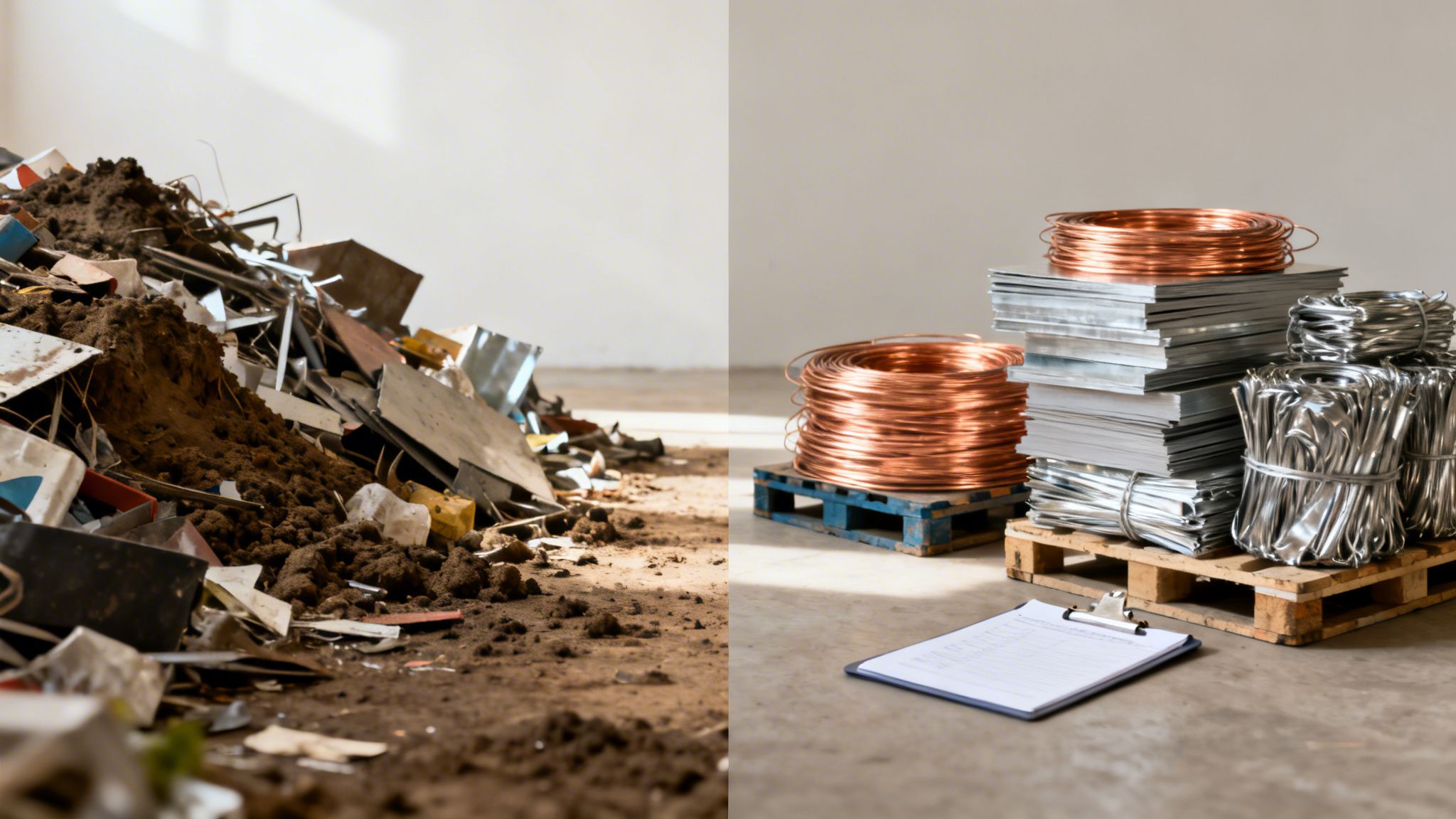
The scrap market works on a simple principle: cleaner, better-sorted material fetches a higher price. The good news is that you control the factors that determine this quality, like material purity, separation, and volume. When you shift from basic disposal to strategic management, you turn a simple byproduct into a valuable asset.
Segregate and Conquer Your Scrap Piles
The single most powerful way to boost your revenue is through segregation. Tossing different types of metal into one big pile is the quickest way to devalue the entire load. A mixed heap forces the recycler to spend time and labour sorting it all out, and that cost comes directly off the price they offer you.
Think about it: if you have valuable copper wire tangled up with much less valuable structural steel, the whole batch gets priced as low-grade mixed metal. You lose out completely on the premium price that clean copper would have earned on its own.
To avoid this common mistake, set up a clear sorting system on-site.
- Separate Ferrous from Non-Ferrous: This is the first and most crucial cut. Use a magnet. If it sticks, it’s a ferrous metal (like steel or iron) and goes in one bin. If it doesn’t, it’s non-ferrous (like aluminium, copper, brass, or stainless steel) and goes in another.
- Divide Non-Ferrous Metals: Take it a step further by separating your high-value non-ferrous metals from each other. Have dedicated, separate containers for copper, aluminium, and stainless steel.
- Label Everything Clearly: Simple, easy-to-read labels on your scrap bins are a must. This prevents your team from accidentally mixing materials and undoing all your hard work.
This little bit of organisation upfront pays off handsomely when it’s time to sell.
Cleanliness Is Next to Profitability
The second major factor that dictates your scrap’s value is its purity. Contaminants are anything attached to the metal that isn't metal. We’re talking about dirt, plastic, wood, rubber, glass, and even excessive fluids like oil or grease.
When a foundry or mill receives scrap, they want pure metal feedstock, not a messy mixture that includes non-metallic waste. The more contaminants in your load, the more processing it needs before it can be melted down, and the lower the price you’ll be offered.
Think of it like selling produce at a market. A box of clean, perfectly sorted apples will always fetch a higher price than a crate of apples mixed with leaves, dirt, and a few rotten ones. Your scrap metal is no different; clean, well-sorted material is a premium product.
Take a few simple steps to clean your scrap before it’s collected:
- Remove Attachments: Strip plastic coatings from wires and cut rubber hoses off metal fittings.
- Shake Off Debris: For scrap from demolition or construction, give it a good shake to get rid of as much excess dirt, concrete, and wood as you can.
- Drain Fluids: Make sure any containers, engine blocks, or machinery parts are properly drained of oils and other liquids.
Understand the Power of Volume
Consolidating your scrap into larger, heavier loads can also earn you a better per-kilogramme rate. It’s simply more efficient for a recycler to transport and process larger volumes, and they often pass those efficiency savings back to you in the form of better pricing.
If your business generates scrap consistently, think about letting it build up until you have a substantial amount before you schedule a pickup. This approach not only helps secure a better price but also cuts down on the transport logistics and costs. Your recycling partner can advise you on the ideal volume to aim for based on your operation.
The positive impact of organised metal scrap recycling goes far beyond your company’s bottom line. Here in South Africa, the sector is a major economic engine, projected to add R35 billion to the GDP and support 25,000 jobs by 2026. For businesses, making metal recovery a priority on demolition projects can slash disposal costs by up to 40%. If you’re ready to get started, you can learn more about how to sell your scrap metal nearby and tap into this valuable market.
Ensuring Safety and Regulatory Compliance
In the fast-paced world of metal scrap recycling, it’s easy to focus on profit and efficiency. But let’s be clear: overlooking safety and legal rules can bring your operations to a screeching halt. The consequences aren’t just a slap on the wrist; we're talking about heavy fines, shutdowns, and a black mark on your company's name.
What you don't know can absolutely hurt you.
Managing scrap metal properly goes way beyond just separating steel from aluminium. It means working within a strict legal framework built to protect people, the environment, and the economy itself. For any business in South Africa, sticking to these rules isn't optional. The smartest move? Partner with a fully compliant recycler to keep your operations profitable, safe, and responsible.
Navigating South Africa’s Regulatory Landscape
In South Africa, two main laws shape how we handle scrap metal. Getting to grips with your responsibilities under these acts is non-negotiable. They aren't just red tape; they exist to fight metal theft, protect our environment, and bring structure to a vital industry.
First up is the Second-Hand Goods Act (No. 6 of 2009). This law is our frontline defence against the trade of stolen metal, a massive problem that cripples infrastructure. It dictates that anyone buying or selling scrap must be a registered dealer and keep meticulous records of every single transaction.
This law is all about accountability. It forces a seller’s identity to be verified and the source of the scrap to be documented. That level of transparency cleans up the industry and protects honest businesses from accidentally getting caught up in illegal trade.
The second pillar is the National Environmental Management Waste Act (No. 59 of 2008), or NEMWA as it’s commonly known. NEMWA is the environmental watchdog for all waste, including scrap metal. It lays down the law on how scrap must be stored, moved, and processed to prevent pollution and push recycling ahead of landfilling.
Practical Steps for On-Site Risk Mitigation
Compliance isn't just about ticking boxes on a form; it's about what happens on the ground at your factory or project site. Putting solid safety measures in place is fundamental to protecting your team and meeting your legal duties. A safe site is the bedrock of any responsible metal scrap recycling programme.
Your risk plan should lock down these key areas:
Proper Handling Procedures: Every staff member needs to be trained on how to safely lift and move heavy or sharp metal. This means providing—and enforcing the use of—personal protective equipment (PPE) like steel-toed boots, heavy-duty gloves, and safety glasses.
Clear Storage Areas: Designate specific, clearly marked zones for scrap storage. These areas must be kept separate from foot traffic and moving machinery to cut down on accidents.
Management of Hazardous Materials: Scrap is rarely clean. Old machinery can leak oil or hydraulic fluids, and some painted metals might contain lead. You must have a clear system to identify, separate, and safely handle these substances as required by environmental laws.
By getting ahead of these risks, you not only build a safer workplace but also ensure your scrap is perfectly prepped for compliant collection. This hands-on approach takes the mystery out of the regulations and gives you the confidence that your entire operation is on solid legal footing.
Choosing the Right Strategic Recycling Partner
Picking a recycling partner is one of those decisions that quietly shapes the efficiency, compliance, and even profitability of your entire operation. This isn't just about finding someone to haul away your scrap. The right partner becomes an extension of your team, focused on maximising your returns and minimising your risks in all metal scrap recycling activities.
A top-tier partnership starts long before a collection truck ever shows up. It begins with a hands-on, on-site assessment to get a real feel for your specific waste streams, your operational flow, and the layout of your site. This crucial first step ensures the solution is built around your business, not the other way around.
What to Look for in a Premier Partner
When you're selecting a partner, you're really vetting their ability to manage your needs from start to finish. You want a company that brings proven expertise to the table. A genuine strategic partner doesn’t just buy your scrap; they help you create a more valuable product from the ground up.
Here are the essential services and qualities to look for:
- On-site Assessment and Planning: They should walk your site, analyse how and where you generate scrap, and then recommend the smartest collection and sorting strategy.
- Provision of Correct Equipment: A good partner provides the right tools for the job. This could be anything from colour-coded bins that make sorting simple to massive skips for heavy-duty industrial or demolition waste.
- Expert Logistics Management: They need to master the complex logistics of collection and transport, guaranteeing timely pick-ups that work with your schedule, not against it.
- Total Waste Management Solutions: Look for a provider that can handle your entire waste stream, not just the metal. Taking an integrated approach makes compliance and vendor management so much simpler.
A partner’s value is measured by their ability to solve your problems. For manufacturers, this means optimising factory floor collection. For demolition contractors, it means ensuring maximum material recovery and site safety. For municipalities, it’s about a reliable, compliant service that simplifies complex waste streams.
Verifying Compliance and Expertise
When it comes to compliance, there's no room for compromise. Your chosen partner must be fully registered and compliant with all South African regulations, including the Second-Hand Goods Act and the National Environmental Management: Waste Act (NEMWA). This is your shield against the legal and financial fallout that comes with non-compliant scrap deals.
Don’t be shy about asking for proof of their certifications or inquiring about their safety record. A partner who is serious about the highest safety standards will have clear, documented protocols for on-site conduct, employee training, and equipment handling. This dedication to safety is vital, especially in high-risk environments like demolition sites or bustling industrial plants.
Ultimately, you’re looking for a partner who brings more to the table than just a price per kilogramme. You need a team that delivers transparent reporting, fair market-based pricing, and a proven track record of navigating both domestic and international markets to get you the best value. This is how you turn your metal scrap recycling programme from a simple disposal chore into a well-managed and profitable part of your business.
Frequently Asked Questions About Metal Recycling
If you're in industry, construction, or manage a municipality, you’ve probably got questions about scrap metal. Getting the right answers is the first step in building a smart, efficient, and profitable scrap management plan.
Let's tackle some of the most common questions we hear from our partners across South Africa.
How Is the Price for My Scrap Metal Determined?
Scrap metal prices are constantly in motion, but they aren't a mystery. The big picture is set by global markets, with values often benchmarked against the London Metal Exchange (LME).
Beyond that, the price you’re offered for your specific load comes down to a few key factors. The type of metal is the most obvious one—high-demand materials like copper will always be worth more than common steel.
Just as important is the purity of your scrap. Clean, unmixed metal fetches a much higher price than a jumbled, contaminated pile. Finally, the total weight of your scrap and the logistics involved in getting it from your site to ours also play a part in the final valuation.
What Do I Need to Do to Prepare My Scrap for Collection?
Proper preparation is the fastest way to increase your financial return. The single most important thing you can do is segregation. If you can, keep your different metal types in separate piles—one for aluminium, one for steel, and so on.
Think of it this way: selling sorted scrap is like selling graded produce. A box of clean, uniform apples commands a better price than a mixed crate of apples, leaves, and twigs. The same principle applies to your metal.
Keeping your scrap as clean as possible by removing excess dirt, plastic, and other non-metal materials also seriously boosts its value. A good recycling partner will provide on-site bins and clear guidance to make this whole process simple for your team.
Which Market Is Better for Selling Scrap Metal?
Deciding whether to sell scrap to a local or international buyer isn’t a simple choice—it depends entirely on the material grade and the market's mood at that moment. Certain high-grade non-ferrous metals often have strong demand from international buyers willing to pay a premium.
In contrast, other grades, especially common ferrous scrap like heavy melting steel, are often more valuable to local South African steel mills and foundries.
A full-service recycling partner takes this decision off your plate. They tap into their network of both domestic and international buyers to find the market that offers the best possible value for your specific material, right now.
What Documentation Is Required for Scrap Metal Transactions?
In South Africa, every scrap metal transaction must be transparent and legally compliant, guided mainly by the Second-Hand Goods Act. This isn't just red tape; it’s about protecting everyone involved.
For every sale, you’ll need to provide a valid ID and documentation showing proof of ownership or the scrap's origin—this is especially critical for large industrial loads.
A detailed weighbridge certificate is also essential, as it records the exact type and weight of the material. A professional recycler manages all this paperwork for you, ensuring every transaction is fully compliant and leaves a clear, auditable trail.
Ready to transform your scrap metal from a cost centre into a valuable asset? D7 Capital Partners (Pty) Ltd offers expert demolition, scrap metal recycling, and total waste management solutions across South Africa. Partner with us for safe, compliant, and profitable recovery. Learn more about our services at D7 Capital.