If you're looking to sell scrap metal, the very first thing you need to get your head around is that there's no fixed metal scrap price. It’s not like buying a product off a shelf. The value of your scrap changes every single day, almost like a stock on the JSE.
That pile of steel, copper, or aluminium from your factory floor or demolition site isn't just waste. It's a valuable, globally traded commodity, and its worth is in constant motion.
Understanding The Metal Scrap Market
Before you can squeeze the most value out of your materials, you need to understand what you're actually selling. Scrap metal isn't just industrial refuse; it's a vital feedstock for global industries, and its price is tied to a complex web of economic forces, both here in South Africa and internationally.
Imagine a massive, live marketplace for recycled materials. Just as the Johannesburg Stock Exchange gives us a snapshot of corporate health, scrap prices provide a real-time pulse of industrial activity across the globe. This guide is here to pull back the curtain on that process for our clients—the industrial manufacturers and demolition contractors who can turn scrap piles into a serious revenue stream.
The Journey from Scrap to Commodity
The path your scrap metal takes is a global one. It might start on a factory floor in Gauteng or a demolition site in the Western Cape, but it certainly doesn't end there. Understanding this journey is the secret to understanding its true value.
- Collection and Sorting: The first step is separating different metals. Clean, well-sorted materials are always worth more. No exceptions.
- Processing: The scrap is then processed—shredded, sheared, and baled—to meet the precise specifications required by foundries and mills.
- Global Trade: Finally, it's sold to its end-users, often overseas, where it's melted down and reborn as new products.
Understanding this path, from a local scrap yard to a global foundry, is the first step toward maximising your earnings. It transforms how you see scrap—from a logistical headache into a financial opportunity.
Every single step in this chain, from the truck that collects it to the ship that takes it overseas, affects the final price you get. Transport costs, processing efficiency, and of course, international demand all have their say. To get a better handle on this, you can explore our detailed breakdown of the life cycle of metal. Our mission is to give you the actionable intelligence needed to secure the best possible metal scrap price for your materials.
What Drives the Metal Scrap Price Rollercoaster
Ever wonder why the metal scrap price you’re quoted seems to change so often? It’s not random. The price is the outcome of a massive tug-of-war between powerful global forces and very specific local conditions, creating what can feel like a constant rollercoaster. Getting a handle on these drivers is your first step to playing the market smartly.
Think of it this way: at the very top, you have the big international commodity markets, with the London Metal Exchange (LME) holding the most sway. The LME price for brand new steel or copper is like the ‘parent’ price, and the scrap price is its ‘child’. When the price of new metal goes up or down on the world stage, the value of its recycled cousin nearly always follows.
This close link means that global economic health is a huge factor. A boom in worldwide construction or a surge in car manufacturing ramps up demand for new metals, pulling scrap prices right up with them. On the flip side, an economic slowdown can sink values across the board almost overnight.
Global Forces and Local Realities
It doesn't stop with just the headline commodity prices. Other international pressures are always at play. For example, a spike in international shipping costs can make exporting scrap less profitable, which directly hits what a local yard can afford to pay you. Big geopolitical events or sudden shifts in trade policy can also throw a spanner in the works, disrupting supply chains and sending ripples through the market.
This flow chart gives you a simple picture of how your scrap pile connects to the global revenue machine.
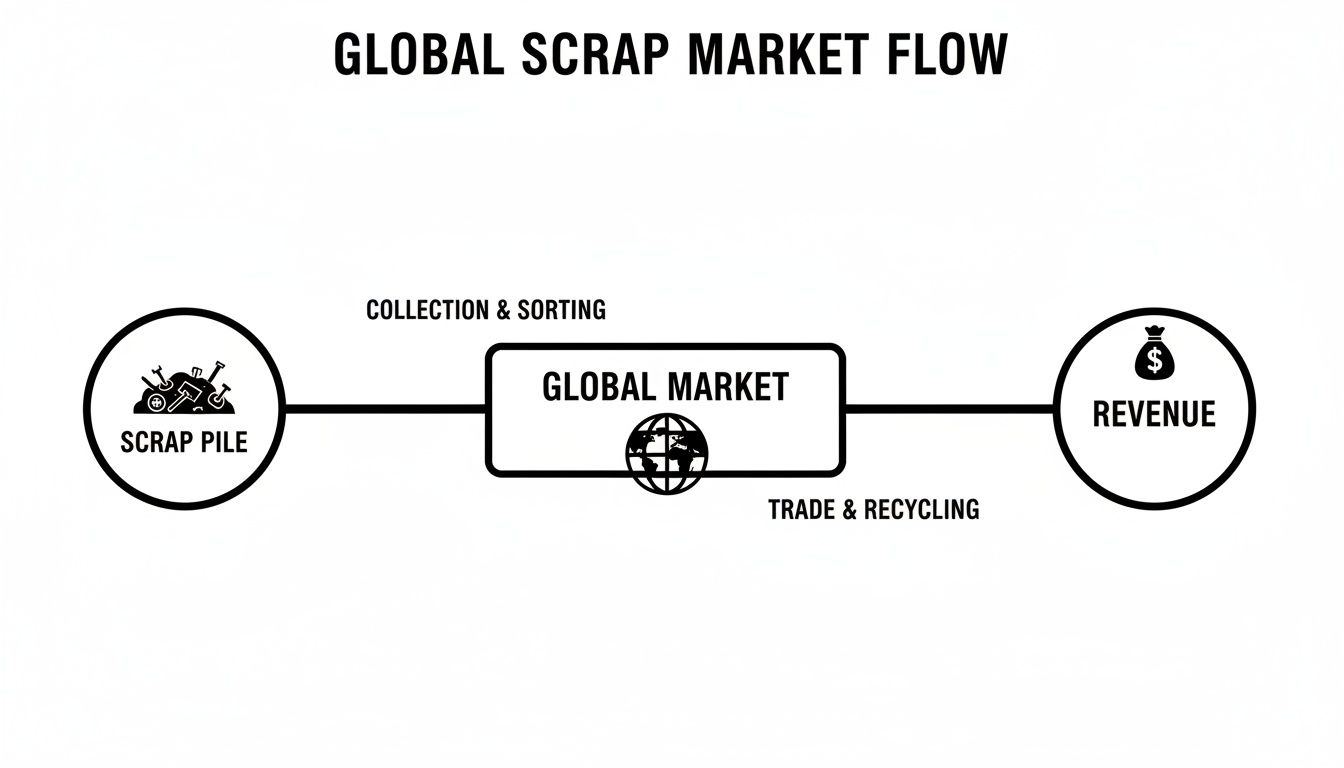
As you can see, that local pile of metal is the very first step in a worldwide system where it’s treated as a valuable commodity.
But the global price is only half the equation. Right here in South Africa, our own unique set of factors adds another layer of complexity.
The ZAR/USD exchange rate is a massive local driver. Because scrap is a global commodity priced in US dollars, a weaker Rand means exporters get more Rands for their dollars. This often gives them the room to offer a better metal scrap price to suppliers like you.
South Africa's Unique Market Dynamics
Domestic demand is just as important. When our local steel mills fire up production, their need for ferrous scrap shoots up, pushing prices higher. Big national infrastructure projects, funded by plans like the National Development Plan, also create a huge, steady appetite for recycled steel and other metals.
Looking back at the data shows just how wild this ride can be. After the 2008 financial crisis, ferrous scrap prices shot up by a staggering 300% between 2009 and 2011. More recently, after a 35% drop during the 2020 pandemic, prices roared back, recovering by 180% within just 18 months as global demand went through the roof.
These interconnected global and local forces are what create the price swings you see every day. To stay ahead of the game, keeping an eye on the latest industry shifts is key. You might find our analysis of the top 5 trends in metal supply for 2025 insightful. A partner with this kind of deep market knowledge is your best asset for navigating the inevitable highs and lows.
Why Scrap Grade and Quality Determine Your Price
Ever wonder why one pile of scrap metal fetches a completely different price from another? It’s a question we get all the time. The simple answer is that not all scrap is the same. The final metal scrap price you’re offered comes down almost entirely to its grade and quality.
Think of it like selling produce. A box of perfect, clean apples will always sell for more than a mixed crate of bruised, dirty ones. It's the same principle in our world. This is why getting to grips with scrap grades is the single most important thing you can do to get the best possible price for your material.
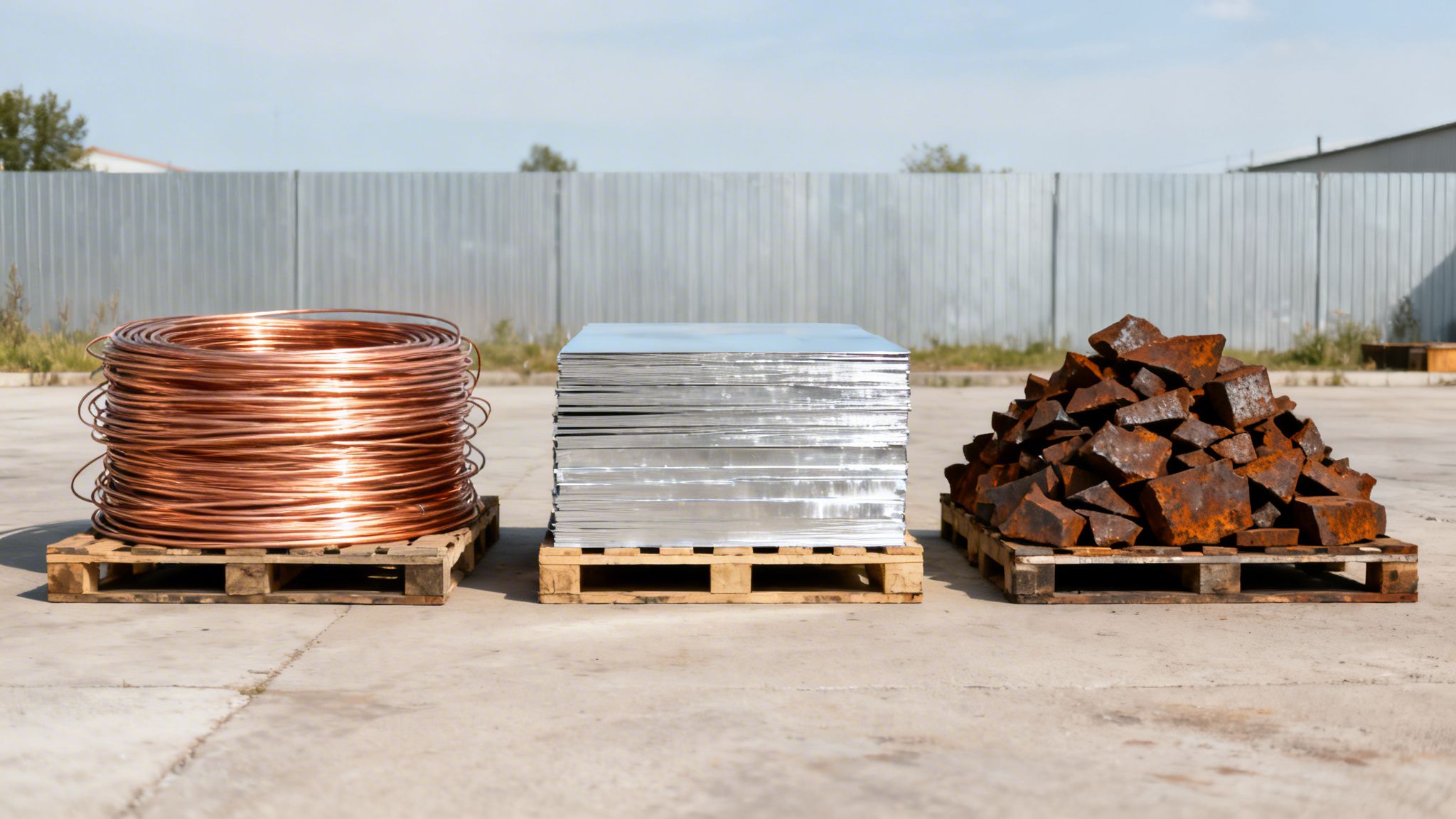
The global scrap industry relies on a standardised "language" to define quality, which comes from the Institute of Scrap Recycling Industries (ISRI). These ISRI codes aren't just random letters and numbers; they are precise recipes that tell a buyer exactly what’s in the load. A steel mill or foundry needs to know the exact chemical makeup of the scrap they’re melting to produce new metal to their own strict specifications. Any guesswork is a non-starter.
Decoding Common Scrap Grades
To give you a better idea, a grade like Heavy Melting Steel (HMS) consistently brings in a premium price. Why? Because it’s dense, clean, and easy for a steel mill to handle. It melts efficiently and doesn't have a lot of unwanted extras attached. It’s the scrap equivalent of a pre-chopped, ready-to-cook ingredient.
On the other hand, lighter, mixed-grade steel or metal with a lot of attachments is less valuable. It takes more work, more energy, and more processing to turn it into something usable, and that extra cost directly impacts the price a recycler can offer you.
To help you get started, we've put together a table outlining some of the common grades you're likely to come across.
Common Scrap Metal Grades and Their Characteristics
| Metal Type | ISRI Grade Example | Description | Key Value Factor |
|---|---|---|---|
| Ferrous | HMS 1 & 2 | The most traded ferrous scrap. HMS 1 is clean, heavy steel (over 6mm thick); HMS 2 can include thinner material. | Density and cleanliness. |
| Ferrous | Plate and Structural (PNS) | Cut-offs from steel plates, I-beams, and other structural pieces. Very clean and desirable. | Purity and high yield. |
| Non-Ferrous | Bare Bright Copper | Uncoated, unalloyed copper wire, typically thicker than a pencil lead. The highest grade of copper. | Absolute purity; no coatings or corrosion. |
| Non-Ferrous | No. 2 Copper | Copper pipe or wire with some paint, solder, or light corrosion. Still valuable but less so than Bare Bright. | Degree of attachments and oxidation. |
| Non-Ferrous | Aluminium Extrusions | Clean aluminium profiles like window frames (with all glass, rubber, and screws removed). | Purity and consistency of the alloy. |
Knowing these distinctions is the first step to sorting your material more effectively. If you want a deeper dive, our guide on 10 common types of scrap metal you can recycle for cash is a great resource.
The High Cost of Contamination
The difference between a ‘clean’ load and a ‘contaminated’ one is where many businesses accidentally leave money on the table. Contamination is what happens when you mix different types of metal, or when you include non-metallic materials like plastic, wood, rubber, or even excessive dirt and rust.
Even a small amount of the wrong material can downgrade an entire truckload of high-value scrap. This is because the contaminated batch must now be manually sorted, or it may be rejected entirely by the end-user foundry, forcing the recycler to sell it at a much lower price.
For example, a truckload of clean aluminium extrusions can lose a massive chunk of its value if it’s mixed with steel screws, plastic fittings, or other metals. The cost of paying a team to remove those contaminants falls on the processor, and that cost is passed directly back to you in the form of a lower price.
That’s why clean sorting isn't just about being tidy—it's a direct investment in your own bottom line.
How to Maximise Your Scrap Metal Revenue
Turning your industrial scrap from a cost centre into a real revenue stream all comes down to strategy. While the big market forces set the baseline metal scrap price, the moves you make on-site are what really determine where your payout lands on that spectrum. If you take control of your scrap management process, you can dramatically increase the value you get back.
It’s a bit like sorting your recyclables at home. You keep paper separate from plastic because mixing them up just tanks their value and makes life difficult for the recycling plant. The very same logic applies to scrap metal, but on an industrial scale where the financial stakes are much, much higher.
Step 1: Segregate Everything at the Source
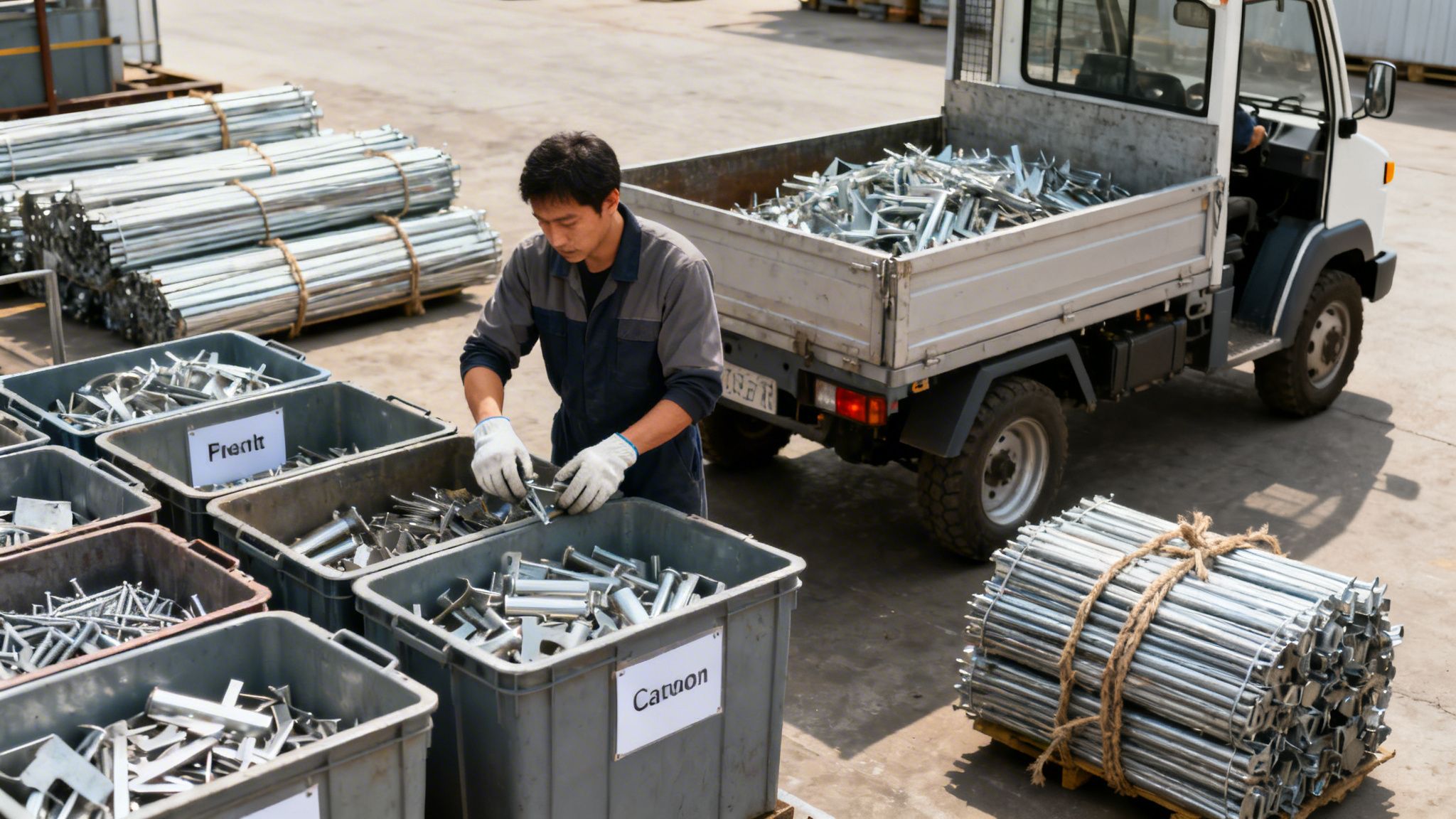
The single most powerful strategy is segregation. This is non-negotiable. It just means keeping different metals separate from the very moment they become scrap. Don’t let your valuable copper wiring end up in a heap of ferrous steel offcuts.
Cross-contamination is the quickest way to downgrade your entire load. It forces a recycler to either pay you a rock-bottom mixed-metal rate or hit you with a bill for the labour to sort it all out.
The fix is simple. Set up clearly labelled, dedicated bins for different materials right there on your factory floor or demolition site.
- Ferrous Metals: Have designated bins for steel, iron, and any related alloys.
- Non-Ferrous Metals: Use separate, well-marked containers for the high-value stuff like aluminium, copper, and stainless steel.
This basic bit of organisation preserves the purity—and therefore the value—of each metal, making sure you get the best possible price for it.
Step 2: Prepare Your Scrap for a Premium
Once everything’s sorted, preparation is your next move to bump up that revenue. Foundries and mills have very specific shopping lists for the scrap they buy. Material that is clean, cut to the right size, and free of junk is far more desirable because they can feed it into their process with minimal effort.
Think of it this way: every bit of preparation you do is like adding value before the metal even leaves your yard. It directly translates to a better price because you're saving the processor time, labour, and money.
For instance, cutting long steel beams into shorter, manageable lengths that meet HMS grade specs can earn you a premium. Similarly, taking the time to strip plastic, rubber, or other non-metal attachments from aluminium extrusions or copper pipes upgrades them to a 'clean' grade, which always fetches a higher price. You can find more tips on what preparations matter most and how to sell scrap metal near me.
Step 3: Optimise Your Logistics
Finally, don’t sleep on logistics. Getting your scrap collected and transported isn’t just a cost to be trimmed; it's a chance to boost your bottom line. Consolidating your scrap to make sure every truck leaves your site completely full is far more economical than scheduling a bunch of smaller pickups.
This simple efficiency drives down your transport cost per tonne, which leaves more room in the budget for the buyer to offer you a better price.
The South African market proves just how much good preparation pays off. Recent data shows that clean aluminium scrap prices shot up from R12,000/tonne in 2019 to an impressive R28,000/tonne by late 2024—a 133% increase. Over a similar period, brass scrap climbed 65% between 2022 and 2025. These huge gains are almost entirely for clean, well-sorted grades that meet precise buyer specifications. You can see more details about scrap steel commodity trends on Trading Economics.
By putting these three strategies into action, you move from being a price-taker to actively influencing your final revenue.
Navigating Legal and Compliance Requirements in South Africa
When it comes to scrap metal, what you don't know can absolutely hurt your business. Trying to operate outside the legal framework isn't just risky; it's a direct threat to your bottom line and your reputation. Getting to grips with the compliance landscape in South Africa isn’t an optional extra—it’s a core part of securing a good metal scrap price without exposing yourself to trouble.
At the heart of these regulations is the Second-Hand Goods Act. This piece of legislation was created specifically to fight the trade in stolen goods, a problem that has historically cast a long shadow over the scrap industry. It’s not just legal jargon; it's a practical shield for both sellers and legitimate buyers.
The Importance of Proof of Ownership
Under the Act, a reputable recycler cannot—and will not—buy scrap metal without the right paperwork. This is a non-negotiable part of every single transaction. It means the seller has to provide proof of identity and, crucially, verifiable proof that they legally own the material they're trying to sell.
Think of it as a title deed for your scrap. Without it, the deal is illegitimate and puts everyone involved at serious legal risk. This strict rule is what separates professional recyclers from the fly-by-night operators and acts as your first line of defence.
This is exactly why finding a fully compliant recycler is the best insurance policy you can have. A professional partner knows these laws inside and out. They handle all the required paperwork, making sure every transaction is transparent and completely above board.
Partnering for Peace of Mind
It’s not just about the Second-Hand Goods Act, either. A compliant partner takes care of a whole host of other critical duties. This includes following all environmental regulations for how materials are handled and processed, and enforcing strict safety protocols on-site to keep workers and visitors safe.
This professional oversight gives you something invaluable: peace of mind. It ensures your scrap operations are not only profitable but also ethical, secure, and perfectly aligned with South African law. In a market where compliance is everything, this lets you focus on your actual business, confident that your recycling is protected from any legal pitfalls.
Choosing the Right Partner to Maximise Your Returns
Getting the best metal scrap price isn't just about sorting your material well—it’s about who you sell it to. After you’ve done the hard work of separating and preparing your scrap, your choice of recycling partner is the final, critical step that determines your real return.
A good partner does more than just weigh and pay. They should act as your guide, offering practical advice on how to improve your on-site sorting to meet those high-value grade specifications. They also handle the mountain of compliance paperwork, protecting you from legal headaches and making sure every deal is transparent. This approach turns your scrap pile from a logistical problem into a genuine profit centre.
Think of it this way: with a professional partner, a demolition contractor can safely and legally monetise every kilogram of metal from a site. A factory manager can transform a regular waste stream into a predictable new source of revenue.
Navigating Market Volatility Together
You really see the value of a true partnership when the market gets choppy. The South African scrap market is no stranger to wild swings. For instance, heavy melting steel prices shot up over 150%, from around R2,500 per tonne in early 2020 to R6,300 per tonne by mid-2021, before pulling back. Copper prices saw a 41% jump in 2022 alone.
Looking at the bigger picture, historical data shows a compound annual growth of 8.2% from 2016-2026. Navigating this kind of landscape on your own is tough. You can explore more data on ferrous scrap price trends on Steelonthenet.com to see for yourself.
A top-tier partner uses their logistical muscle to arrange timely, cost-effective collections. More importantly, they use their market expertise to help you decide when to sell. They’ll help you understand if it’s better to hold onto your material or sell now, turning market volatility into an opportunity instead of a threat.
Ultimately, working with a professional service means you’re not just selling scrap metal. You are bringing on a team that is focused on boosting your returns through efficiency, proper compliance, and sharp market intelligence.
Answering Your Top Questions
Getting into the scrap metal market naturally brings up a lot of questions. We get it. Here are some quick, no-nonsense answers to the queries we hear most often about metal scrap prices and the recycling process here in South Africa.
How Often Does the Metal Scrap Price Change?
Daily. Sometimes even more often than that. Scrap metal prices are tied directly to the live global commodity markets, which can jump or fall based on the day's economic news, supply chain issues, or global events.
Because the market is in constant motion, any price quote you get from a recycler will have a very short shelf life—usually just 24 hours. A professional partner will always price your material based on that day's market to give you the most accurate value.
Think of it like a live stock price. The value is always moving, which is why a price from last week, or even yesterday, is no longer reliable today. This volatility makes timely communication with your recycling partner essential.
Why Is My Quote Different from Prices I See Online?
Those benchmark prices you see on websites like the London Metal Exchange (LME) are wholesale figures. They represent the raw value of the metal itself, but they don't account for the real-world costs involved in getting it from your site to a foundry.
The price you are offered is a ‘net’ figure that has to factor in several practical costs:
- Transport costs to get the material from your location to the yard.
- Labour and processing costs for sorting, cleaning, and preparing the metal.
- Operational margins that keep the recycling business running.
- Local supply-and-demand dynamics, which can also influence the final price.
Essentially, the price you're quoted is the global benchmark minus all these necessary costs.
Does a Larger Quantity of Scrap Get a Better Price?
Yes, almost always. Supplying larger, consistent volumes of scrap will typically earn you a better price per tonne.
It all comes down to simple logistics. It's far more efficient and cost-effective for a recycler to arrange and process one full truckload than several smaller, separate pickups. Recyclers value high-volume suppliers, and they’ll often reflect that appreciation in the price they offer.
At D7 Capital Partners (Pty) Ltd, we’re committed to providing transparent pricing and expert guidance to help you get the most value from your scrap materials. Learn how our end-to-end solutions can work for you.