A shutdown crew is waiting on skip bins. Production has pushed out another batch. The yard already holds mixed steel offcuts, damaged pallets, spent refractories, broken glass, and an old conveyor marked for removal. In Germiston, that is a normal operating day. The question is not whether waste is being generated. It is whether anyone is treating those by-products as part of the plant’s cost structure and recovery plan.
That is the practical lens for this guide. Manufacturing companies in Germiston do more than buy raw materials and consume power, water, and transport capacity. Their operations also produce repeatable waste streams such as scrap metal, cullet, packaging waste, obsolete plant equipment, demolition arisings, and maintenance scrap. Poor segregation turns saleable material into disposal cost. Good handling protects floor space, reduces compliance pressure, and improves recovery.
Germiston remains one of the East Rand’s core industrial nodes, with manufacturers spread across steel, engineered equipment, precious metals, glass, and heavy fabrication. For contractors, procurement teams, facility managers, and recyclers, that concentration creates a clear commercial advantage. The work is not only in supply. It sits in collection timing, on-site sorting, shutdown support, demolition planning, and matching each factory’s waste profile to the right downstream outlet.
The company profiles that follow are built for that job. Each one looks past the directory-level description and focuses on what the operation is likely to discard, what can be recovered, and where D7 Capital fits through scrap recycling, industrial clean-outs, demolition, and waste management. In heavy industry especially, material selection drives both production performance and scrap value. That is worth keeping in view when assessing plants tied to high-performance industrial alloys in modern manufacturing.
1. Scaw Metals Group
Scaw is one of the names that still defines heavy industry in Germiston. When a manufacturer needs steel capability tied to mining, rail, construction, or industrial consumption, Scaw belongs on the shortlist because its operating model is built around core steel products rather than light fabrication or trading.
The practical appeal is its integrated nature. A plant that handles cast products, rolled products, grinding media, and wire-related outputs usually creates a predictable mix of internal returns, steel offcuts, worn parts, rejected heats, scale, and maintenance scrap. For a recycling and waste partner, that means the opportunity isn't random. It's structured.
Where Scaw fits best
Scaw makes sense when the requirement is industrial steel input with local production depth. Buyers looking for broad steel capability from one producer usually benefit more here than they would from splitting requirements across multiple smaller specialists.
That said, this isn't the place to expect finished fabricated assemblies for every need. The value is in steel manufacturing capacity and product depth, not in being a catch-all downstream fabricator.
- Best for heavy industry: Strong fit for mining, rail, and industrial applications that need hard-wearing steel products.
- Best for consolidated sourcing: Useful when procurement wants fewer supplier interfaces across related steel categories.
- Less suited to niche fabrication: If you need a finished custom structure rather than steel inputs, another fabrication model may be a better fit.
Waste and recycling angle
For D7 Capital, a site like Scaw points to ferrous recovery opportunities tied to production rejects, maintenance shutdowns, obsolete machinery, and structural steel replacement. It also suggests disciplined segregation matters. Mixed loads reduce value. Clean grade separation improves recovery and downstream resale potential.
Practical rule: In steel environments, the biggest value loss usually happens in the yard, not on the shop floor. Once clean grades get mixed with general factory waste, recovery becomes slower and less profitable.
Scaw also sits in the kind of materials ecosystem where alloy performance matters. Manufacturers and recyclers working around higher-spec inputs can benefit from understanding where advanced material requirements are heading, especially in sectors like mining and heavy engineering. D7’s piece on high-performance alloys in industrial applications gives useful context for that side of the market.
Website: Scaw Metals Group
2. Trident Steel a division of Aveng Africa
A buyer in Germiston needs slit coil, cut lengths, tube processing, and predictable quality on a production schedule. That is the kind of requirement Trident Steel is built around. Its processing focus, including coil handling and automotive-linked steel programmes, puts it in a different operating category from a primary steel producer.
That operating model matters for waste planning. Steel service centres usually generate scrap that is easier to classify and recover, such as coil edge trim, tube offcuts, rejected processed sections, strapping, pallets, and packaging. For D7 Capital, that means a clearer route to scheduled collections, cleaner ferrous segregation, and better recovery value than mixed factory waste usually allows.
What works well with Trident
Trident suits OEM-linked users and industrial buyers that want several processing steps handled by one supplier. Services such as tube laser cutting, heat treatment, and straightening can reduce transport between vendors and tighten quality control at the same time.
There is a practical trade-off. Plants geared for repeat programmes and tighter specifications do not always give small once-off jobs the same priority, especially when longer production runs are booked in.
Repetitive, well-separated scrap streams usually return more value than mixed yard scrap. Collection discipline often decides the margin.
Operational value for waste planning
Sites with similar processing lines should treat scrap as a controlled output, not an afterthought. Keep ferrous grades separate, remove packaging from metal where possible, and avoid letting processed scrap sit in open stockpiles too long. Once material is exposed to weather, moved too many times by forklift, or mixed with general waste, resale value drops and handling costs rise.
A report from Steel Technology on fabricated steel manufacturing in Germiston points to demand for dependable local supply, compliant recycled material, and better logistics visibility across common ferrous grades. That lines up with D7 Capital’s function as a collector, sorter, and supplier of ferrous and non-ferrous scrap into local industrial channels.
Procurement teams reviewing supply risk should also watch where the metal market is heading. D7’s analysis of metal supply trends shaping 2025 gives useful context for planning around recycled inputs, pricing pressure, and material availability.
Website: Trident Steel
3. ACTOM Industrial Fan Manufacturing
ACTOM’s Driehoek presence is important because it represents engineered manufacturing rather than commodity output. Industrial fans and air-movement systems serve power, mining, and heavy industrial facilities where specification, reliability, and after-sales support often matter more than unit price alone.
That changes the waste profile. Engineered fan manufacturing tends to generate fabricated steel offcuts, balancing material, motor and electromechanical components, cable-related scrap, coatings waste, packaging, and maintenance replacement parts from field service activity. It also creates opportunities during retrofits, when old ventilation systems are stripped out and replaced.
Best use case
ACTOM is strongest when a plant needs local engineering support tied to a specific air-handling requirement. Shutdown managers and maintenance teams often prefer a local manufacturing and repair footprint because it helps with spares, fitment checks, and site support.
The limitation is equally clear. If you don't need fans, air systems, or associated electromechanical support, ACTOM’s specialisation can feel narrow.
- Strong for shutdown work: Useful where old industrial fans, housings, and duct-linked systems are being replaced.
- Strong for retrofit projects: Good fit for plants modernising ventilation or process air movement.
- Less broad for general buying: Not a general-purpose fabrication supplier for unrelated categories.
Recovery opportunities around fan manufacturing
From a D7 perspective, sites like this often produce value in two ways. First, there is routine production scrap. Second, there is high-value project scrap when old plant equipment comes out during upgrades.
That second category is where many manufacturers miss value. Teams focus on installation deadlines, then send removed motors, housings, support steel, cable, and non-ferrous components into mixed skips. A better approach is staged removal with on-site separation.
When replacing industrial equipment, the removal sequence should be planned with recycling in mind. Motors, cable, structural supports, and sheet steel don't belong in the same container if you're trying to maximise return and maintain traceability.
Website: ACTOM
4. Rand Refinery
Rand Refinery occupies a category of its own among manufacturing companies in Germiston. This isn't a broad industrial plant. It's a specialised precious-metals refining and smelting complex with receiving, assay, refining, and fabrication capabilities built around strict control.
For manufacturers, recyclers, and industrial asset managers, the lesson is precision. Precious-metal-bearing material can't be handled like ordinary plant scrap. The chain of custody, sampling, documentation, and compliance thresholds are much tighter.
Why the facility matters
If your operation generates precious-metal-bearing residues, process scrap, or specialised industrial returns, a refinery of this type is the right destination. The benefit isn't convenience. It's credibility, assay confidence, and secure processing.
The downside is obvious to anyone who's worked in regulated flows. Intake requirements are strict, and general mixed scrap has no place in that stream.
Practical implications for Germiston industry
Plants in automotive, catalyst, electronics, specialist alloy, and joining sectors often underestimate how much value sits inside small-volume residues. Filters, spent catalyst material, sweeps, polishing waste, brazing residues, and plated components may need specialist assessment before disposal decisions are made.
That doesn't mean every site should try to refine material itself. It means waste contractors and facility teams must identify high-value streams early and keep them out of general bins.
- Use specialist routing: Precious-metal-bearing material should move under documented, controlled processes.
- Avoid mixed collection: Once residues are contaminated with general waste, recovery options narrow fast.
- Align demolition with material identification: During plant strip-outs, specialist equipment and residues should be isolated before bulk metal removal starts.
Manufacturers dealing with metal value recovery across the production lifecycle can also draw useful perspective from D7’s article on the life cycle of metal from mine to market, especially when building internal policies for handling recovered metal-bearing material.
Website: Rand Refinery
5. Johnson Matthey South Africa
Johnson Matthey South Africa adds another specialist layer to Germiston’s manufacturing base. Its local activity in emission-control autocatalysts and silver-bearing brazing alloys places it firmly in the category of high-spec materials manufacturing rather than broad-volume fabrication.
That usually means tighter process discipline, more formal environmental controls, and higher attention to traceability. It also means the waste streams may be smaller by volume but richer in recoverable value, especially where precious or non-ferrous inputs are involved.
Where Johnson Matthey stands out
For buyers in automotive and engineered joining applications, the attraction is technical specialisation. Autocatalyst production and brazing alloy supply serve applications where consistency and compliance matter as much as output.
The trade-off is that this isn't a general-purpose supplier. If you're looking for commodity fabrication, structural work, or low-spec volume output, this isn't the lane.
Waste streams that deserve attention
On sites connected to catalyst or brazing alloy work, waste planning should be deliberate. Non-ferrous offcuts, silver-bearing residues, packaging from controlled inputs, spent process consumables, and obsolete specialised equipment shouldn't be treated as routine mixed factory waste.
Experienced scrap partners add value. They don't just remove material. They help identify what should be weighed, separated, documented, and routed differently.
On the ground: High-value non-ferrous waste is often lost in housekeeping routines. The cleaner the floor sweep and bench-clearance process, the better the recovery result.
For maintenance and decommissioning teams, the same principle applies. During line changes or plant upgrades, identify non-ferrous-rich components before contractors start bulk removal. D7’s guide to everyday industrial relevance of non-ferrous metals is a useful reminder of just how often these materials appear in ordinary operations.
Website: Johnson Matthey
6. Ardagh Glass Packaging formerly Consol
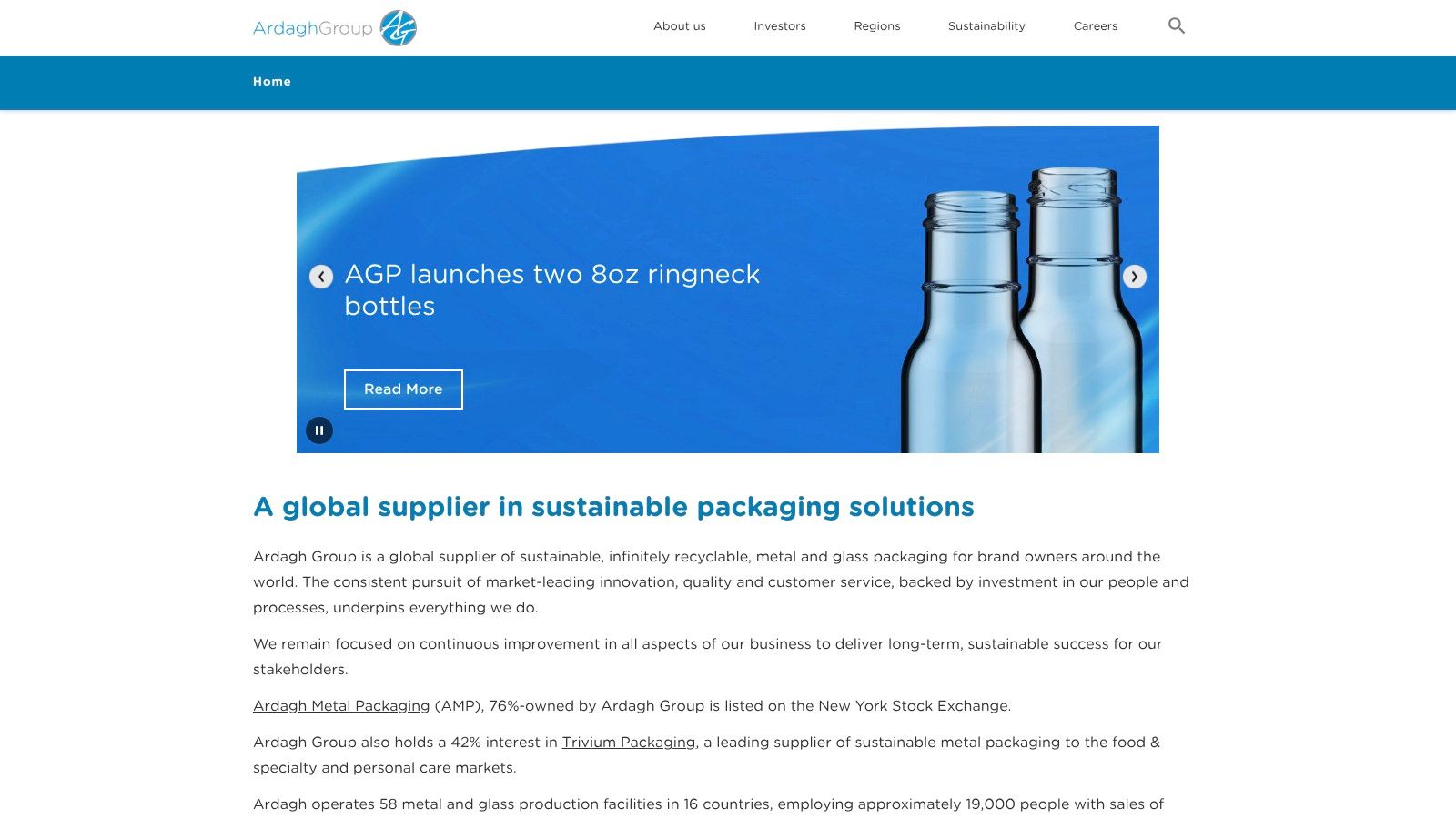
A bottle plant changes the waste conversation straight away. In Wadeville, Ardagh Glass Packaging, formerly Consol, represents the kind of operation where output scale, breakage control, and material segregation all affect recovery value day to day.
Its role in food and beverage packaging matters for more than supply chain reasons. It creates a defined set of waste streams that can be planned properly instead of being treated as generic factory waste. The obvious one is cullet from rejected containers, breakage, and line adjustments. Around that, there is usually pallet waste, plastic packaging, maintenance scrap, worn conveyors, cable, motors, and refractory-related waste during shutdown work.
Why Ardagh matters to recovery strategy
Glass manufacturing rewards discipline. Clean cullet can return to the recycling loop. Mixed or contaminated glass usually drops in value and can become a disposal problem instead.
That trade-off is what makes this type of site different from a steel fabricator or precious metals plant. Recovery depends less on alloy identification and more on separation standards, contamination control, and consistent handling routines across production and maintenance teams.
Off-spec product also needs a practical view. A rejected bottle is still a recoverable material if it is kept separate from general waste, labels, plastics, and food contamination.
Practical fit for D7 services
For D7 Capital, the opportunity is broader than collecting broken glass. During maintenance and plant upgrades, a glass site can release a useful mix of ferrous scrap, non-ferrous components, redundant line equipment, structural steel, and demolition material. If those streams are identified early, recovery improves and disposal volumes usually drop.
Three areas stand out:
- Cullet management: Segregation, clean storage, and contamination control determine whether glass stays recyclable.
- Shutdown and maintenance scrap: Motors, cables, supports, guards, and removed plant components often hold more recoverable value than teams expect.
- Upgrade and strip-out work: Demolition planning should separate recyclable materials before everything goes into mixed waste skips.
Website: Ardagh Glass Packaging
7. Genrec Engineering
Genrec Engineering is the sort of Wadeville operation contractors and plant managers know when heavy fabrication is involved. It suits projects where structural steel, machining, rolling, blasting, painting, and site erection need to connect in one delivery chain.
That has direct relevance for waste and recycling because large fabrication environments generate substantial recoverable steel offcuts, plate remnants, machining swarf, obsolete fixtures, damaged assemblies, paint-related waste, and project packaging. They also intersect naturally with demolition and rebuild programmes.
Best match for industrial projects
Genrec is a strong fit for large industrial structures, brownfield modifications, and shutdown-driven mechanical work. If a project involves big steel, lifting constraints, site erection, and coordination with operating plant conditions, this type of engineering partner is usually more useful than a lighter workshop.
The trade-off is scheduling. Project shops live by booked capacity, so urgent last-minute requirements can be harder to place.
Where D7 can create value
This is one of the clearest cases where recycling and demolition planning should be integrated from the start. During fabrication, D7 can support regular scrap removals that keep yards clear and preserve grade separation. During decommissions, the same partner can move from scrap collection into structural demolition, equipment removal, and compliant waste handling.
A lot of value is lost when decommissioning is treated as one undifferentiated teardown. The better approach is staged recovery. Remove non-ferrous first. Separate reusable steel where practical. Then process demolition debris with a clear chain of responsibility.
Industrial decommissions work best when demolition crews and scrap buyers aren't working at cross purposes. One coordinated plan usually saves more material than a rushed strip-out ever will.
Website: Genrec Engineering
Germiston Manufacturing: 7-Company Comparison
| Item | Implementation complexity 🔄 | Resource/Capacity ⚡ | Expected outcomes ⭐ | Ideal use cases 📊 | Key advantages 💡 |
|---|---|---|---|---|---|
| Scaw Metals Group | High, integrated casting, rolling & processing | High, 49‑ha site, heavy capital, scrap processing | High, end‑to‑end steel supply for heavy industries | Bulk supply for mining, rail, construction | Broad product range, local scale, proven industrial specs |
| Trident Steel (Aveng) | Medium‑High, multi‑process coil/tube value‑add | Medium, specialized processing lines & OEM QA | High, automotive‑grade processed steel | OEMs and industrial users needing precision processing | Strong QA, complex multi‑process capability, stable contracts |
| ACTOM, Industrial Fans | Medium, engineered, project‑based manufacturing | Medium, modern plant, local engineering & service | High, tailored fans and air‑movement systems with spares support | Plant retrofits, maintenance shutdowns, power/mining plants | Local manufacturing, shorter lead‑times for spares and service |
| Rand Refinery | High, stringent compliance, assay & security demands | High, secure high‑throughput site, specialist assay labs | Very High, LBMA‑grade refined bullion with traceability | Precious‑metal recovery, refining and compliant bullion supply | Global credibility, LBMA accreditation, strict traceability |
| Johnson Matthey South Africa | Medium, high‑spec materials production with certifications | Medium, certified lines, skilled workforce, precious‑metal inputs | High, certified catalysts and brazing alloys for OEMs | Automotive emission systems, engineered joining applications | High‑spec certified production and technical application support |
| Ardagh Glass Packaging | Medium, continuous high‑volume container production | High, large lines, FSSC 22000 systems, steady cullet demand | High, food/beverage compliant glass packaging at scale | FMCG and beverage bottle supply; cullet offtake | Stable high‑volume demand and strong food‑safety QA |
| Genrec Engineering | High, project‑driven heavy fabrication and erection | High, ~55,000 m² workshop, CNC, heavy‑handling capability | High, large structural works and on‑site erection delivery | Plant construction, decommissions, large structural projects | One‑stop heavy fabrication, proven delivery on large projects |
From By-Product to Asset Activating Your Waste Strategy
The strongest lesson from these manufacturing companies in Germiston is that waste isn't a side issue. It's built into production. Steel processors generate clean offcuts and trim. Heavy fabricators produce plate remnants, swarf, and obsolete structural components. Glass plants create cullet and packaging waste. Specialist materials manufacturers handle smaller but often higher-value residues that need tighter control.
That means the right waste strategy starts with classification, not collection. If a site doesn't know what it is generating, in what condition, and where on the plant it accumulates, the collection process will always underperform. Too many factories still throw valuable ferrous, non-ferrous, packaging, and demolition material into the same operational bucket, then wonder why disposal costs rise while recovery value stays low.
A practical first move is to map waste by production area. Separate routine manufacturing scrap from shutdown scrap, capital-project scrap, and decommissioning waste. Those categories behave differently. Routine scrap needs regular pickups and clean segregation. Shutdown scrap needs temporary staging and fast evacuation. Decommissioning waste needs a removal sequence that protects both safety and material value.
Three habits usually make the biggest difference:
- Identify high-value streams early: Keep copper, aluminium, stainless steel, catalyst-linked material, alloy residues, and reusable steel out of mixed bins.
- Match containers to material type: Dedicated skips or bays prevent contamination and improve resale outcomes.
- Build logistics around operations: Scrap removal should support production flow, not block access roads, loading zones, or maintenance work.
Compliance matters just as much as revenue. Manufacturers need clear handling processes, documented removals, lawful transport, and responsible downstream processing. That's especially true during strip-outs, building alterations, or plant closures, when waste volumes rise quickly and environmental risk increases with them.
An industrial partner earns their place. D7 Capital Partners can support factories, engineering works, municipalities, and contractors with a joined-up service that covers scrap metal recycling, bulk removals, demolition, and total waste management. The practical benefit is coordination. One team can assess the site, identify recoverable material, plan safe extraction, move scrap efficiently, and ensure the waste that can't be recycled is handled responsibly.
For Germiston manufacturers, that approach turns cluttered yards, shutdown debris, and obsolete plant into something more useful. It reduces operational drag, improves housekeeping, supports compliance, and recovers value that would otherwise leave the site as cost. In an industrial centre this dense, that isn't just good waste management. It's good operating discipline.
If your factory, workshop, depot, or project site needs a smarter way to handle scrap, demolition material, or recurring industrial waste, D7 Capital Partners (Pty) Ltd can help you build a practical recovery plan. The team works with manufacturers, fabricators, contractors, and facility managers to remove material safely, maximise recycling value, and keep operations compliant without slowing production down.