A demolition safety plan South Africa teams can trust begins with an engineering survey and a competent, documented sequence. This demolition safety plan South Africa guide provides a practical project-control baseline. Demolition is construction in reverse, but the structure may have undocumented alterations, hidden services, hazardous materials and weakened load paths. That uncertainty makes planning more important than machine size.
This 10-part guide is for clients, principal contractors, engineers, site managers and SHEQ teams preparing industrial, commercial or structural demolition work. It is practical guidance, not a substitute for a project-specific design, legal review or competent-person appointment.
South African demolition planning duties
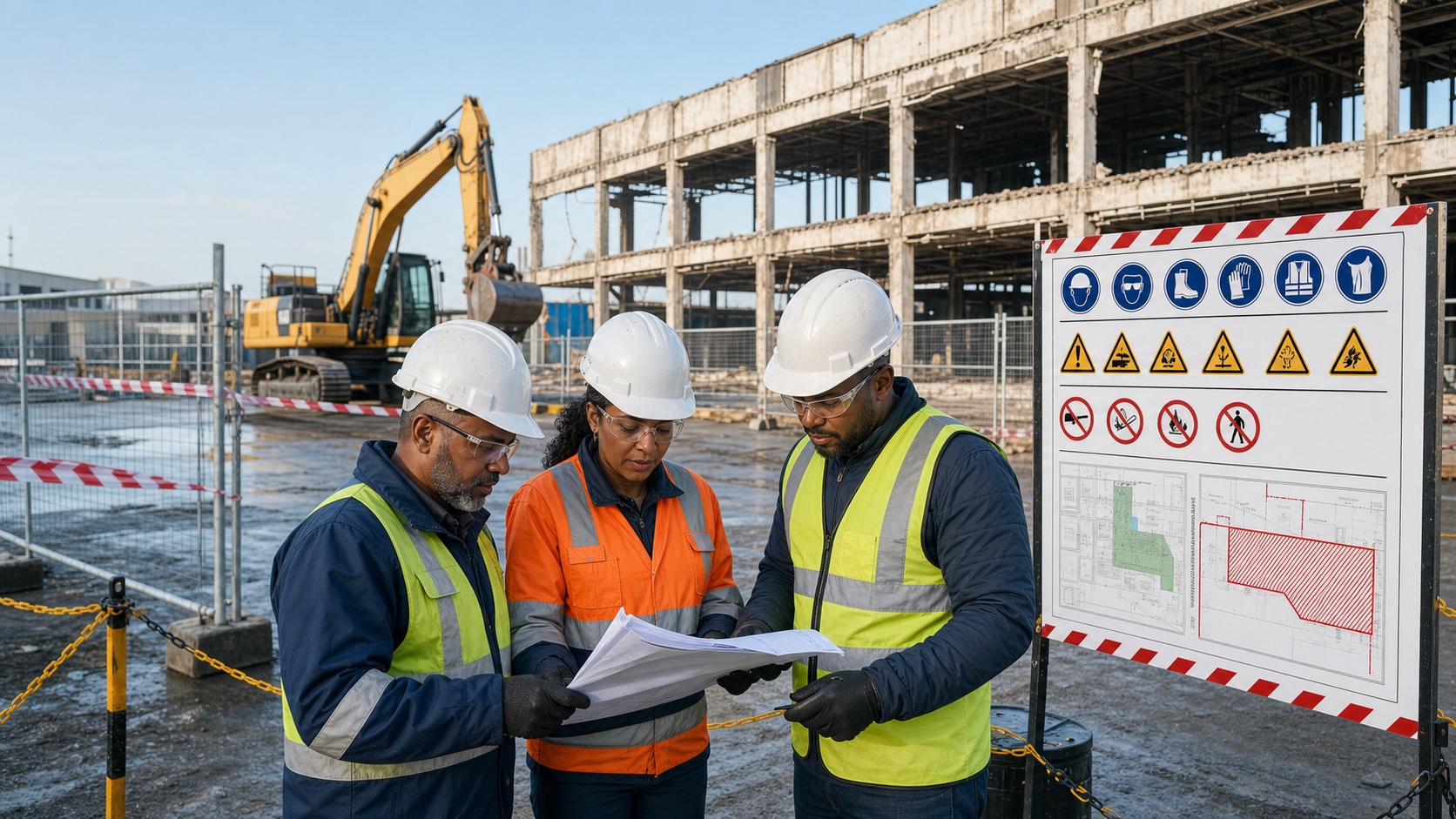
South Africa’s Construction Regulations require demolition work to be supervised and controlled by an appointed competent person. Before work, a detailed structural engineering survey and a demolition method statement must inform the method. Structural integrity must then be checked at intervals set by that method statement. Review the official wording of Construction Regulation 14 and obtain professional advice for the actual site.
10 essentials in a demolition safety plan
1. Scope and boundaries
Define exactly what will be demolished, dismantled, retained or temporarily supported. Show adjacent buildings, roads, public areas, live operations and property boundaries. Partial demolition needs especially clear interfaces.
2. Structural engineering survey
Record framing, stability, damage, alterations, load paths and the condition of floors, walls and connections. Assess adjoining structures that could be affected. The survey must drive the sequence rather than being filed after a method has already been chosen.
3. Hazardous-material assessment
Investigate asbestos-containing materials, lead, silica, chemicals, oils, refrigerants and historical process residues. Specialist removal may need to occur before structural work. Unknown material should be stopped, isolated and assessed.
4. Utility isolation
Locate electricity, gas, water, sewer, steam, compressed air and telecommunications. Define who will disconnect, cap, lock out, test and certify each service. Protect utilities that must remain live.
5. Demolition sequence and hold points
Describe the order of removal, equipment and temporary support. Identify moments when work must stop for a competent inspection. Conditions change as each member is removed, so the plan must support controlled reassessment.
6. Exclusion and debris zones
Plot machine operating areas, potential collapse zones, debris zones, pedestrian routes and public protection. Use physical controls, not signs alone. Only essential personnel should enter an affected area.
7. Dust, noise and vibration controls
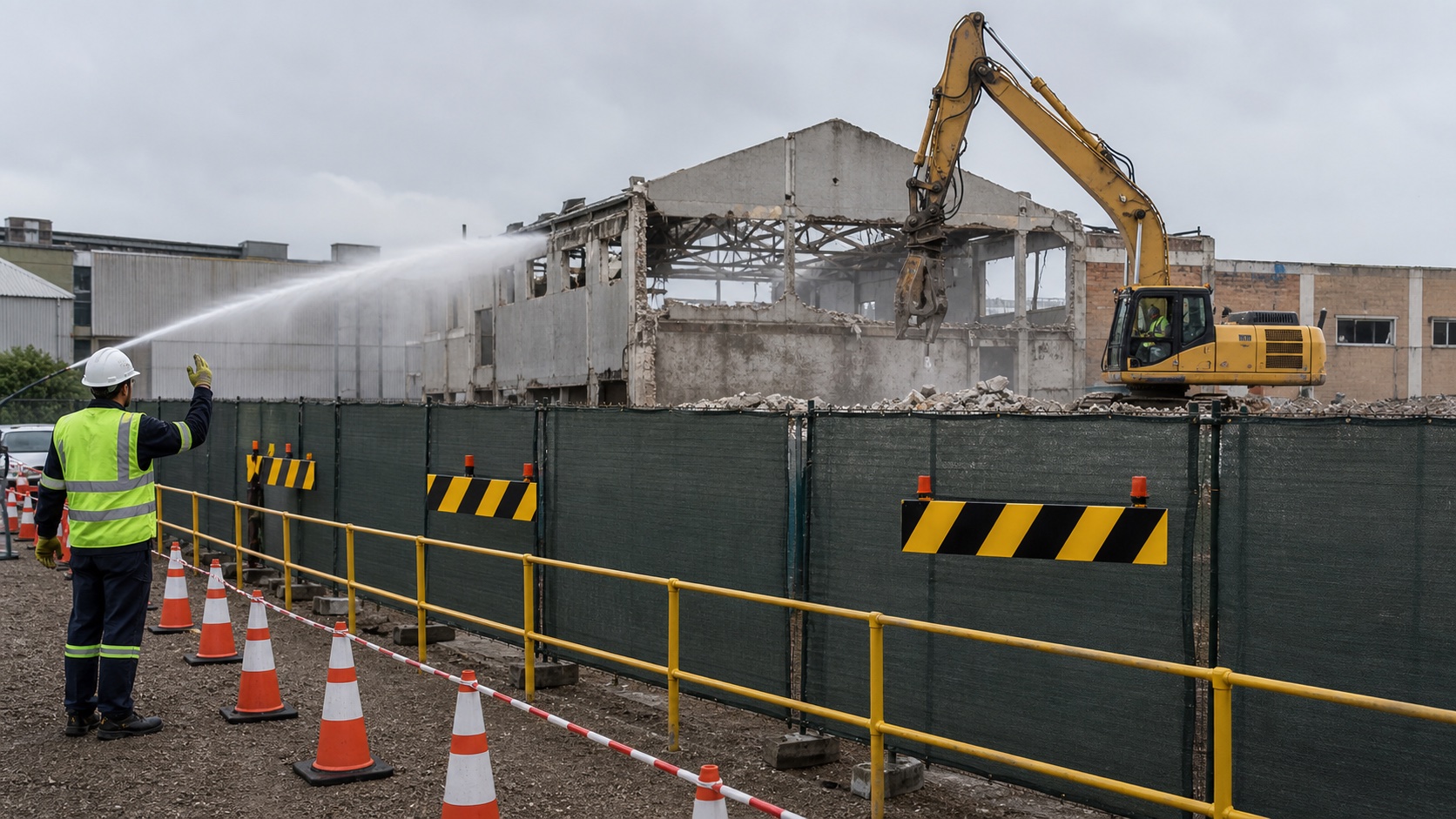
Specify wet suppression, extraction, monitoring, work hours and neighbour communication. Water must not create electrical, stability or runoff hazards. Noise and vibration controls should reflect nearby operations and sensitive structures.
8. Plant, lifting and traffic management
Match plant to reach, attachment, ground capacity and the engineered method. Separate people from machines, define banksman communication and plan truck movements. Inspect attachments and safety devices before each shift.
9. Emergency arrangements
Plan for structural movement, fire, service strike, hazardous-material discovery, medical emergency and severe weather. State alarms, escape routes, muster points, shutdown authority and emergency contacts.
10. Daily communication and records
Translate the method into daily briefings. Record inspections, changes, permits, monitoring, photographs and disposal evidence. Stop-work authority must be clear to every person, not only management.
Demolition safety plan control matrix
| Risk | Primary control | Verification |
|---|---|---|
| Premature collapse | Engineering survey and sequenced method | Competent-person inspections at defined hold points |
| Live services | Isolation, lock-out and test | Certificates and physical verification |
| Public exposure | Boundary, exclusion and debris zones | Daily perimeter inspection |
| Hazardous material | Survey and specialist handling | Clearance and waste records |
| Dust and debris | Suppression, containment and controlled loading | Inspection and monitoring |
| Plant interaction | Traffic plan and communication protocol | Pre-start and supervisor observation |
Watch: deactivation before major plant demolition
What the client should provide
- Available drawings, surveys and alteration records.
- Building and process history, including hazardous substances.
- Known utility routes and isolation contacts.
- Information on neighbouring structures and live operations.
- Required end state, handover criteria and programme constraints.
- Ownership rules for salvageable materials and equipment.
For the wider process, see D7 Capital Partners’ guide to structural demolition in South Africa and the potential uses of reclaimed materials.
Review the relevant industry and regulatory guidance before finalising scope. A demolition safety plan South Africa project should also be checked against site-specific legal, safety and environmental duties.
Pre-start demolition safety verification
Before demolition begins, hold a joint verification with the client, appointed demolition team, structural specialist, utilities representatives and site safety leadership. Confirm that surveys match actual conditions, services are isolated and tested, temporary works are ready, exclusion zones are visible and emergency access remains open. Record photographs of the structure, adjoining property, overhead hazards and known weak points.
The demolition safety plan South Africa team should define who may authorise each phase, who monitors structural change and who can stop work. Brief machine operators, banksmen and ground teams on the planned sequence, falling-material zones, dust controls, communication signals and evacuation arrangements. Reassess the plan after severe weather, unexpected material, hidden voids or any unplanned movement.
A useful demolition safety plan South Africa close-out record includes inspection findings, permit status, equipment checks, briefing attendance, waste routing and the competent person’s release for the next stage. These controls turn a written plan into observable site behaviour and give both the client and contractor evidence that critical decisions were made before exposure increased.
Frequently asked questions
Who prepares a demolition method statement?
It must be developed by a competent person informed by the structural engineering survey and the project’s legal appointments. The team should verify the exact role and competency requirements for the specific scope.
Can the demolition plan change during work?
Yes, controlled change is essential when conditions differ from the survey. Work should stop, the risk should be assessed, the method revised by the appropriate competent people and the team re-briefed before continuing.
Does PPE make an unsafe sequence acceptable?
No. PPE is one layer. The priority is engineered stability, isolation, exclusion, safe plant selection, containment and competent supervision.
demolition safety plan South Africa: Practical Next Steps
A robust demolition safety plan South Africa project connects engineering, site control, environmental management and material recovery. D7 Capital Partners supports industrial and commercial clients with structural demolition, scrap recovery and waste solutions. Contact D7 Capital Partners to discuss a controlled site assessment.