Trying to pin down the exact cost of scrap copper per kg can feel like you're chasing a moving target. But as we move through 2026, one thing is certain: premium-grade scrap like Bare Bright copper is fetching excellent returns. While prices shift daily, knowing the general range helps you estimate your material's value before you even think about selling.
Your Quick Guide to 2026 Scrap Copper Prices
Getting a handle on the current market is the first step to making sure you get the best possible price for your scrap. The money you walk away with is directly linked to the grade and cleanliness of your copper. Purer forms will always command the highest prices.
Think of it like this: you wouldn't expect to get the same price for a brand-new, shiny copper pipe as you would for an old, corroded one caked in paint. Both are copper, sure, but their immediate value to a recycler is worlds apart.
Here in South Africa, the scrap copper market has been on a remarkable climb since 2016. By February 2026, we saw prices in Johannesburg markets hitting an average of R140-R150 per kg. This spike was fuelled by a massive 39% year-on-year jump in LME copper benchmarks, which shot up from $3.35/lb (R93/kg) in early 2025 to $5.56/lb (R154/kg) by April 2026. That reflects a powerful compound annual growth rate of 12.5% over the last decade. If you're interested, you can explore more about these market trends for copper scrap.
A Snapshot of Copper Grades and Prices
To give you a clearer picture of what your scrap might be worth, it’s crucial to understand the different grades. Not all copper is created equal in the eyes of a scrap yard.
- Bare Bright Copper: This is the absolute cream of the crop. It’s clean, uncoated, unalloyed copper wire that looks shiny and new. Because of its purity, it fetches the top price.
- No. 1 Copper: This grade is for clean copper tubes, pipes, and clippings. The key here is "clean"—it must be free of paint, solder, insulation, and other materials. It's still highly valuable, sitting just a small step below Bare Bright.
- No. 2 Copper: This is where you’ll find copper with some minor issues. Think light coatings, a few solder joints, or a bit of corrosion. It's still valuable, but the price is lower because it needs more processing to be purified.
The chart below gives you a quick visual on how these grades typically stack up in terms of price.
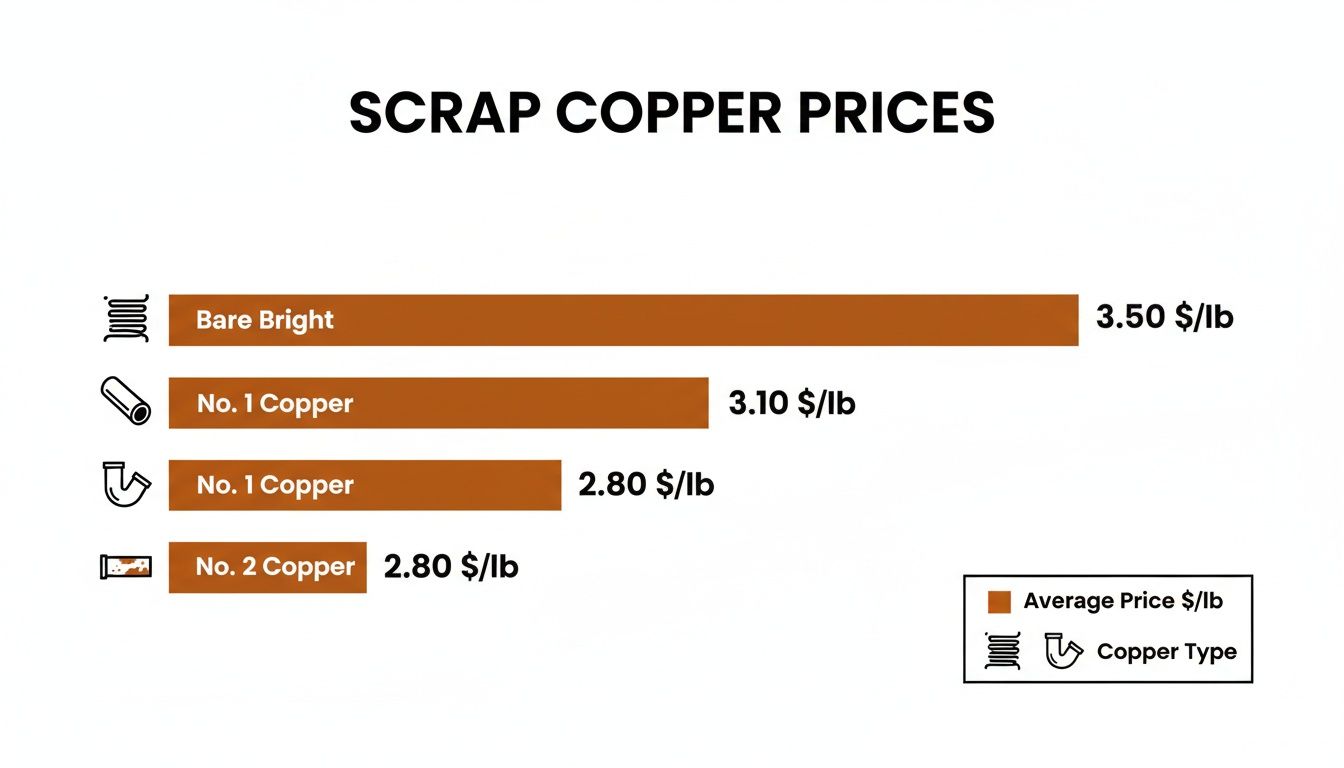
As you can see, the cleaner and purer your copper, the more you can expect to get per kilogram. This is just a starting point, of course. Let's dig into the specific factors that really drive these prices.
Estimated 2026 Scrap Copper Prices Per KG in South Africa
To help you get a quick estimate before selling, we've put together a summary of typical price ranges for the most common ISRI-spec copper grades you're likely to encounter.
| Copper Grade (ISRI Specification) | Description | Estimated Price Range (Per KG) |
|---|---|---|
| Bare Bright (Barley) | Clean, unalloyed, uncoated copper wire. The highest and most valuable grade. | R145 – R155 |
| No. 1 Copper (Candy/Berry) | Clean copper tubing, pipes, and clippings. Free of solder, paint, and insulation. | R135 – R145 |
| No. 2 Copper (Birch/Cliff) | Copper with light solder, coatings, or minor corrosion. May include burnt wire. | R120 – R130 |
| Light Copper (Dream) | Thin-gauge copper sheets and roofing copper with signs of oxidation. | R110 – R125 |
| Insulated Copper Wire | Copper wire still in its plastic casing. Price depends on the recovery percentage. | R40 – R90 |
These figures give you a solid baseline. Remember, the final price you get will depend on market fluctuations, your location, and the specific policies of the scrap yard you work with.
Getting to Grips with Copper Grades and Their Value
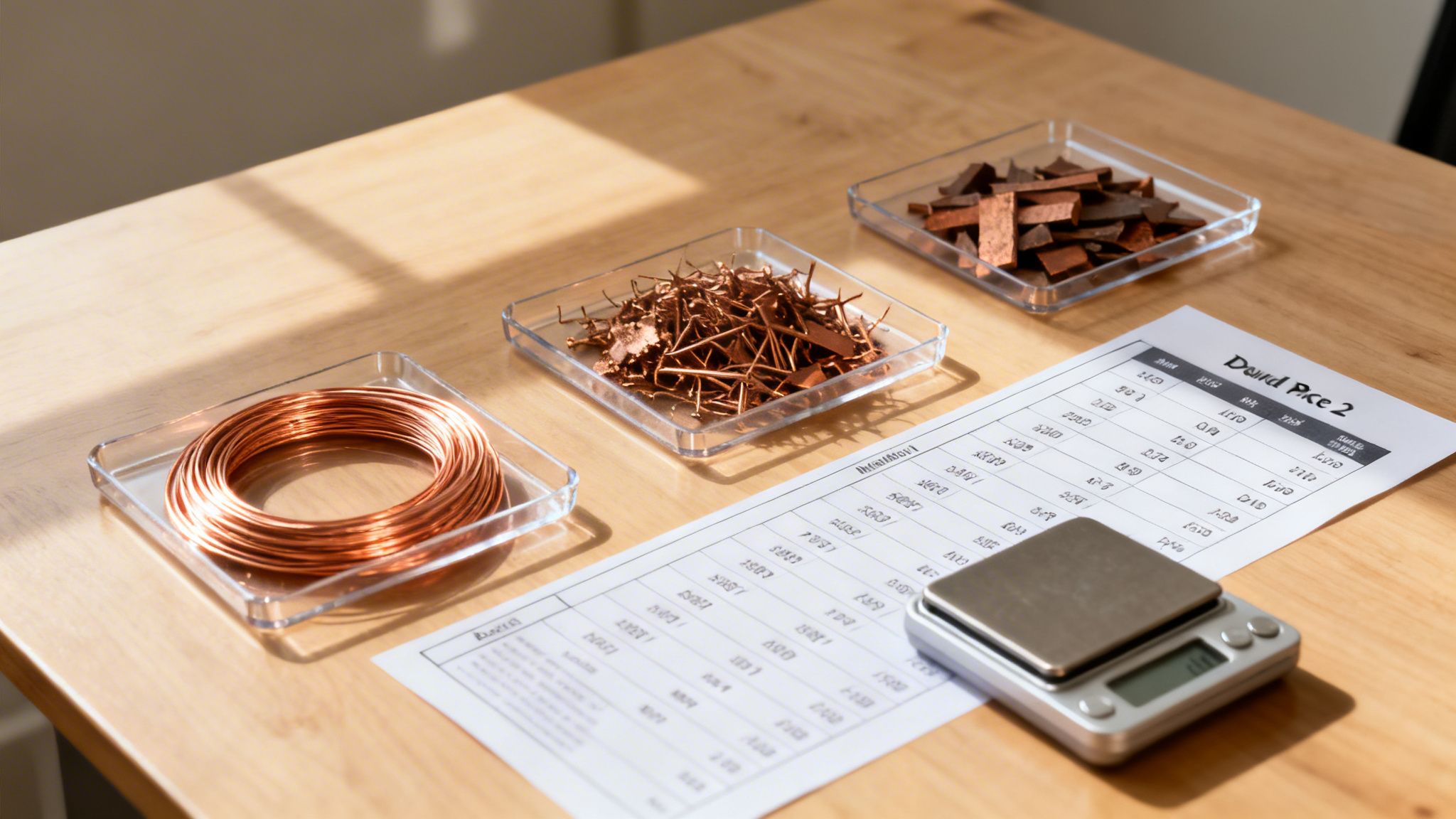
Not all copper is created equal, and knowing the subtle differences is the first step to getting the best possible payout. The grading system that recyclers use is what ultimately sets the final cost of scrap copper per kg, and it all comes down to purity.
Think of it like this: a flawless, cut diamond is worth far more than a raw, uncut one. Both are valuable, sure, but one is ready for immediate use and fetches a premium price.
The same idea applies to your scrap. A kilo of clean, gleaming copper wire is much more valuable to a processing facility than a kilo of old, tarnished pipes covered in paint and solder. The purer your material, the less work it takes to recycle, and that translates directly into a higher price for you.
The Most Common Copper Grades Explained
To help you figure out what you’ve got on your hands, let’s run through the most common grades you're likely to find. Each has its own look and feel, which directly impacts its value.
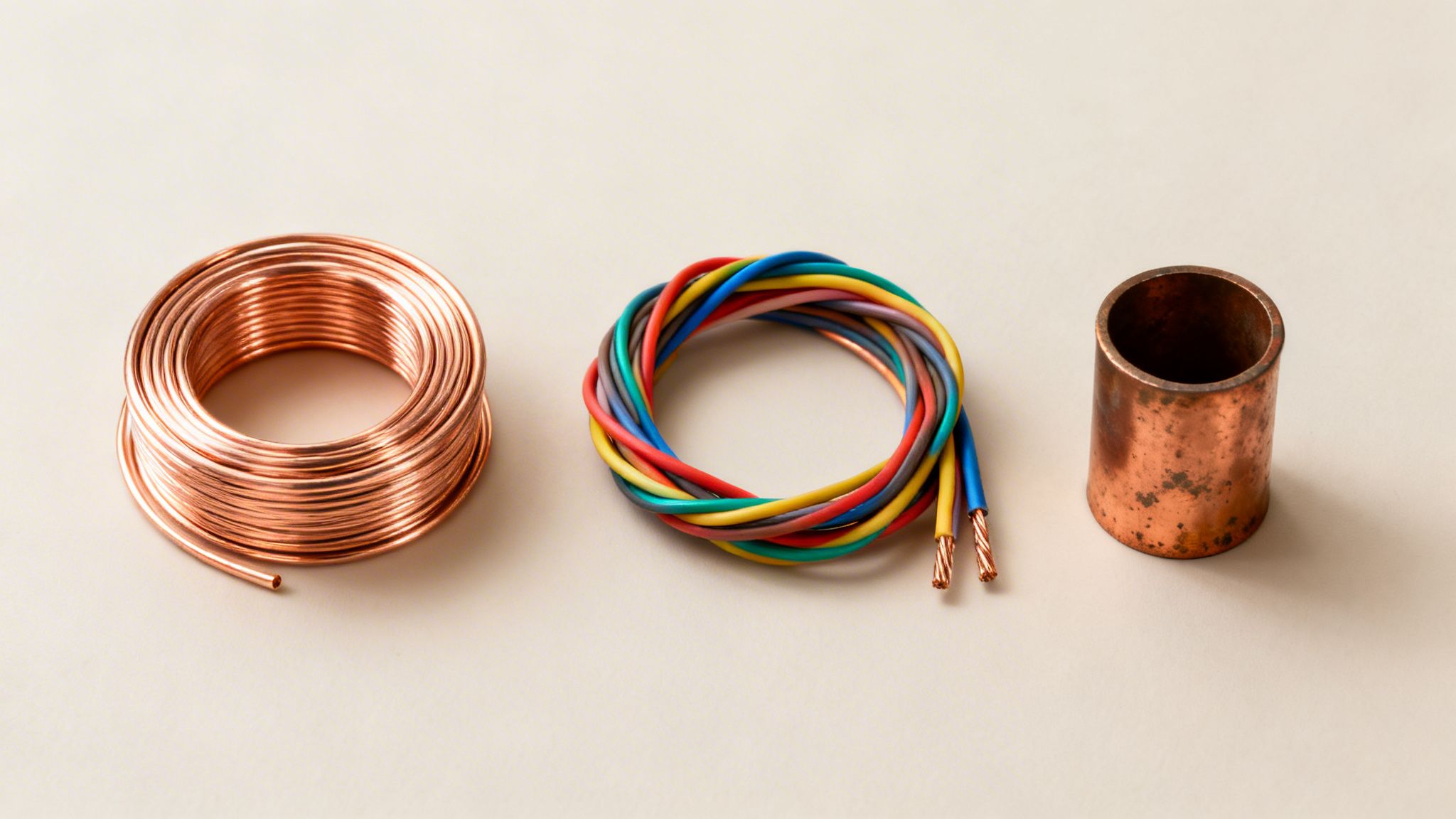
Bare Bright Copper: This is the top tier, the best of the best. It's bare, uncoated, and unalloyed copper wire, no thinner than 1.6 mm. To qualify, it has to be completely free of paint, insulation, or any corrosion—it needs to look 'bright' and shiny. This is the most sought-after grade because of its 99.9% purity.
No. 1 Copper: This grade covers clean copper tubes, pipes, and clippings that have no attachments like fittings, solder, or paint. It might have a little tarnish (a patina from age), but it's otherwise pure and ready for the furnace.
No. 2 Copper: This grade is worth a bit less because it comes with some level of contamination. It’s usually unalloyed copper pipes or wire that might have light solder, traces of paint, or signs of corrosion. Burnt copper wire also often lands in this category, as long as it isn't heavily coated in ash.
Understanding these grades is key, as they have a direct impact on your bottom line. Copper is just one of many valuable materials you can recycle. You can learn more by checking out our guide on what non-ferrous metals are.
Why Purity and Contamination Matter So Much
Any other materials attached to your copper will seriously reduce its value. These contaminants—things like plastic, steel, or brass—have to be stripped away before the copper can be melted down, and that’s a costly, labour-intensive job for any recycler.
The core concept is simple: The price you receive is for the recoverable copper content only. Any attached steel, plastic, brass fittings, or excessive solder adds weight but not value, and the cost to remove it is deducted from your payment.
For instance, insulated copper wire is priced based on its estimated copper recovery rate. A thick industrial cable with a high percentage of copper will be worth much more per kilo than a thin wire with a heavy plastic coating.
Likewise, copper-aluminium radiators are priced lower because the aluminium fins have to be separated from the copper tubes. By taking the time to sort your materials and remove contaminants yourself, you directly increase the cost of scrap copper per kg you’ll get paid.
The Global and Local Forces Driving Copper Prices
The price you get for your scrap copper isn't just a number pulled from thin air. It’s the result of a fascinating tug-of-war between powerful global markets and on-the-ground local factors. To really understand the cost of scrap copper per kg and why it shifts daily, you need to look at the big picture.
At the very heart of it all is a single, global benchmark: the London Metal Exchange (LME). Think of the LME as the world’s stock market, but for industrial metals like copper. Just like the JSE reflects the health of South African businesses, the LME price shows the global pulse of copper supply and demand. This price is the starting block for every single scrap deal, everywhere.
When global demand for copper surges—fuelled by massive infrastructure projects, the boom in electric vehicles, or new electronics—the LME price goes up. On the flip side, if major mines ramp up production or a global economic slowdown hits, the price will drop. That number from London sets the tone for everything that follows.
South African Factors That Shape Your Price
While the LME provides the global baseline, several local forces in South Africa fine-tune the final price you're offered. These factors can have a massive impact on your bottom line and explain why prices might differ from one province to the next.
One of the biggest local influencers is the Rand-to-Dollar exchange rate. Copper is a global commodity priced in US Dollars, so a weaker Rand can actually work in your favour. When the Rand falls, it takes more Rands to buy a dollar's worth of copper, which often translates into a higher per-kilogram price for your material right here at home.
The price you get is a blend of global trends and local realities. The LME sets the baseline, but exchange rates, regional demand, and logistical costs determine the final figure on your weighbridge ticket.
Local industrial demand is another key piece of the puzzle. If there's a surge in manufacturing or construction in a hub like Gauteng or KwaZulu-Natal, local demand for recycled copper can shoot up, leading to more competitive pricing in those areas. Even your proximity to smelters and ports matters, as it directly impacts the cost of getting your material processed and moved. You can dive deeper into this journey in our article on the life cycle of metal from mine to market.
The On-the-Ground Realities
Moving away from the big economic picture, the actual physical state of your scrap and how much you have are what truly shape the final offer. The two biggest factors here are contamination and volume.
- Contamination Level: As we’ve covered, anything that isn't copper—like plastic insulation on wires, steel screws, or brass fittings—is considered a contaminant. Removing it takes time, labour, and machinery, and the cost for that work is deducted from the copper’s value. Put simply, the cleaner your scrap, the better your price.
- Total Volume: Logistics aren't cheap. It's far more cost-effective for a recycler to collect and transport a single 10-tonne load than to make twenty separate trips for 500 kg batches. Because of this efficiency, larger volumes will almost always earn you a better per-kilogram rate.
A perfect example of how markets react happened right here in South Africa. Back in 2025, severe drought-related power cuts slashed Eskom's output by 22%. This unexpectedly boosted local scrap values by a staggering 25%, pushing prices for bare bright copper to an average of R135/kg. By the end of that year, industry surveys showed copper scrap turnover had hit R18.5 billion annually, with Johannesburg’s recyclers processing a huge chunk of the region's volume. To see how markets react to such events, you can explore historical price indicators and their drivers.
How to Calculate Your Potential Scrap Copper Revenue
Alright, let's get down to what really matters: turning that pile of scrap copper into actual Rands in your bank account. It’s one thing to talk about market prices, but the real skill is in understanding how a recycler looks at your load and calculates its final value.
The process isn't complicated once you get the hang of it. We start with the total weight, figure out what grades of copper you have, and then subtract anything that isn't pure copper. Let's run through a couple of real-world scenarios to see how it works.
A Worked Example for Industrial Facilities
Imagine you run a manufacturing plant and you've collected 800 kg of clean, shiny copper offcuts. This stuff is top-tier—uniform, unpainted, and with no attachments. In the scrap world, that’s premium No. 1 Copper.
- Gross Weight: 800 kg
- Copper Grade: No. 1 Copper
- Contamination: 0% (it's pure and clean)
- Payable Weight: 800 kg
If the going rate for No. 1 Copper is R140 per kg, the math is beautifully simple:
800 kg x R140/kg = R112,000
This is the best-case scenario and it perfectly illustrates why clean, well-sorted material is king. You get paid for every single kilogram you bring in. Of course, copper isn't the only metal that can bring in this kind of revenue. For more ideas, check out our list of 10 common types of scrap metal you can recycle for cash.
A Scenario for Demolition Contractors
Now for a more typical, complex situation. A demolition contractor pulls 4 tonnes (4,000 kg) of copper out of an old factory. It's a mixed bag: some clean tubing, old wiring still in its plastic casing, and pipes with soldered joints.
A quick assessment at the yard breaks the load down like this:
- 1,000 kg of No. 1 Copper (the clean pipes and tubes)
- 2,500 kg of No. 2 Copper (pipes with solder and some light corrosion)
- 500 kg of Insulated Wire (which we estimate will yield about 60% copper once stripped)
With different grades come different prices. Let’s use these example rates:
- No. 1 Copper: R140/kg
- No. 2 Copper: R125/kg
- Insulated Wire (based on the copper inside): R75/kg
Here’s how the payout would be calculated:
- (1,000 kg x R140) + (2,500 kg x R125) + (500 kg x R75) = R140,000 + R312,500 + R37,500 = R490,000
Even with a mixed load, sorting your material into basic categories makes it much easier to see where the value is and get a fair price.
The biggest lesson here is that contamination is the enemy of profit. Every kilogram of plastic, steel, excess solder, or even dirt is weight you simply won't get paid for.
To really drive this home, look at how even a small amount of contamination can eat into your profits on a standard 1-tonne load of No. 2 Copper.
Impact of Contamination on a 1,000 KG Copper Load
| Contamination Level | Deductible Weight | Payable Weight (KG) | Price Per KG (Example) | Total Payout |
|---|---|---|---|---|
| 2% (Light Dirt) | 20 kg | 980 kg | R125 | R122,500 |
| 5% (Solder/Paint) | 50 kg | 950 kg | R125 | R118,750 |
| 10% (Fittings/Insulation) | 100 kg | 900 kg | R125 | R112,500 |
As you can see, just 10% contamination—things like brass fittings or leftover plastic insulation—on a single tonne of copper can cost you R10,000. This is exactly why taking the time to clean and sort your scrap before you bring it in is the single best thing you can do to get the maximum return.
Maximising Your Return When Selling Scrap Copper
Getting the best possible price for your scrap copper isn’t just about finding the closest buyer. A professional, transparent approach gets you a fair deal and builds a solid relationship with your recycler. It all starts with you providing clear and accurate information right from the beginning.
Think of it like selling a house. You wouldn't just tell a potential buyer "it's a house"—you'd give them the address, the square meterage, the number of rooms, and share plenty of photos. The same logic applies to scrap metal; the more detail you can provide upfront, the more precise and reliable your quote will be.
Taking a few minutes to gather the right information before you even pick up the phone shows you're a professional. It allows a recycler to give you a realistic estimate that truly reflects the market value of your materials.
The Professional Quoting Process
To get an accurate, dependable quote for your scrap, you’ll need to have a few key details ready. This information gives a recycler a clear picture of the scope and value of your materials right from the outset.
- Estimated Tonnage: Have a good estimate of the total weight you're looking to sell. A quote for 500 kg will naturally be different from one for 10 tonnes, mainly because of logistical efficiencies.
- Copper Grades: If you can, separate your materials and identify the different grades. Saying you have "roughly 2 tonnes of No. 2 copper and 1 tonne of insulated wire" is far more useful than just saying you have "3 tonnes of copper."
- Location for Collection: The collection address is vital. It allows the recycler to calculate transport costs, which are always factored into the final price.
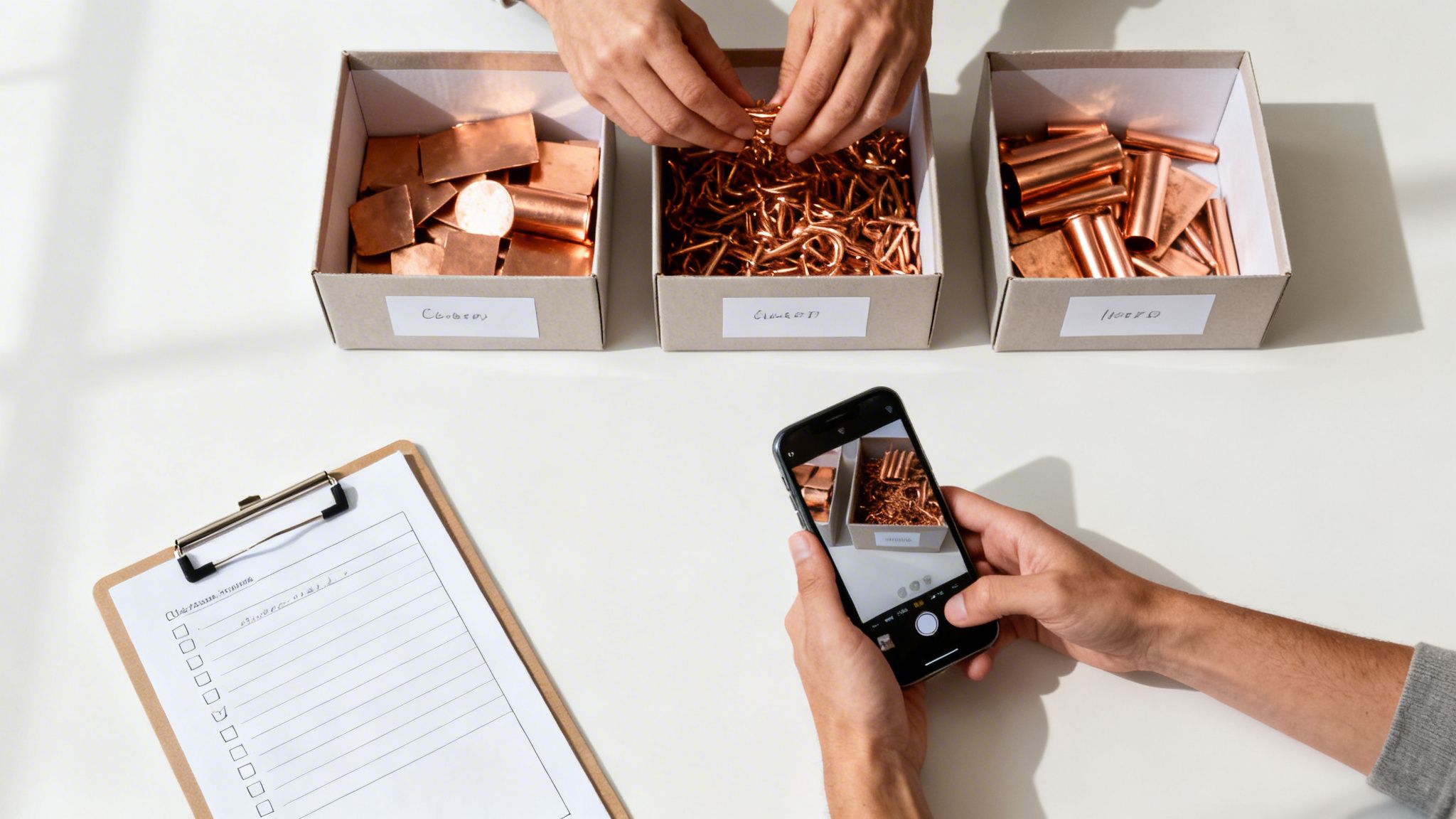
- Clear Photographs: A picture is genuinely worth a thousand words here. Photos of your stockpiled material let an expert visually assess the quality, grade, and any potential contamination.
When you provide these details, the initial quote you receive isn't just a wild guess. It’s a realistic assessment based on the solid information you’ve supplied.
Actionable Tips to Maximise Your Payout
A little bit of prep work can make a huge difference to your final payment. Maximising your return is all about making your material as easy as possible for the recycler to process.
The core principle is simple: the less work the recycler has to do to purify your copper, the more they can afford to pay you. Every step you take to clean and sort your material adds directly to your bottom line.
Here are a few practical steps you can take to boost the cost of scrap copper per kg you receive:
- Sort Materials by Grade: Separating your Bare Bright wire from your No. 2 pipes before collection is the single most effective thing you can do. When grades are all mixed in one pile, the entire load is often priced at the rate of the lowest-value material present.
- Remove Contaminants: Take the time to strip plastic insulation from wires if it’s practical. Make sure to remove any steel bolts, brass fittings, or plastic caps attached to your copper pipes. This reduces the weight that gets deducted and increases your total payable tonnage.
- Consolidate Smaller Loads: If you generate scrap regularly, try to build up a larger volume before scheduling a collection. Transport is a major cost, and moving one large load is far more economical than several small ones. This efficiency often translates into a better per-kilogram rate for you.
By following these guidelines, you present your material in its most valuable state, ensuring you are compensated fairly for every kilogram of recoverable copper. If you're looking for a reliable partner to handle your materials, you might be interested in our services to sell scrap metal near you.
Why Compliance in Scrap Trading Protects You
In South Africa, the scrap metal industry operates under some very tight regulations, and for good reason. It’s not about creating headaches with paperwork. These rules are in place to shield you, your business, and the wider community from the very real fallout of metal theft and shady dealings.
Choosing to work with a fully compliant recycler isn't just a good idea—it's your first line of defence against serious legal and financial blowback. A legitimate, documented sale ensures you're on the right side of the law, keeping you far away from the illegal trade of stolen materials. The alternative, dealing with a fly-by-night operator, just isn't worth the risk.
Navigating the Legal Requirements
To sell scrap metal legally, you need to provide some basic documentation. This isn't just "red tape." It's a crucial step that builds a transparent, traceable record for every transaction, protecting both you as the seller and us as the buyer.
When you come to sell your scrap, you'll generally need to have these on hand:
- Proof of Identity: A valid ID document or your driver’s licence.
- Proof of Address: A recent utility bill or another piece of official mail.
- Proof of Ownership: For larger industrial quantities, you'll need documentation that proves the material is yours to sell.
These measures are legally mandated to choke the market for stolen metal. It's all about making sure every kilogram of scrap is accounted for and that all transactions are above board.
Think of it this way: partnering with a compliant recycler is like taking out an insurance policy on your reputation. It’s a guarantee that every part of the deal, from the weigh-in to the payment, follows the letter of the law, keeping your name clear of any link to criminal activity.
The Importance of On-Site Safety
Compliance goes well beyond the paperwork. It’s absolutely vital during on-site work like collections, demolitions, and clear-outs. A professional recycler brings a non-negotiable set of safety protocols to your site, designed to protect your property, your people, and the environment.
This means the right personal protective equipment (PPE) for the job, properly secured work areas, and, most importantly, a team trained to handle heavy machinery and materials safely. An unqualified or uninsured operator is a massive liability. If an accident or property damage occurs on their watch, the legal and financial responsibility could fall on you—a risk that’s simply too great to take.
Frequently Asked Questions About Scrap Copper Prices
When it comes to scrap metal, especially something as valuable as copper, it’s only natural to have a few questions. We get it. To give you some clarity, here are some straightforward answers to the questions we hear most often about the cost of scrap copper per kg.
Why Do Scrap Copper Prices Change So Often?
If you’ve been tracking copper prices, you’ve noticed they never sit still for long. That’s because scrap copper’s value is directly pegged to the global commodities market, with the London Metal Exchange (LME) being the key benchmark.
The price you get on any given day is a reflection of a much bigger picture. Factors like global supply and demand, the output from major mines, geopolitical events, and even currency exchange rates can cause prices to shift daily. We constantly adjust our pricing to stay in sync with these market movements, ensuring you always get a fair and current value for your material.
What Is the Minimum Amount of Copper You Will Collect?
We handle projects of all scales, from massive industrial clear-outs to smaller hauls. However, when it comes to our on-site collection services, logistics are everything. To make it efficient and maximise your return, we generally need a minimum tonnage. This can vary a bit depending on your location in South Africa.
But what if you have a smaller quantity? No problem at all. You’re always welcome to bring it directly to our processing facility. The best first step is to give us a call to chat about your specific load. That way, we can figure out the most cost-effective solution for you.
Our Commitment to Transparency: We believe in total accountability. Every kilogram of your material is weighed on certified and regularly calibrated industrial scales right here at our facility. You'll get a detailed weighbridge ticket and a full breakdown showing each grade of metal, its exact weight, and the price you're getting for it.
How Do I Know My Scrap Is Being Weighed Accurately?
This is a question we love to answer because transparency is the bedrock of our business. We operate on an open-door policy, meaning you are always welcome to be present and witness the entire weighing process yourself.
There are no smoke and mirrors here. We want you to have complete confidence and peace of mind in every transaction. Building that trust is central to how we do things, and it's how we build lasting relationships with our clients.
At D7 Capital Partners (Pty) Ltd, we are dedicated to providing transparent, compliant, and reliable scrap metal recycling services across South Africa. Whether you have a large industrial load or are clearing out a smaller site, our team is ready to help you get the best possible value for your materials. Partner with us for a professional and seamless experience by visiting our website at https://d7capital.co.za.